Caffeine can be useful when you want to feel more alert, but its effects may last beyond the noticeable energy boost. For some people, coffee, tea or an energy drink later in the day can overlap with bedtime.
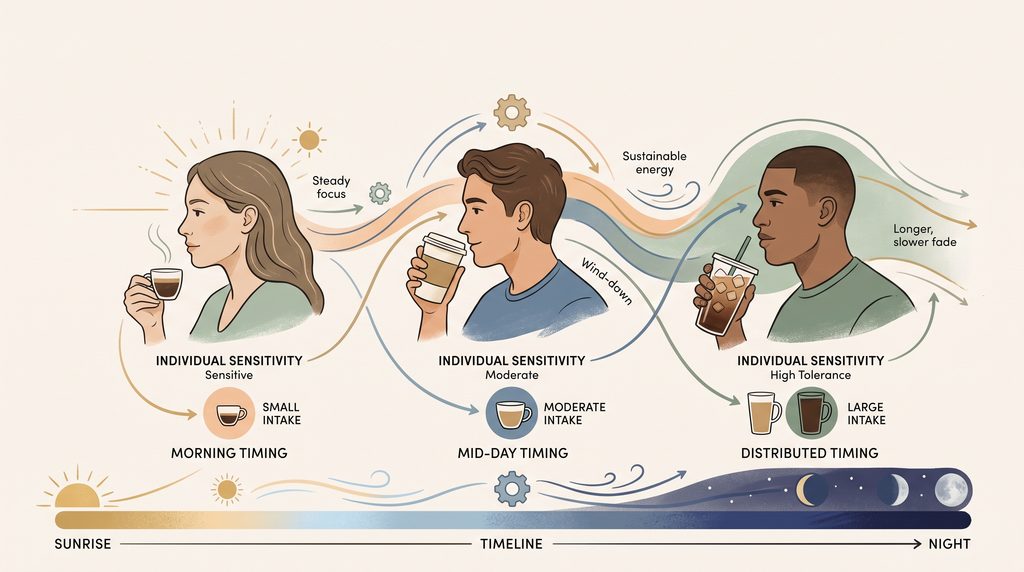
The connection between caffeine and sleep depends on more than the clock. The total amount you consume, your usual bedtime and your individual sensitivity all help shape the picture.
Instead of assuming that one cutoff works for everyone, it can be more useful to notice where caffeine appears in your day and make one manageable adjustment at a time.
Quick Takeaways
- Caffeine may remain relevant for several hours after you consume it.
- The amount consumed matters as well as the timing.
- Individual sensitivity varies.
- Coffee is only one of many possible caffeine sources.
- A short observation period may help reveal your own pattern.
How Caffeine May Affect Sleep
Caffeine is a stimulant that acts on the central nervous system. It can temporarily increase alertness and reduce the feeling of tiredness. MedlinePlus notes that its effects may continue for approximately four to six hours, although individual responses vary.
The noticeable boost may fade while caffeine is still being processed. This is one reason late-day intake can remain relevant near bedtime.
Falling Asleep Is Not the Only Measure
When researchers study caffeine and sleep, they look at more than whether someone can fall asleep. They may also assess:
- how long it takes to fall asleep;
- total sleep time;
- time spent awake during the night;
- sleep efficiency, or the proportion of time in bed spent asleep;
- perceived sleep quality.
A 2023 systematic review and meta-analysis found that caffeine intake was linked, on average, with shorter total sleep time, lower sleep efficiency and a longer time to fall asleep. These were group-level findings and cannot predict how one person will respond.
A randomized crossover trial also found that participants did not always perceive all the changes detected through objective sleep measures. Falling asleep without difficulty does not always capture every aspect of sleep.
A General Starting Point, Not a Universal Rule
A useful caffeine cutoff depends on more than the clock. Serving size, total intake, bedtime and individual response all matter.
Timing Matters, but It Is Not the Only Factor
It is common to ask, “How long before bed should I stop drinking caffeine?” A simple answer is appealing, but research suggests that dose and timing need to be considered together.
The Time of Your Last Caffeinated Drink
In a small controlled study, a single 400-milligram dose taken at bedtime, three hours before bedtime or six hours before bedtime affected sleep compared with a placebo. The study supports the idea that substantial caffeine intake can remain relevant several hours before sleep.
That does not mean every drink consumed six hours before bed will affect every person. The study used a single 400-milligram dose, which is different from the amount in many smaller servings of tea or coffee.
A more recent randomized crossover trial further highlighted the relationship between dose and timing. In that trial, a 100-milligram dose taken four hours before bedtime did not significantly change the measured sleep outcomes compared with placebo. A 400-milligram dose affected sleep when consumed within 12 hours of bedtime, with larger effects closer to bedtime. These findings describe that particular study and should not be treated as a universal personal rule.
Your usual bedtime also changes the context. A 3 p.m. coffee has a different relationship to sleep for someone who goes to bed at 9 p.m. than for someone who routinely sleeps after midnight.
Your Total Intake Across the Day
The time of your last drink is only part of the picture. Several servings consumed across the day can add up, particularly when cup sizes are large or drinks contain multiple espresso shots.
The FDA cites 400 milligrams per day as an amount not generally associated with negative effects for most adults. That number is not a target, a sleep-specific recommendation or a guarantee that the same amount will suit everyone. The agency emphasizes that sensitivity and the rate at which caffeine is processed vary.
A person who is sensitive to caffeine may notice sleep-related effects at a lower amount. Personal observation can help put general guidance into the context of an individual routine.
Individual Sensitivity Changes the Picture
People can respond differently to the same serving. Habitual use, medications and individual health circumstances may all affect how caffeine is experienced.
MedlinePlus notes that some people are more sensitive than others and that certain health conditions or medications may be reasons to discuss caffeine intake with a healthcare professional.
Pregnancy and breastfeeding also call for individualized guidance rather than a general blog rule.
Caffeine Can Come From More Than Coffee
Coffee may be the most familiar source, but caffeine can appear in many everyday foods, drinks and products.
Common Everyday Sources
Possible caffeine sources include:
- brewed coffee;
- espresso drinks;
- black and green tea;
- caffeinated soda;
- energy drinks;
- chocolate and cacao products;
- some energy bars and chewing gums;
- pre-workout products and dietary supplements;
- some pain-relief products and other over-the-counter medications.
The FDA and MedlinePlus note that caffeine may occur naturally or be added to foods, drinks, supplements and medications.

Do not stop or change a medication because it contains caffeine. Ask a pharmacist or qualified healthcare professional about ingredients or possible interactions.
Why Serving Size and Labels Matter
Caffeine content can vary substantially by product, preparation and serving size. A large coffee-shop drink may contain multiple espresso shots, while the amount in tea can vary with the type and brewing method.
Energy drinks also differ. Check whether the label lists caffeine for one serving or for the entire container, then confirm how many servings the container holds.
Decaffeinated coffee and tea generally contain less caffeine than regular versions, but “decaf” does not necessarily mean caffeine-free.
Common Caffeine Sources and What to Check
| Source | What may vary | What to check |
|---|---|---|
| Brewed coffee | Cup size and brewing method | Serving size and refills |
| Espresso drinks | Number of shots | Total shots in the drink |
| Tea | Type and brewing time | Label and preparation |
| Energy drinks | Brand and container size | Total caffeine per container |
| Caffeinated soda | Product and serving size | Nutrition and ingredient labels |
| Chocolate | Type and portion | Serving amount |
| Workout products | Formula and dose | Full ingredient panel |
| Some medications | Product formulation | Active ingredients and directions |
A Practical Way to Notice Your Own Pattern
A short observation period may be more useful than immediately following a strict rule. The goal is not to diagnose a sleep problem. It is simply to see whether timing, serving size or total intake appears to line up with changes in your routine.
Step 1: Identify Your Main Sources
List the caffeine sources that regularly appear in your day.
Include coffee and tea, but also consider soda, energy drinks, chocolate, workout products and relevant medications.
Step 2: Note Timing and Serving Size
Write down:
- the time of each caffeinated item;
- the type of drink or product;
- the approximate serving size;
- the number of servings in the container;
- your usual bedtime.
A notebook or a simple note on your phone is enough. The NHLBI also offers a sleep diary that includes space for caffeinated drinks, medicines and daytime sleepiness.
READ MORE:
Eating Slowly: A Small Habit That May Support Comfortable Digestion
How to Create a Sleep-Friendly Bedroom Without Spending Much
Step 3: Notice Sleep-Related Patterns
Pay attention to everyday observations such as:
- how easily you wind down;
- how long you think it takes to fall asleep;
- whether you wake during the night;
- how you feel in the morning;
- whether a difficult night leads to more caffeine the next day.
These observations are not diagnostic. They are simply clues that may help you make a more informed choice.
Step 4: Change One Factor at a Time
Choose one realistic adjustment rather than changing your entire routine.
You might:
- move one serving earlier;
- reduce the size of a late-day drink;
- skip a refill;
- choose a lower-caffeine option or a beverage labeled caffeine-free;
- avoid combining several caffeine sources late in the day.
Try to keep the rest of your routine reasonably consistent while observing the change.
Step 5: Review the Pattern
Once you have enough notes to see a pattern, review what changed.
One better or worse night does not prove that caffeine was the cause. Look for repeated patterns, then decide whether another small adjustment makes sense.
A Simple Caffeine and Sleep Check-In
- Note the time of your first and last caffeinated item.
- Include drinks, foods, supplements and relevant medications.
- Check serving size and servings per container.
- Record your usual bedtime.
- Notice how easily you wind down.
- Notice nighttime awakenings without trying to diagnose them.
- Notice how you feel the next morning.
- Review the pattern before making another change.
When Caffeine May Not Be the Whole Story
Caffeine can be one factor in sleep, but it is rarely the only part of the routine worth considering.
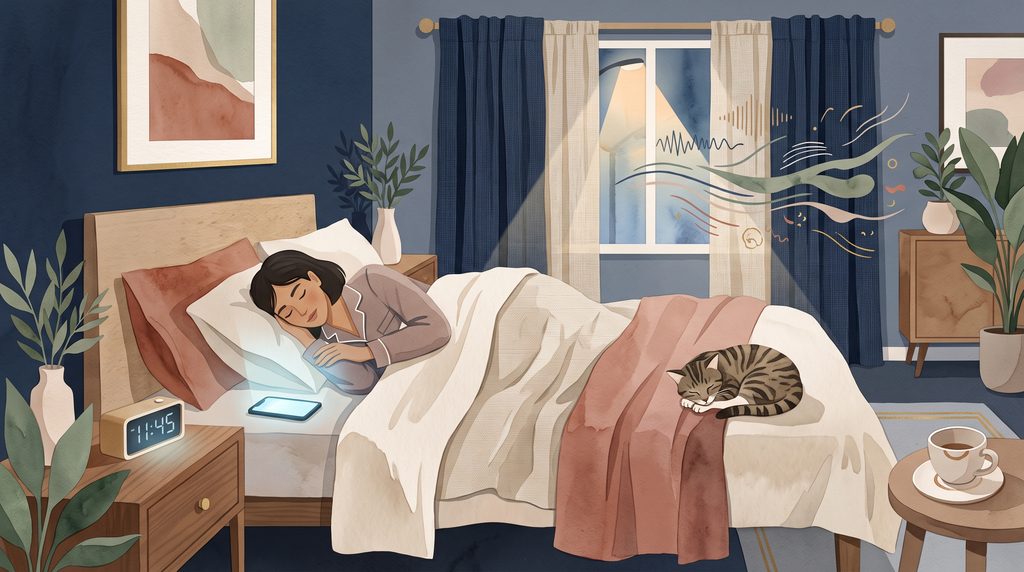
Irregular sleep hours, evening light, stress, alcohol, physical discomfort, shift work, medications and the bedroom environment may also influence how easily you fall asleep or how rested you feel.
The NHLBI recommends paying attention to sleep schedules, relaxing routines and a quiet, cool and dark bedroom. It also notes that caffeine can interfere with sleep and may continue to have effects for several hours.
When to Talk With a Healthcare Professional
Consider speaking with a qualified healthcare professional when sleep problems continue, interfere with daily activities or affect safety.
Individual guidance is also appropriate when you:
- are pregnant or breastfeeding;
- take prescription or over-the-counter medications;
- have a medical condition that may affect caffeine sensitivity;
- experience symptoms after caffeine that concern you;
- find it difficult to reduce a high habitual intake;
- suspect that caffeine is not the only factor affecting sleep.
The CDC advises speaking with a healthcare provider about problems sleeping.
Medical note: This article provides general educational information and is not a substitute for individualized medical advice. Speak with a qualified healthcare professional about persistent sleep problems, pregnancy, medical conditions, medications or concerns about caffeine use.
Frequently Asked Questions
How long before bed should you stop drinking caffeine?
A buffer of several hours may be a useful starting point, but there is no single cutoff that works for everyone. Dose, bedtime and individual response all matter.
A controlled study found that a 400-milligram dose affected sleep even when taken six hours before bedtime. More recent research suggests that dose changes the picture, with larger amounts producing effects farther from bedtime in the study population.
Can afternoon coffee affect sleep?
Afternoon coffee may affect sleep for some people, particularly when the serving is large, bedtime is early or the person is sensitive to caffeine.
For others, a modest serving earlier in the afternoon may not produce an obvious effect. Tracking timing and serving size can help clarify your pattern.
Does caffeine affect sleep even if you fall asleep?
It may. Falling asleep is only one measure researchers use.
Studies also examine total sleep time, sleep efficiency and nighttime awakenings. Some research suggests that perceived sleep and objectively measured sleep do not always align, although individual responses vary.
Does decaf coffee contain caffeine?
Usually, yes. Decaf generally contains much less caffeine than regular coffee, but it is not necessarily caffeine-free.
The amount varies by product and serving size.
Start With One Manageable Change
The relationship between caffeine and sleep is personal rather than one-size-fits-all. The time of your last serving matters, but so do total intake, serving size, bedtime and individual sensitivity.
Start by noticing when caffeine appears in your day. Choose one manageable change, allow time to observe the pattern and remember that caffeine may be only one part of a broader sleep routine.
Start by noticing when caffeine appears in your day and choose one manageable change to observe. For a broader view, explore our practical guide to healthy sleep habits.
Sources
- U.S. Food and Drug Administration — Spilling the Beans: How Much Caffeine Is Too Much?
Used for: general adult intake reference, sensitivity, caffeine sources, serving-size variation and decaffeinated products.
URL: https://www.fda.gov/consumers/consumer-updates/spilling-beans-how-much-caffeine-too-much - MedlinePlus — Caffeine
Used for: central nervous system effects, duration of noticeable effects, sensitivity, medications and individual health circumstances.
URL: https://medlineplus.gov/caffeine.html - Gardiner C, et al. — The Effect of Caffeine on Subsequent Sleep: A Systematic Review and Meta-Analysis
Used for: total sleep time, sleep efficiency, sleep onset and overall research context.
URL: https://pubmed.ncbi.nlm.nih.gov/36870101/ - Gardiner CL, et al. — Dose and Timing Effects of Caffeine on Subsequent Sleep: A Randomized Clinical Crossover Trial
Used for: interaction between dose and timing and differences between perceived and objectively measured sleep.
URL: https://pubmed.ncbi.nlm.nih.gov/39377163/ - Drake C, et al. — Caffeine Effects on Sleep Taken 0, 3, or 6 Hours Before Going to Bed
Used for: effects of a 400-milligram caffeine dose at different intervals before bedtime.
URL: https://pubmed.ncbi.nlm.nih.gov/24235903/ - National Heart, Lung, and Blood Institute — Healthy Sleep Habits
Used for: broader sleep habits and factors beyond caffeine.
URL: https://www.nhlbi.nih.gov/health/sleep-deprivation/healthy-sleep-habits - National Heart, Lung, and Blood Institute — Sleep Diary
Used for: tracking caffeinated drinks, medicines, sleep and daytime sleepiness.
URL: https://www.nhlbi.nih.gov/resources/sleep-diary - Centers for Disease Control and Prevention — About Sleep
Used for: general guidance on seeking professional help for sleep problems.
URL: https://www.cdc.gov/sleep/about/index.html