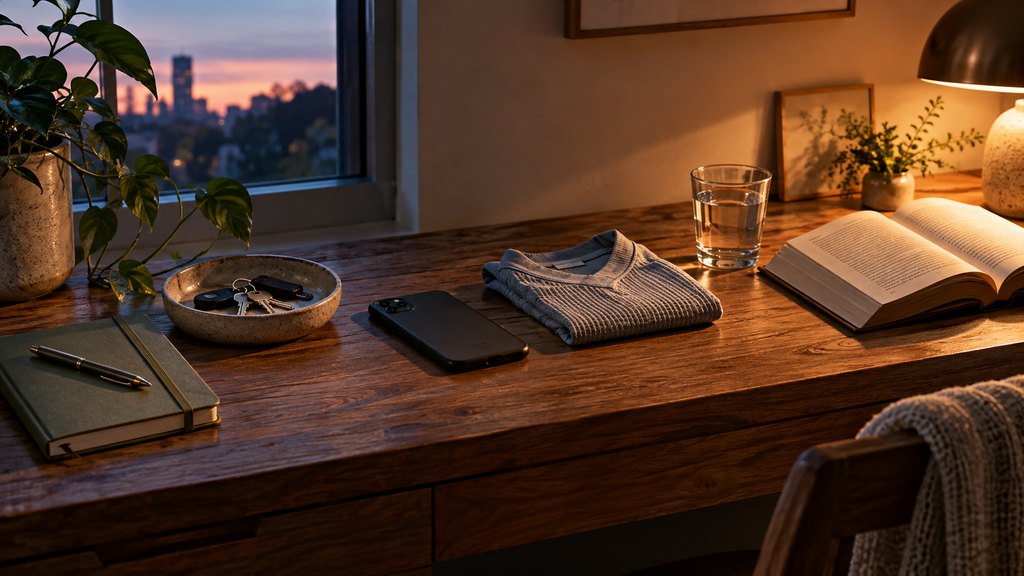
Creating a sleep-friendly bedroom does not require a new mattress, smart lighting, or a complete makeover.
Start by identifying the light, noise, heat, discomfort, or electronic distraction that bothers you most. Then try one free adjustment before buying anything.
A supportive sleep environment cannot guarantee better sleep or treat a sleep disorder. However, reducing avoidable distractions may make the room feel calmer and help you prepare for rest.
The goal is not to create a perfect bedroom. It is to make the space you already have darker, quieter, more comfortable, and less stimulating where possible.
Quick Takeaways
- Start with the biggest source of light, noise, heat, or discomfort.
- Try free changes before buying anything.
- Reduce notifications and other nighttime distractions.
- Adjust bedding and airflow for comfort.
- Seek professional guidance for persistent or severe sleep problems.
What Makes a Bedroom Sleep-Friendly?
A sleep-friendly bedroom limits unnecessary stimulation and feels comfortable enough for rest.
The National Heart, Lung, and Blood Institute recommends keeping the bedroom quiet, cool, and dark. General CDC guidance similarly recommends a quiet, relaxing room at a cool temperature and turning off electronic devices before bedtime.
These recommendations do not mean your room must be completely silent, empty, or maintained at one exact temperature. Your climate, living situation, personal comfort, and available resources all matter.
Focus on Fewer Distractions, Not a Perfect Room
Look at the room from your usual sleeping position. Common distractions include:
- a bright digital clock;
- a phone that lights up;
- street noise;
- heavy or uncomfortable bedding;
- work materials beside the bed;
- a television left on.
Keep in Mind: A sleep-friendly room can still be small, shared, personal, and lived-in. Focus on the distractions you can control rather than trying to create a showroom.
Choose the issue that affects you most and test one simple change first.
Start With Free Changes
Some of the most useful low-cost bedroom changes do not require spending money.
Reduce Small Sources of Light
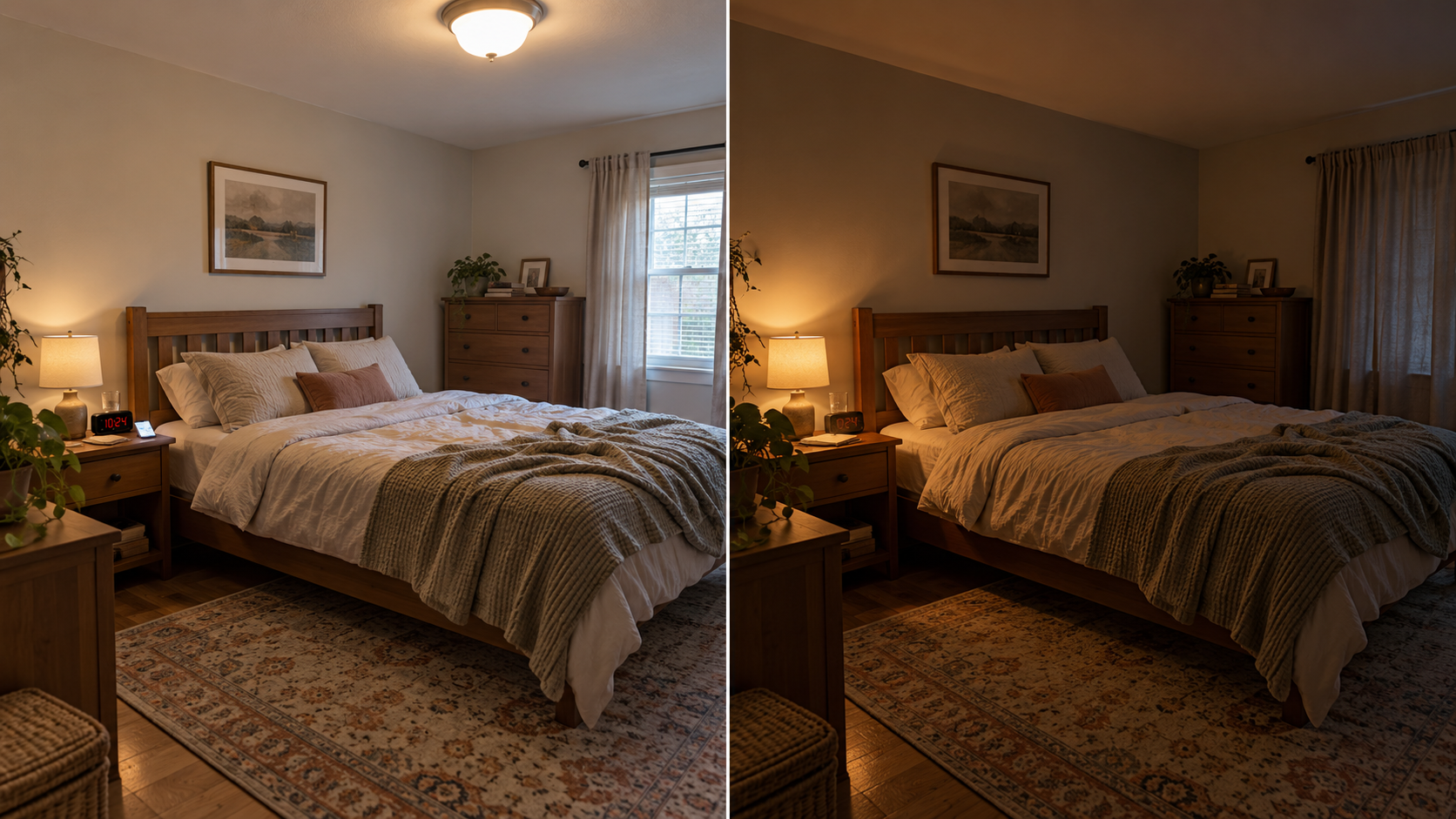
At night, look for light from clocks, chargers, televisions, computers, phones, hallways, and gaps around doors or windows.
You might:
- turn off unnecessary devices;
- face a digital clock away from the bed;
- move chargers outside your direct line of sight;
- close the bedroom door;
- lower nearby hallway lighting;
- place the phone screen-side down.
NHLBI guidance notes that light from televisions and electronic devices may interfere with the sleep-wake cycle.
Do not cover ventilation openings or place paper or fabric over electronics that may become warm.
Reset the Area Around Your Bed
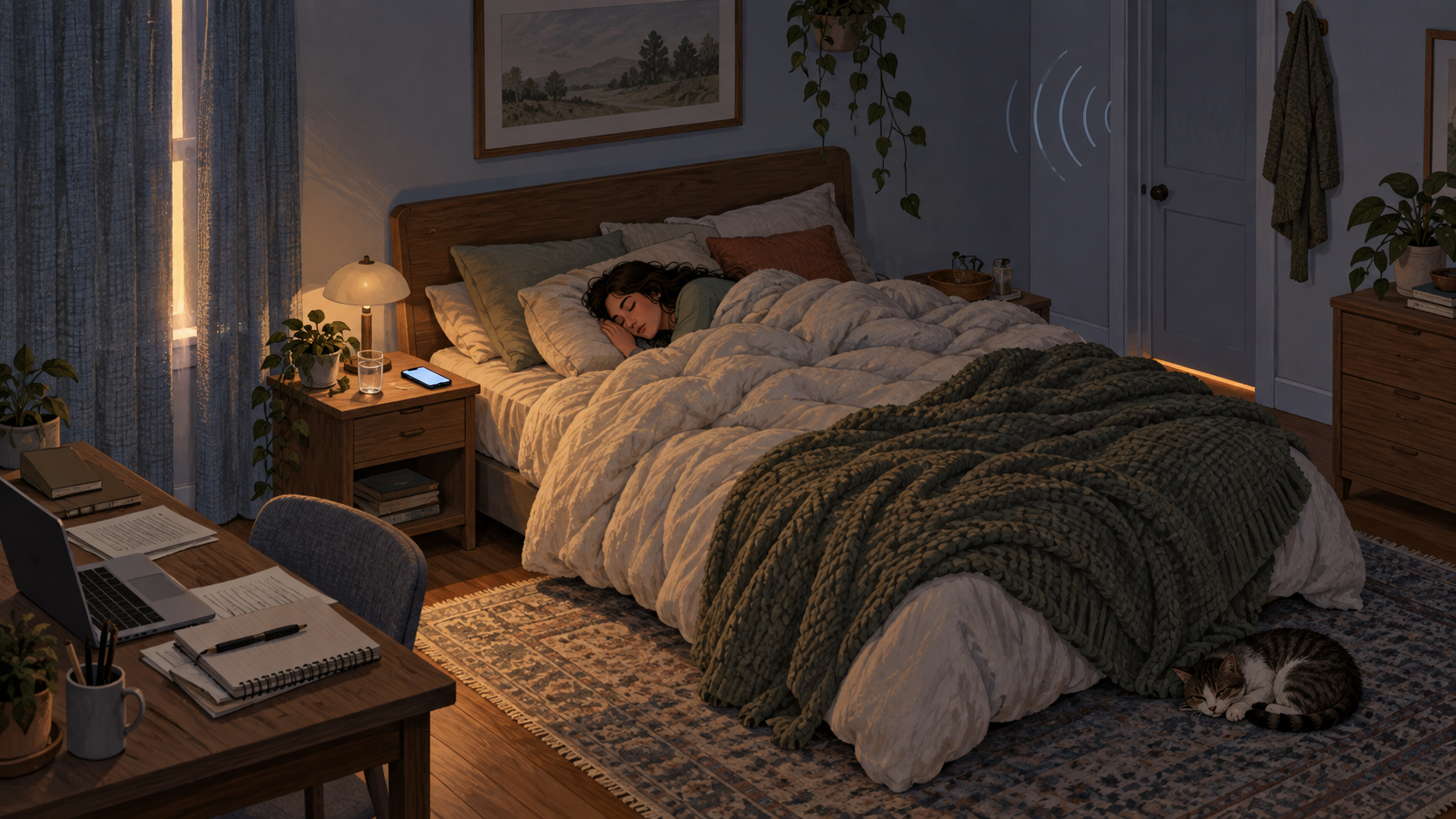
You do not have to organize the entire room. Clear only the areas you can see from bed, such as the bedside table, nearby floor, or a surface holding work materials.
Before bedtime:
- Close the curtains or blinds.
- Lower unnecessary lights.
- Prepare the bedding.
- Put work devices away.
- Silence notifications.
- Adjust airflow when practical.
A simpler bedside area may feel less distracting without requiring minimalist décor.
Reduce Light Without Expensive Blackout Curtains
Blackout curtains can be useful, but they are not the only way to make a bedroom darker.
Block the Brightest Source First
Identify whether the strongest light comes from a window, hallway, streetlight, clock, television, or electronic indicator.
Closing existing blinds, repositioning the bed, turning a clock away, or switching off a device may help without adding anything new to the room.
Temporary and renter-friendly options include:
- combining curtains and blinds you already own;
- moving the bed away from the brightest area;
- using a comfortable sleep mask;
- closing the bedroom door;
- keeping devices outside your direct line of sight.
Lowering bright evening lighting can also make the transition toward bedtime feel less abrupt. You do not need smart bulbs; turning off the main ceiling light and using a lamp you already own may be enough.
Safety Note: Do not block exits, cover ventilation openings, hang heavy materials insecurely, or place fabric over hot electronics.
Make Noise Less Disruptive
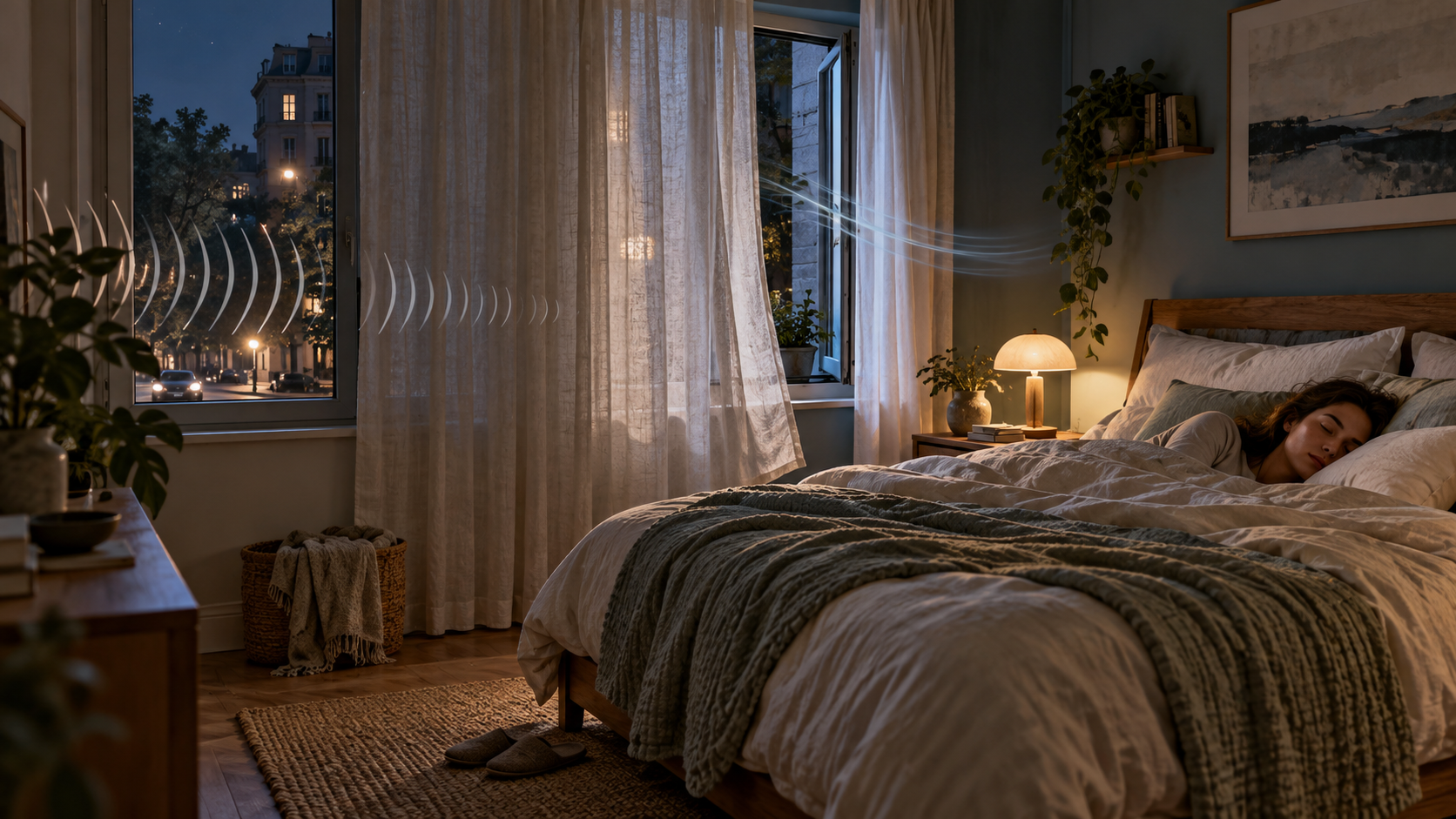
Complete silence is not realistic for everyone. Traffic, neighbors, family members, pets, plumbing, and appliances may create sounds you cannot fully control.
First, determine whether the problem is an occasional interruption or continuous background noise.
Start with sounds inside your own space:
- silence phone alerts;
- move vibrating devices away from hard surfaces;
- close doors or windows when safe;
- reposition objects that rattle;
- move the bed away from the loudest wall;
- agree on a lower television volume with other household members.
A fan or another steady background sound may make sudden noises less noticeable for some people. Keep it at a comfortable volume, and stop using earplugs if they cause pain, pressure, or irritation.
Keep the Room Comfortably Cool
A room that feels too hot or too cold can make sleep less comfortable. Research also indicates that bedding and sleepwear influence how the body responds to bedroom temperature.
There is no single temperature that will feel right for every person and every home. Instead of aiming for one perfect number, ask:
- Do I wake up feeling too warm or too cold?
- Is my bedding appropriate for the season?
- Does air move through the room?
- Am I using more layers than I need?
Low-cost adjustments may include:
- opening a window when safe and appropriate;
- creating cross-ventilation;
- using a fan you already own;
- closing curtains earlier on hot days;
- moving heat-producing electronics away from the bed;
- removing or adding one bedding layer.
Consider security, outdoor temperature, noise, allergies, and air quality before leaving a window open.
READ MORE:
The Sleep and Energy Connection: Why Better Nights Support Better Days
Improve Comfort Before Replacing the Mattress
Before replacing a mattress, check whether a smaller issue is contributing to the discomfort.
Look for:
- bunched or twisted sheets;
- an awkward pillow position;
- excessive bedding;
- objects left on the bed;
- a mattress that has shifted on its base;
- a rough or damaged sheet;
- bedding that feels too warm.
Some mattresses may be rotated periodically, but not all should be flipped or repositioned in the same way. Follow the manufacturer’s care instructions.
When a purchase becomes necessary, replace the item causing the clearest problem rather than upgrading several parts of the bed at once.
Before You Buy Anything
- What is the actual source of discomfort?
- Can it be adjusted or repositioned?
- Have you tested a free change?
- Is one item genuinely worn out?
- Would replacing that item solve a specific problem?
Reduce Electronic and Visual Distractions
You do not necessarily need to remove every device from the bedroom. Focus on how much light, sound, attention, and activity each device brings into the space.
Use settings already available on your phone or smartwatch:
- Do Not Disturb;
- bedtime mode;
- silent notifications;
- reduced screen brightness;
- scheduled alerts.
Keep the phone away from the pillow when practical so notifications are less immediate and the device is not automatically within reach.
If the bedroom also serves as an office, create a simple end-of-day transition:
- close the laptop;
- turn off the monitor;
- place papers in a drawer or box;
- remove work materials from the bed;
- move cables out of sight;
- turn the desk chair away from the sleeping area.
The room can remain personal. Books, photographs, artwork, and meaningful objects do not need to disappear.
Improve a Small, Shared, or Rented Bedroom
When you have limited control over the space, focus on the area around your side of the bed.
You may be able to adjust:
- your bedside surface;
- phone settings;
- bedding;
- reading light;
- the floor beside the bed;
- objects in your direct line of sight.
In a shared bedroom, a few simple agreements may help:
- when to lower the lights;
- when to reduce television volume;
- whether headphones will be used;
- how notifications will be managed;
- whether the door or window stays open.
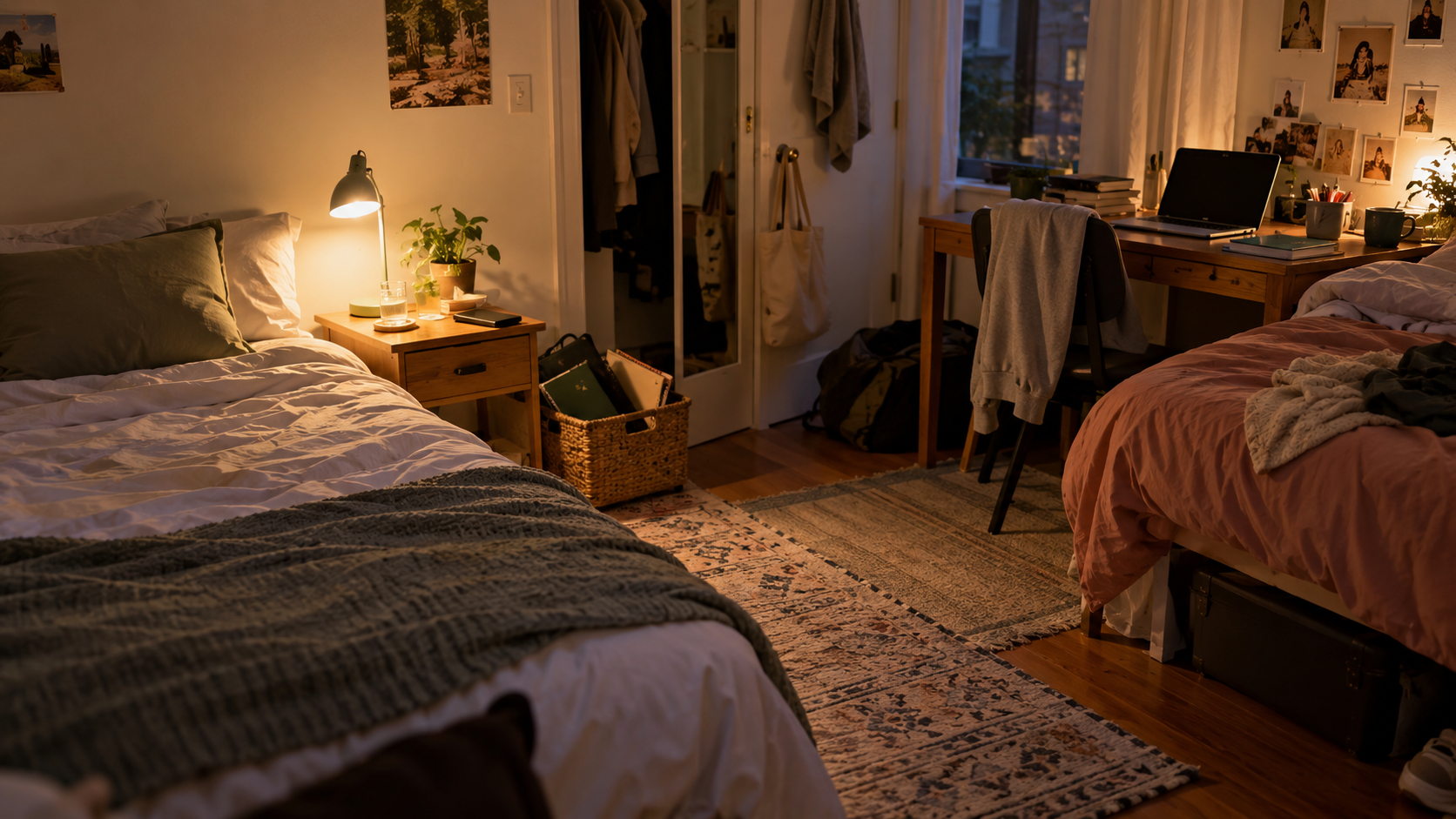
Portable options such as a sleep mask, small fan, earplugs, storage basket, or movable lamp may be useful when they address a specific remaining problem. None is essential.
Choose Changes by Cost and Impact
Use this simple order:
- Identify the biggest disruption.
- Try one free change.
- Notice whether the room feels more comfortable.
- Add one inexpensive solution only if the problem remains.
10-Minute Sleep-Friendly Bedroom Reset
- Turn off unnecessary lights.
- Silence notifications.
- Move the phone out of immediate reach.
- Clear the bedside area.
- Adjust the pillow and bedding.
- Reduce one noticeable source of noise.
- Improve airflow when practical.
- Put work materials away.
- Close the curtains or blinds.
- Choose one change to test tonight.
Low-Cost Bedroom Improvements by Problem
| Problem | Free change to try | Optional solution | Notice whether… |
|---|---|---|---|
| Window light | Close blinds or reposition the bed | Sleep mask | The room feels darker |
| Street noise | Close the window or move the bed | Earplugs or steady sound | Sudden noise is less noticeable |
| Warm room | Reduce bedding and improve airflow | Basic fan | The room feels comfortable |
| Visual clutter | Clear the bedside area | Small storage basket | The area feels less distracting |
| Phone alerts | Use Do Not Disturb | Basic alarm clock | You reach for the phone less |
| Bedding discomfort | Adjust layers and pillow position | Replace one worn item | The bed feels more comfortable |
When Bedroom Changes May Not Be Enough
A calmer room can support healthy sleep habits, but the bedroom environment is only one part of sleep.
Consider speaking with a qualified healthcare professional if you regularly have trouble falling asleep, wake repeatedly, experience severe daytime sleepiness, or find that sleep problems affect your work, driving, or daily activities. CDC guidance recommends talking with a healthcare provider when sleep problems occur regularly.
Loud snoring accompanied by gasping, observed breathing pauses, or significant daytime sleepiness should also be discussed with a healthcare professional. Not everyone who snores has sleep apnea.
When to Get Help: Seek professional guidance when sleep difficulties are persistent, severe, or affecting your safety or daily life.
Frequently Asked Questions
How Can I Make My Bedroom Better for Sleep Without Spending Money?
Start with your biggest distraction. Turn off unnecessary lights, silence notifications, clear the bedside area, adjust the bedding, reduce one source of noise, and improve airflow when practical.
Does a Bedroom Need to Be Completely Dark for Sleep?
Official guidance recommends keeping the bedroom dark, but complete darkness may not be practical or safe for everyone. Reduce the brightest source first. A dim night-light may be used when needed for safe movement.
Do I Need Blackout Curtains?
Not necessarily. Try existing blinds, curtains, a different bed position, a closed door, or a sleep mask before making a purchase.
What Is the Best Bedroom Temperature for Sleep?
There is no single setting that feels comfortable for everyone. Aim for a comfortably cool room and adjust bedding, sleepwear, and airflow based on your needs.
Should I Remove All Electronics From the Bedroom?
No. A more realistic goal is to reduce device-related light, sound, notifications, and stimulating use before bed.
Can a Sleep-Friendly Bedroom Fix Insomnia?
No. A supportive environment may be part of healthy sleep habits or an appropriate care plan, but it cannot diagnose or treat insomnia by itself. Persistent symptoms should be discussed with a healthcare professional.
Start With One Change Tonight
Your bedroom does not need to be expensive, perfectly organized, or completely silent.
Choose one change that addresses your biggest distraction and try it tonight. Reduce the brightest light, silence unnecessary notifications, or clear the area beside your bed.
Medical Note: A calmer bedroom may support healthy sleep habits, but it cannot diagnose or treat a sleep disorder. Consider speaking with a qualified healthcare professional if sleep problems are persistent, severe, or affecting your daily life.
Sources
- https://www.nhlbi.nih.gov/health/sleep-deprivation/healthy-sleep-habits
- https://www.nhlbi.nih.gov/health/sleep-disorder-treatments
- https://www.nhlbi.nih.gov/health/insomnia/treatment
- https://www.cdc.gov/sleep/about/index.html
- https://medlineplus.gov/sleepapnea.html
- https://pmc.ncbi.nlm.nih.gov/articles/PMC3427038/