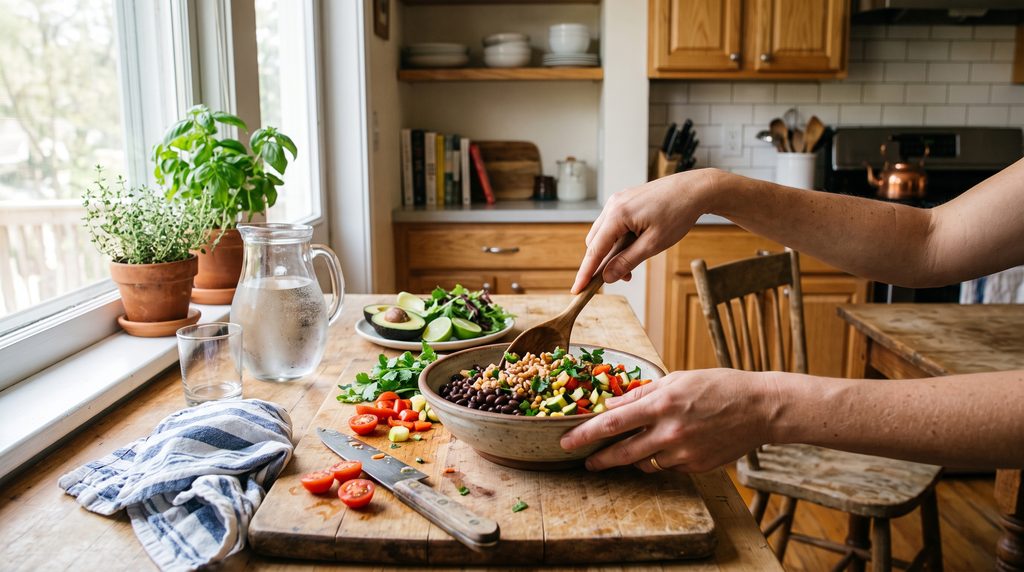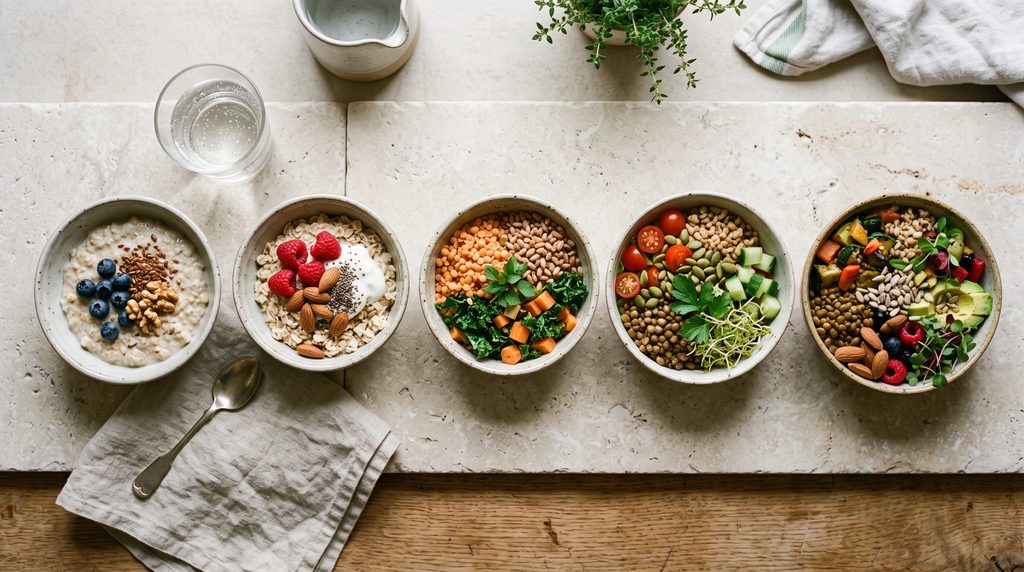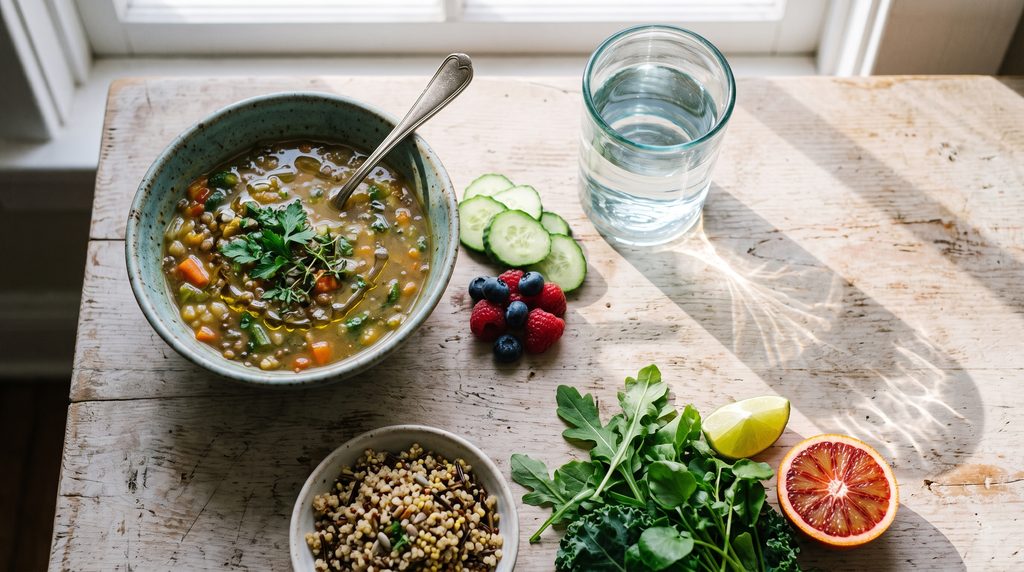
It is easy to finish a meal before you have really noticed its taste, texture, or how full you feel. Work, screens, family responsibilities, and short breaks can all make eating quickly feel normal.
Eating more slowly may give you more time to chew, notice the pace of the meal, and recognize fullness or discomfort as it develops. Research suggests that eating rate can influence food intake and appetite, although individual responses vary and most studies have not examined slower eating as a treatment for digestive symptoms.
You do not need to count every chew or make meals last a certain number of minutes. A useful starting point is simply to make one meal a little less rushed.
Quick Takeaways
- Eating more slowly gives you additional time to chew and notice the meal.
- A less rushed pace may help some people notice fullness as it develops.
- There is no universal meal length or required number of chews.
- One manageable adjustment may be more useful than a strict set of rules.
- Persistent or concerning digestive symptoms deserve professional guidance.
Why Eating Speed May Matter
Chewing Is Part of Digestion
Digestion begins in the mouth. Your teeth break food into smaller pieces, while saliva moistens the food and begins breaking down some starches before you swallow. The rest of the digestive system continues processing food and absorbing nutrients. The National Institute of Diabetes and Digestive and Kidney Diseases and MedlinePlus describe these basic steps.
That does not mean chewing for as long as possible guarantees better digestion. Foods with different textures naturally require different amounts of chewing, and dental health, comfort, and individual needs also matter.
The practical point is simpler: when a meal is extremely rushed, you may have less time to chew comfortably and pay attention to each bite.
A Slower Pace May Change How You Experience a Meal
Eating more slowly creates more opportunity to notice flavor, texture, hunger, fullness, and comfort during a meal.
A systematic review and meta-analysis found that slower eating was associated with lower energy intake during meals, although the studies differed considerably in their methods and results. Another systematic review found that changes in oral processing, including chewing and eating rate, were associated with differences in reported hunger and food intake.
These findings do not mean that everyone will eat less or experience the same effects. They suggest that eating pace is one of several factors that may shape what happens during a meal.
Meal Pace Is Influenced by More Than Willpower
Food texture, bite size, available time, distractions, and the dining environment can all affect how quickly a meal is eaten.
Some foods naturally take longer to chew than others. A rushed work lunch also creates a different situation from an unhurried meal at home.
The goal is not to force every meal into the same pattern. It is to notice when rushing has become automatic and decide whether a small adjustment feels useful.
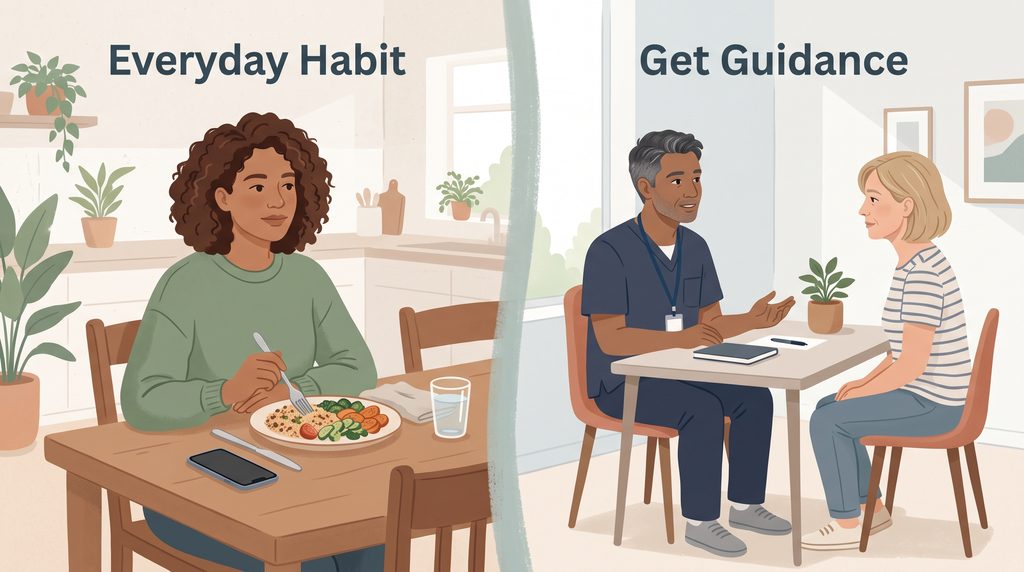
Keep in mind: Eating more slowly is a habit to experiment with, not a treatment for digestive symptoms. Individual needs, schedules, and health circumstances vary.
What Eating Slowly Actually Means
Eating slowly does not require a perfect meal length. There is no single duration that fits every person, food, schedule, or setting.
It also does not require counting how many times you chew. Soft and firm foods need different amounts of chewing, and dental or swallowing concerns may change what is comfortable. People with chewing or swallowing difficulties should seek individualized guidance rather than follow a general rule.
A more useful goal is to think less rushed, not perfectly slow. That might involve:
- taking a slightly smaller bite;
- finishing one bite before preparing the next;
- putting your utensil down once or twice;
- paying attention to a few bites without multitasking;
- noticing whether the pace still feels comfortable.
You do not need to practice every step at once.
Simple Ways to Eat More Slowly
Start With One Meal
Choose one meal that gives you a realistic opportunity to practice.
Breakfast may work when mornings are calmer. Dinner may be easier when lunch breaks are short. A weekend meal may be the most manageable place to begin.
Starting with one meal reduces the pressure to change your entire routine.
Create Natural Pauses
Try taking a slightly smaller bite or resting your utensil once or twice during the meal. These adjustments can interrupt an automatic rushing pattern without making eating feel like an exercise.
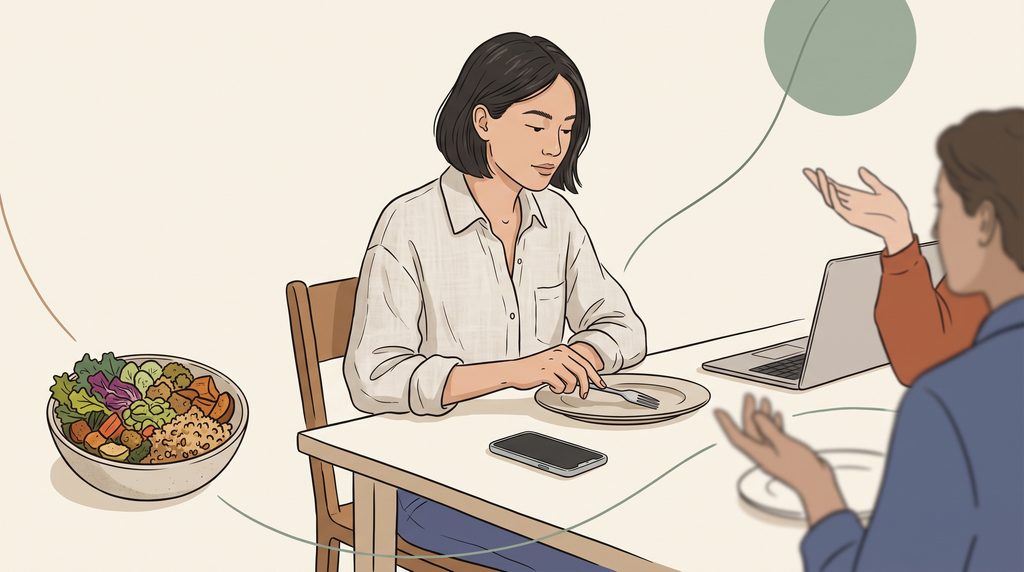
You might also reduce one source of distraction. A perfectly quiet, screen-free meal may not be practical, but you could step away from your computer for the first few minutes or place your phone out of sight while you begin eating.
Near the middle of the meal, briefly notice whether you still feel hungry, whether the pace feels rushed, and whether you would like to continue at the same speed.
READ MORE:
Adapt the Habit to Busy Days
Some days do not allow a long or peaceful meal.
During a short break, choose one adjustment instead of trying to slow every bite. You might spend the first few minutes away from email, take slightly smaller bites, or pause once before finishing.
During family meals, conversation may create natural pauses. When eating alone, a calm setting may make rushing less automatic.
A flexible habit is more useful than a rule that only works under perfect conditions.
Small Ways to Make a Meal Feel Less Rushed
| Everyday challenge | Small adjustment | What to notice |
|---|---|---|
| Eating while working | Step away from the screen for the first few minutes | Whether the meal feels less rushed |
| Taking large bites | Try a slightly smaller bite | Whether the pace feels more manageable |
| Finishing very quickly | Pause once near the middle of the meal | Hunger, fullness, and pace |
| Having a short break | Choose one adjustment instead of slowing every bite | Whether the change fits your schedule |
| Losing attention | Bring your attention back to the next few bites | Taste, texture, and pace |
What Eating Slowly Cannot Do
Eating more slowly is not a treatment for reflux, chronic indigestion, or other digestive conditions.
It also cannot guarantee that bloating, gas, discomfort, or overeating will stop. These experiences can have many causes, and people may respond differently to the same habit.
Most research on eating rate has focused on appetite, food intake, and eating behavior rather than relief of reflux, bloating, or indigestion. Findings about slower eating should therefore not be interpreted as proof that it will resolve a digestive symptom.
Slowing down may still be a reasonable everyday experiment. Keep the expectation modest: the purpose is to make the eating process less rushed and observe whether the adjustment feels useful.

When Digestive Symptoms Need More Attention
Recurring, worsening, or severe symptoms should not simply be blamed on eating too fast.
Contact a healthcare professional if you have difficulty or pain when swallowing, frequent or persistent vomiting, severe or constant abdominal pain, unexplained weight loss, or possible signs of gastrointestinal bleeding.
Blood in vomit or black, tarry stools can be signs of gastrointestinal bleeding and warrant prompt medical attention. Ongoing trouble swallowing also needs individualized evaluation rather than general advice about meal pace.
General eating habits may be one part of everyday wellness, but they do not replace appropriate medical care.
Frequently Asked Questions
How Long Should a Meal Take?
There is no universal meal length that works for everyone.
The type of food, your schedule, appetite, physical needs, and dining setting can all affect how long a meal takes. Instead of aiming for a particular number of minutes, focus on whether you feel rushed and whether you have enough time to chew comfortably.
Should You Count How Many Times You Chew?
A fixed chew count is not necessary for most people.
Different foods require different amounts of chewing, and individual needs vary. A more practical approach is to notice whether you are rushing from one bite to the next.
People with dental problems or swallowing difficulties should seek individualized guidance.
Can Eating Slowly Help With Bloating or Acid Reflux?
It may make a meal feel less rushed, but it cannot be expected to stop bloating or acid reflux.
Gas, bloating, and reflux can have many causes. Frequent symptoms, swallowing problems, repeated vomiting, possible bleeding, or unexplained weight loss deserve professional evaluation.
Choose one meal this week and try making it a little less rushed. For a broader look at everyday digestive habits, explore our guide to gut health basics.
Medical note: This article provides general educational information and is not a substitute for individualized medical advice. Speak with a qualified healthcare professional about persistent digestive symptoms, severe pain, swallowing difficulties, repeated vomiting, unexplained weight loss, or signs of gastrointestinal bleeding.
Sources
- National Institute of Diabetes and Digestive and Kidney Diseases — Your Digestive System & How It Works
https://www.niddk.nih.gov/health-information/digestive-diseases/digestive-system-how-it-works - MedlinePlus — Mouth Disorders
https://medlineplus.gov/mouthdisorders.html - Robinson E, et al. — A Systematic Review and Meta-Analysis Examining the Effect of Eating Rate on Energy Intake and Hunger
https://pubmed.ncbi.nlm.nih.gov/24847856/ - Krop EM, et al. — Influence of Oral Processing on Appetite and Food Intake: A Systematic Review and Meta-Analysis
https://pubmed.ncbi.nlm.nih.gov/29408331/ - National Institute of Diabetes and Digestive and Kidney Diseases — Symptoms & Causes of Indigestion
https://www.niddk.nih.gov/health-information/digestive-diseases/indigestion-dyspepsia/symptoms-causes - National Institute of Diabetes and Digestive and Kidney Diseases — Symptoms & Causes of Gastrointestinal Bleeding
https://www.niddk.nih.gov/health-information/digestive-diseases/gastrointestinal-bleeding/symptoms-causes - MedlinePlus — Swallowing Disorders
https://medlineplus.gov/swallowingdisorders.html