Reaching bedtime does not always mean your mind and body are ready to slow down. Work, household tasks, screens, worries, or a changing schedule can make the transition into the night feel abrupt.
Simple relaxation techniques before bed may help create a calmer pause between daytime activity and rest. They are not a way to force sleep, and no single method feels right for everyone.
The options below include comfortable breathing, muscle relaxation, guided imagery, brief journaling, and other manageable ways to wind down. Start with one that fits how you feel tonight rather than trying to build a perfect routine all at once.
Quick Takeaways
- Relaxation is about creating a calmer transition, not making sleep happen on command.
- Different techniques may suit different kinds of tension or restlessness.
- Start with one short practice instead of building a complicated routine.
- Keep breathing and movement exercises comfortable.
- Stop or switch approaches if something feels unpleasant.
- Persistent sleep difficulties may be a reason to seek professional guidance.
Why a Calmer Transition Before Bed May Help
Relaxation techniques are practices intended to encourage a calmer physical and mental state. They may involve breathing, focused attention, imagery, or gradually releasing muscle tension. [1]
A brief wind-down practice can create some distance between an active day and going to bed. However, feeling calmer and falling asleep are not the same outcome. You may feel less tense and still remain awake for a while.
Evidence for relaxation techniques used alone for insomnia is limited and generally lower in quality than the evidence supporting cognitive behavioral therapy for insomnia, or CBT-I. Clinical guidance may still include relaxation therapy in some situations, but a general bedtime exercise is not the same as structured insomnia treatment. [2][3]
Keep in mind: Relaxation and falling asleep are not the same thing. A practice can feel calming without making sleep happen immediately.
Choose a Technique Based on What You Notice
You do not have to choose a bedtime relaxation technique because it is popular or seems more advanced. Begin by noticing what feels most prominent tonight.
Is your body tense? Does your mind keep returning to tomorrow’s tasks? Are you restless or having difficulty slowing down?
| What you notice | Technique to consider | Simple starting point |
|---|---|---|
| Physical tension | Progressive muscle relaxation | Focus on one area at a time |
| A busy mind | Brief journaling or guided imagery | Set aside a few quiet minutes |
| Difficulty slowing down | Slow, comfortable breathing | Keep the breath natural |
| Restlessness | Gentle stretching | Use easy, pain-free movements |
| No interest in a formal exercise | Calm reading or quiet audio | Choose something familiar |
This table is a practical starting point, not a diagnostic tool.
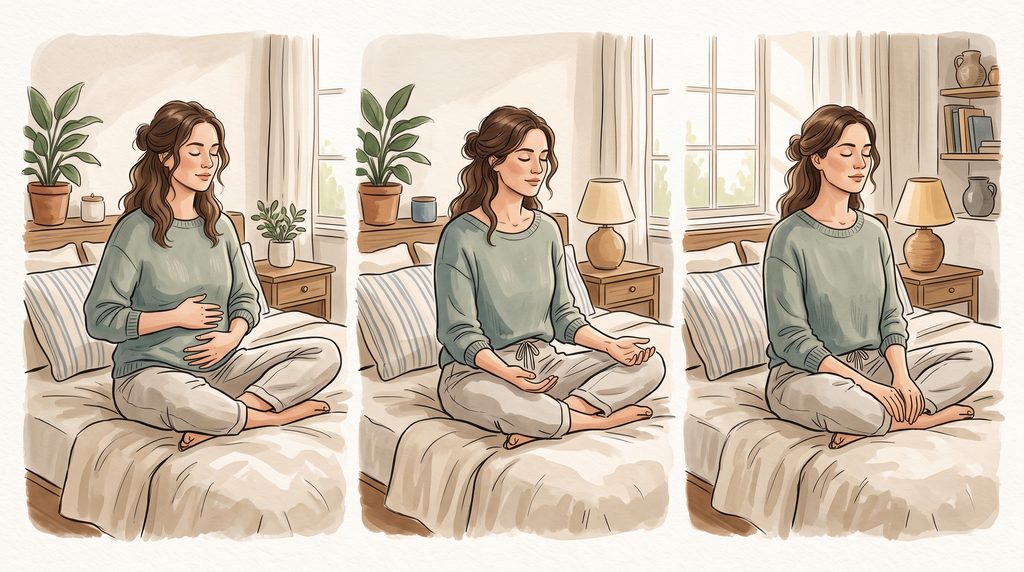
7 Simple Bedtime Relaxation Techniques
1. Slow, Comfortable Breathing
Breathing exercises before bed do not need to involve strict counting, long breath holds, or a complicated pattern. Sit or lie in a comfortable position and notice your natural breathing.
Let your breathing settle into a comfortable rhythm without trying to make each breath perfect. Return to your usual breathing if you feel dizzy, short of breath, anxious, or uncomfortable. Breathing exercises are one recognized form of relaxation practice. [1]
Try a smaller version: Take five comfortable breaths without trying to control them perfectly.
2. Progressive Muscle Relaxation
Progressive muscle relaxation generally involves gently tensing a group of muscles and then releasing that tension before moving to another area. [1]
You might begin with your shoulders, hands, or feet. Apply only light tension, pause briefly, and let the muscles soften. Notice the contrast without trying to create a dramatic feeling.
Skip any area that is painful, injured, or uncomfortable. You can also leave out the tensing step and simply notice whether you can soften one part of the body.
Try a smaller version: Notice your shoulders, let them soften, and pause before choosing another area.
3. A Short Body Scan
A body scan directs your attention through different parts of the body. It does not require you to clear your mind or remove every sensation.
Begin at your feet or head and move slowly through three or four areas. Notice pressure, warmth, tightness, or contact with the bed or chair.
Release only the tension you can soften comfortably. When your attention wanders, gently return to the next area.
4. Guided Imagery
Guided imagery involves picturing a place, object, or scene that you associate with calm or comfort. [1]
Choose a simple setting, such as a quiet porch, a familiar walking path, or a room where you feel at ease. Add a few sensory details: what you see, hear, or feel.
There is no need to create an elaborate story. Choose another technique if visualization feels distracting or uncomfortable.
5. Brief Journaling
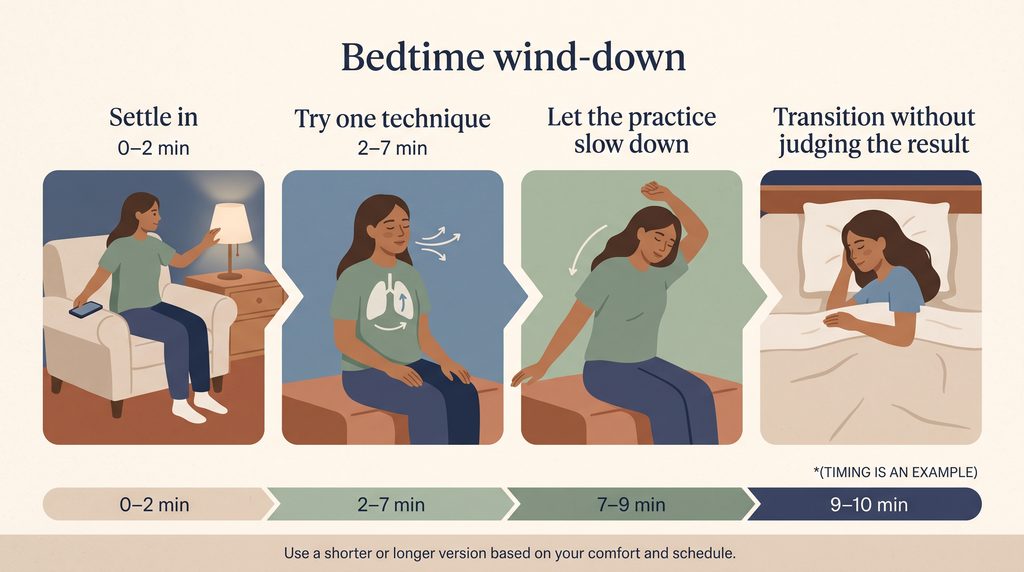
When unfinished tasks keep returning to your attention, you might write down a few of them and leave problem-solving for another time.
List several tasks for tomorrow, note one concern to revisit later, or write a sentence about something that can wait until morning. Keep the exercise practical and brief.
Keep it simple: The goal is not to solve every problem at night. It is to give unfinished thoughts a place to wait until tomorrow.
6. Gentle Stretching
Gentle stretching may feel appropriate when your body is restless or stiff after a day of sitting or repetitive activity.
Choose one or two slow movements that stay within a comfortable range. Avoid bouncing, pushing deeper, or continuing through pain.
This is not the time for an intense workout or for trying to treat an injury. Skip any movement that does not feel right for your body.
READ MORE:
Caffeine and Sleep: Timing, Sensitivity and Better Daily Choices
7. Calm Reading or Quiet Audio
Calm reading or quiet audio may feel more approachable for people who do not enjoy formal relaxation exercises.
Choose something familiar and low-key rather than work, suspenseful content, or news that keeps you engaged. Keep the volume comfortable and reduce screen brightness when a screen is necessary.
A quieter, less stimulating bedroom may also make this type of wind-down activity easier to maintain.
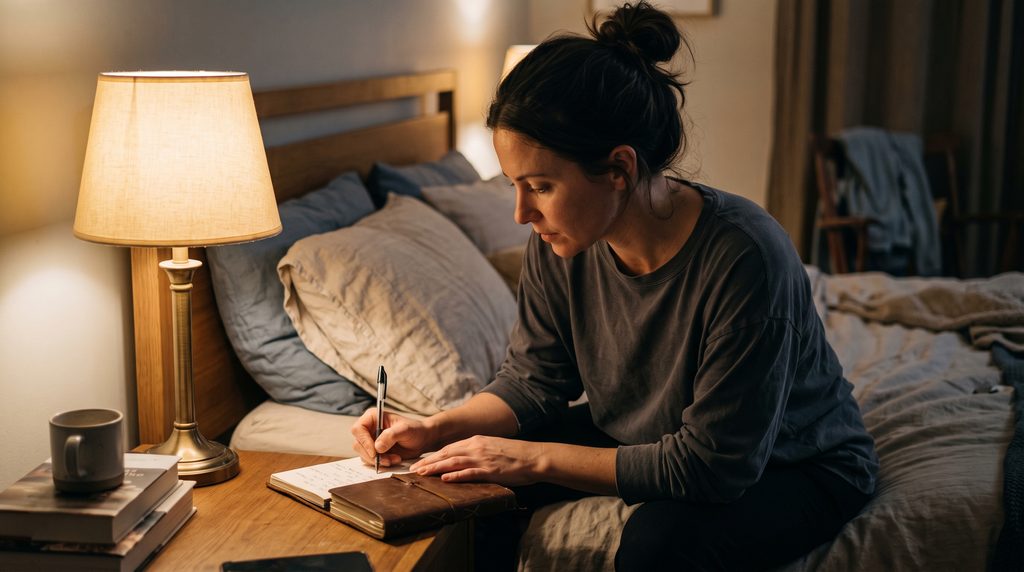
How to Create a Flexible 10-Minute Wind-Down Practice
Ten minutes is only an example, not an ideal duration or medical recommendation. Your version might take two minutes, five minutes, or longer depending on the evening.
- Settle in. Put aside immediate distractions and choose a comfortable position.
- Choose one technique. Avoid testing several new exercises at the same time.
- Practice for a few minutes. Keep your breathing and movements natural.
- Let the practice slow down. Avoid immediately switching to another stimulating activity.
- Move on without grading the result. Feeling calmer can still be worthwhile when sleep does not follow right away.
Start here: Choose one technique and try the smallest version of it. A short, repeatable practice may feel more realistic than a complicated routine.
A Simple Bedtime Relaxation Checklist
- Choose one technique.
- Keep the practice comfortable.
- Start with a short version.
- Stop if something feels unpleasant.
- Avoid judging the result immediately.
What to Do When a Technique Does Not Feel Relaxing
A relaxation exercise should not become another task you force yourself to complete.
Breath-focused exercises may make some people more aware of discomfort. Silence may make thoughts feel more noticeable. Visualization may feel artificial, and muscle exercises may not be appropriate around painful areas.
Relaxation practices can occasionally be associated with increased anxiety, intrusive thoughts, or other unwanted reactions. [1]
Stop and switch approaches: If a practice feels distressing or brings up unwanted thoughts, stop and choose another activity. If controlled breathing makes you dizzy or short of breath, return to your normal breathing pattern.
You might replace breathing practice with quiet reading, perform muscle relaxation without the tensing step, or shorten a body scan to three areas.
Changing approaches does not mean you failed. It means you learned something about what feels more or less comfortable for you.
Common Mistakes That Can Make Relaxation Feel Harder
Try to avoid turning the process into a test of whether you are “good at” relaxing.
Common sources of friction include:
- trying several techniques at once;
- expecting immediate sleep;
- forcing or holding the breath;
- using painful or intense movements;
- choosing audio or reading that feels stimulating;
- turning the routine into another task to complete perfectly.
Other factors may also shape the evening. For example, caffeine consumed later in the day may still affect some people around bedtime.
When to Talk With a Healthcare Professional
Persistent sleep difficulties deserve more than another relaxation tip. Talk with a qualified healthcare professional when sleep problems continue or interfere with work, school, driving, concentration, or other daily activities. [4]
Significant daytime sleepiness, regularly waking without feeling refreshed, frequent loud snoring, gasping, or observed pauses in breathing during sleep are also reasons to seek guidance. These signs do not confirm a diagnosis, but they can be important to discuss with a healthcare professional. [5]
Do not stop or change medication because of sleep concerns without speaking with an appropriate healthcare professional.
Medical note: This article provides general educational information and is not a substitute for individualized medical advice. Talk with a qualified healthcare professional about persistent sleep difficulties, significant daytime sleepiness, loud snoring, gasping, or other breathing concerns during sleep.
Frequently Asked Questions
How long should I relax before bed?
There is no single duration that fits everyone. Begin with a few minutes and adjust according to your comfort, available time, and response.
What if breathing exercises make me uncomfortable?
Stop controlling the breath and return to your usual breathing pattern. Choose a different technique if the exercise continues to feel uncomfortable.
Do I need to meditate before sleep?
No. Meditation is only one option.
Comfortable breathing, progressive muscle relaxation, a short body scan, journaling, gentle stretching, calm reading, or quiet audio can all be considered as part of a personal wind-down routine.
Can relaxation techniques cure insomnia?
Relaxation techniques should not be presented as a cure for insomnia. Persistent sleep difficulties may require professional evaluation, and structured CBT-I is different from general bedtime relaxation tips. [2][3]
One Manageable Step for Tonight
You do not need to master every technique. Choose one approach that feels manageable, keep it comfortable, and adjust it as your routine changes.
Choose one technique that feels manageable tonight. Keep it comfortable, start small, and adjust it as your routine changes.
Sources
- National Center for Complementary and Integrative Health — Relaxation Techniques: What You Need To Know
https://www.nccih.nih.gov/health/relaxation-techniques-what-you-need-to-know - National Center for Complementary and Integrative Health — Sleep Disorders and Complementary Health Approaches
https://www.nccih.nih.gov/health/sleep-disorders-and-complementary-health-approaches - National Center for Complementary and Integrative Health — Psychological and Physical Approaches for Sleep Disorders: What the Science Says
https://www.nccih.nih.gov/health/providers/digest/psychological-and-physical-approaches-for-sleep-disorders-science - National Heart, Lung, and Blood Institute — Insomnia Diagnosis
https://www.nhlbi.nih.gov/health/insomnia/diagnosis - National Heart, Lung, and Blood Institute — Sleep Apnea Symptoms
https://www.nhlbi.nih.gov/health/sleep-apnea/symptoms