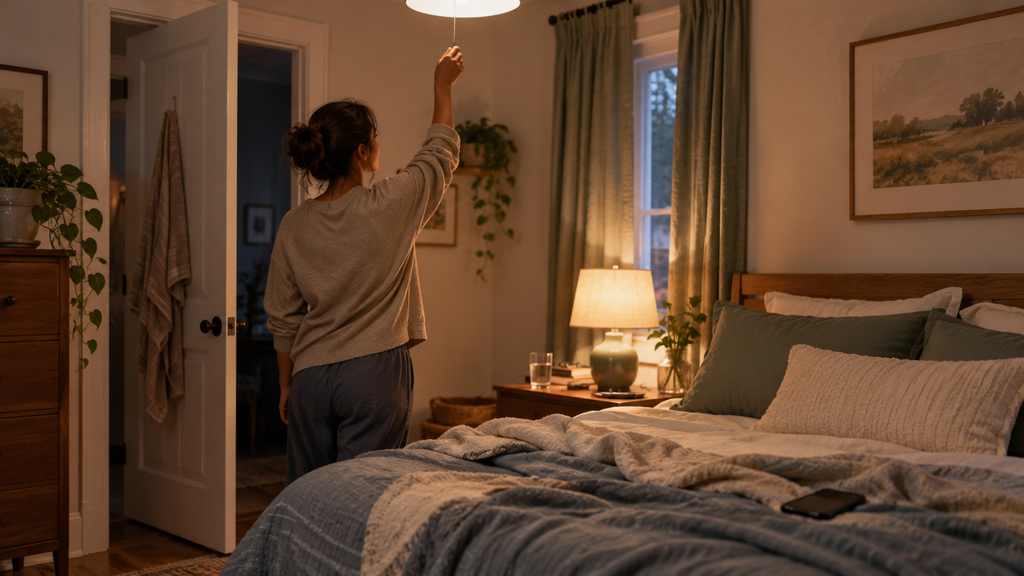
Your day may be over, but your mind, surroundings, and unfinished tasks do not always slow down at the same pace. Moving directly from work, household responsibilities, or scrolling into bed can make the evening feel like an extension of the day.
A few simple evening habits may create a clearer transition toward bedtime. You do not need to adopt all 10 ideas or build a perfect routine. Start with one or two habits that address the busiest part of your evening, then adapt them to your schedule.
Quick Takeaways
- You do not need a long or elaborate routine to start winding down.
- Closing unfinished tasks may make the end of the day feel more defined.
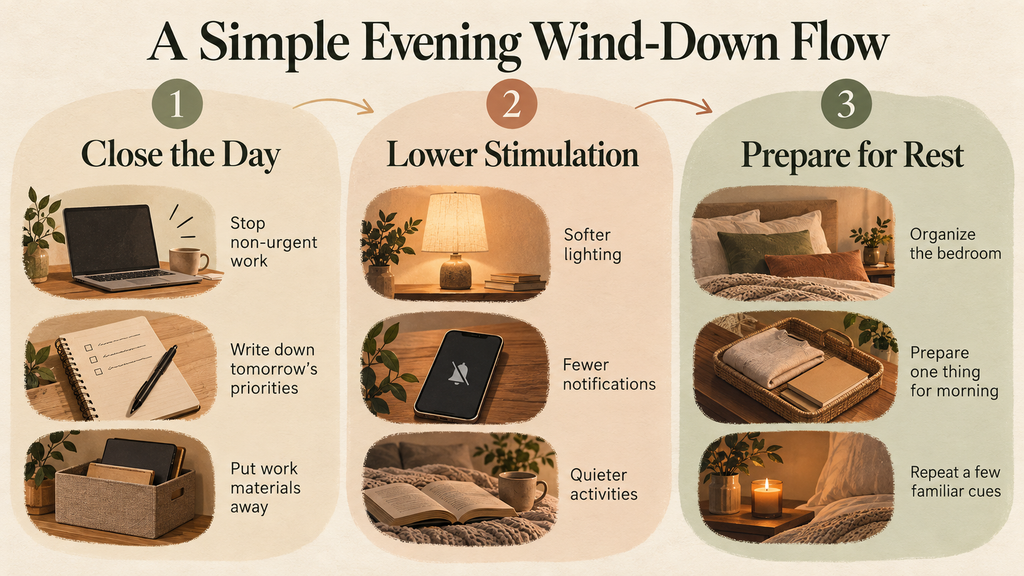
- Softer lighting, fewer notifications, and quieter activities can reduce evening stimulation.
- Choose habits that work on an ordinary night, not only on an ideal one.
- Speak with a healthcare professional if sleep problems occur regularly.
Why Winding Down Can Take Time
Stopping work does not automatically create a sense of rest. Bright lighting, messages, household tasks, and thoughts about tomorrow may keep the evening feeling active after your main responsibilities are finished.
The National Heart, Lung, and Blood Institute recommends using the period before bed for quiet time and avoiding bright artificial light.
Keep in mind: A wind-down routine can make the transition toward bedtime feel more intentional, but it cannot guarantee when sleep will begin.
10 Evening Habits to Help You Wind Down
Use these habits as options rather than a rigid checklist. Start with the part of your evening that feels most active.
1. Choose a Clear Stopping Point for the Day
Select an approximate point when you will stop non-urgent work, chores, or planning. It does not have to happen at exactly the same minute every night.
Create a visible ending by closing your laptop, putting papers away, or clearing the space where you worked. This simple boundary may make the transition out of the active part of the day feel clearer.
Small way to try it: Close your work materials and decide which task you will return to first tomorrow.
2. Write Down Tomorrow’s Main Tasks
Unfinished tasks may still come to mind when the day becomes quiet. Instead of developing a detailed plan at bedtime, write down a few priorities or reminders and leave them for the morning.
In a small laboratory study of 57 healthy young adults, participants who spent five minutes writing a specific to-do list fell asleep faster than participants who wrote about completed tasks. The study was limited in size and setting, so it does not show that bedtime writing will work for everyone or treat a sleep problem.
Small way to try it: Write down tomorrow’s first task and anything important you are concerned about forgetting.
3. Soften the Lighting
Lighting that works well for cooking, cleaning, or finishing paperwork may feel too bright later in the evening.

Bright artificial light late in the evening can interfere with the sleep-wake process, according to the NHLBI. When it is practical and safe, consider turning off one bright overhead light and using a softer lamp instead.
You do not need a special bulb or complicated lighting system. The goal is simply to make the environment feel less like the middle of an active day.
4. Create a Screen Stopping Point
A screen stopping point does not have to mean turning off every device at a fixed time. It can mean deciding when you will stop answering work messages, checking news, gaming, or opening new social media content.
Official guidance recommends limiting bright artificial light from devices before bed. Screen use may also involve notifications, emotionally engaging content, and activities that extend the time spent awake.
A study involving young adolescents found that screen use while already in bed—particularly interactive use—was associated with later sleep and less total sleep. Because the participants were adolescents, those findings should not be applied directly to all adults.
Small way to try it: Keep using your phone as an alarm or accessibility tool if needed, but stop opening new work, news, gaming, or social media content.
5. Replace High-Energy Tasks With Something Gentler
You do not have to stop doing everything at once. Try changing the pace of what you are doing.
Reading a few pages, listening to quiet music, completing your usual personal-care routine, or doing a small amount of uncomplicated tidying may feel less activating than work messages, breaking news, or an unfinished project.
NHLBI guidance includes quiet time, a warm bath, and relaxation practices among the options people may consider before bed. These are examples, not requirements.
READ MORE:
6. Prepare One or Two Things for the Morning
A few minutes of preparation can make tomorrow feel more organized without turning bedtime into another productivity session.
Set out clothes, place your keys in their usual spot, pack your work bag, or prepare one item needed for breakfast. Focus on whatever usually creates unnecessary rushing in the morning.
Small way to try it: Prepare only one item—the one you are most likely to search for when you are tired or in a hurry.
7. Make the Bedroom Feel Ready for Rest
A bedroom does not need to look perfect, but a few adjustments can make it feel more separate from the rest of the day.
Consider reducing unnecessary light, addressing distracting noise when possible, and keeping the room at a comfortable temperature. NHLBI guidance generally recommends keeping the bedroom quiet, cool, and dark.

People who share a room, live in a small home, or work from the bedroom may not be able to change the entire environment. Even putting work materials out of view or preparing the bed can create a useful boundary.
8. Pick One Quiet, Repeatable Activity
Choose one simple activity that can become a familiar evening cue. It might be reading a paperback, listening to calm music, taking a shower, completing your skin-care routine, or sitting quietly for a few minutes.
The activity does not have to make you sleepy. Its purpose is to give the final part of the evening a quieter, more predictable focus.
Avoid choosing something so complicated that you will skip it on busy nights. A few pages of a book may be more realistic than expecting yourself to complete a long relaxation routine.
9. Keep Late-Evening Decisions Simple
Starting new projects and making several small decisions can allow the active part of the day to continue longer than planned.
Consider choosing a short sequence before the evening becomes busy. For example, you might prepare for the morning, complete your personal-care routine, and then read.
A predictable sequence should reduce decisions, not become another rule you can fail to follow. Change it when work, family responsibilities, travel, or health needs make the usual order impractical.
10. Repeat the Same Few Cues Most Nights
Consistency does not mean completing 10 steps perfectly. It can mean repeating the same two or three cues on many ordinary nights.
You might soften the lighting, put your phone on silent, and read for a few minutes. On a busier evening, you may do only one of those things.
General sleep guidance encourages relatively consistent sleep schedules and relaxing bedtime routines, but individual circumstances vary. Shift workers, caregivers, parents, and people with changing schedules may need a more flexible approach.
How to Choose Which Habits to Try First
Begin with the part of the evening that creates the most friction. Someone who continues working may benefit from a stopping point. Someone who keeps remembering errands or unfinished tasks may prefer a short written list.
Use this four-step process:
- Notice what keeps your evening feeling active.
- Choose one habit that responds to it.
- Make the habit smaller than you think it needs to be.
- Repeat it on several ordinary evenings before adding another.
Start here: Choose one habit that helps close the day and one that lowers stimulation. Keep both small enough to repeat on an ordinary evening.
A Small Wind-Down Starter Checklist
- I chose one habit that closes the day.
- I chose one habit that lowers stimulation.
- I chose one small action that makes the evening easier.
- I picked a smaller version for busy nights.
- I am not trying to change everything at once.
Evening habits cannot replace making enough time for sleep.
When Evening Habits May Not Be Enough
General sleep habits may support a calmer routine, but they are not a substitute for evaluation or treatment of a sleep disorder.
Speak with a qualified healthcare professional if sleep difficulties persist, interfere with daily life, or create safety concerns. The Centers for Disease Control and Prevention advises talking with a healthcare provider if you regularly have problems sleeping or notice possible signs of a sleep disorder.
Medical note: This article provides general educational information and is not a substitute for individualized medical advice. Speak with a qualified healthcare professional if sleep difficulties persist, affect your daily functioning, or raise safety concerns.
Frequently Asked Questions
How long should an evening wind-down routine be?
There is no single length that suits everyone. Official guidance suggests using the hour before bed for quiet time, but a shorter routine may be more realistic for your schedule. Treat that period as general guidance rather than an exact rule.
What can I do instead of scrolling before bed?
Try reading a few pages, listening to quiet music, preparing something for the morning, or completing your usual personal-care routine. Choose an activity that does not lead you into more messages, decisions, or unfinished tasks.
Can writing a to-do list help me wind down?
It may help some people record future tasks so they do not have to keep mentally revisiting them. One small laboratory study found that writing a specific to-do list was associated with falling asleep faster, but the result does not prove that the practice works for everyone.
A Calmer Evening Can Start Small
You do not need to redesign your entire night. Choose one habit that gives the day a clearer ending and another that lowers stimulation. Keep both simple enough to use when the evening is busy or imperfect.
Choose one or two habits that feel manageable and adapt them as your schedule changes.
Sources
- National Heart, Lung, and Blood Institute — Healthy Sleep Habits
https://www.nhlbi.nih.gov/health/sleep-deprivation/healthy-sleep-habits - National Heart, Lung, and Blood Institute — Your Sleep/Wake Cycle
https://www.nhlbi.nih.gov/health/sleep/sleep-wake-cycle - National Heart, Lung, and Blood Institute — Get Enough Good-Quality Sleep
https://www.nhlbi.nih.gov/health/heart-healthy-living/sleep - Centers for Disease Control and Prevention — About Sleep
https://www.cdc.gov/sleep/about/index.html - Scullin MK et al. — The Effects of Bedtime Writing on Difficulty Falling Asleep: A Polysomnographic Study Comparing To-Do Lists and Completed Activity Lists
https://pubmed.ncbi.nlm.nih.gov/29058942/ - Brosnan B et al. — Screen Use at Bedtime and Sleep Duration and Quality Among Youths
https://pubmed.ncbi.nlm.nih.gov/39226046/