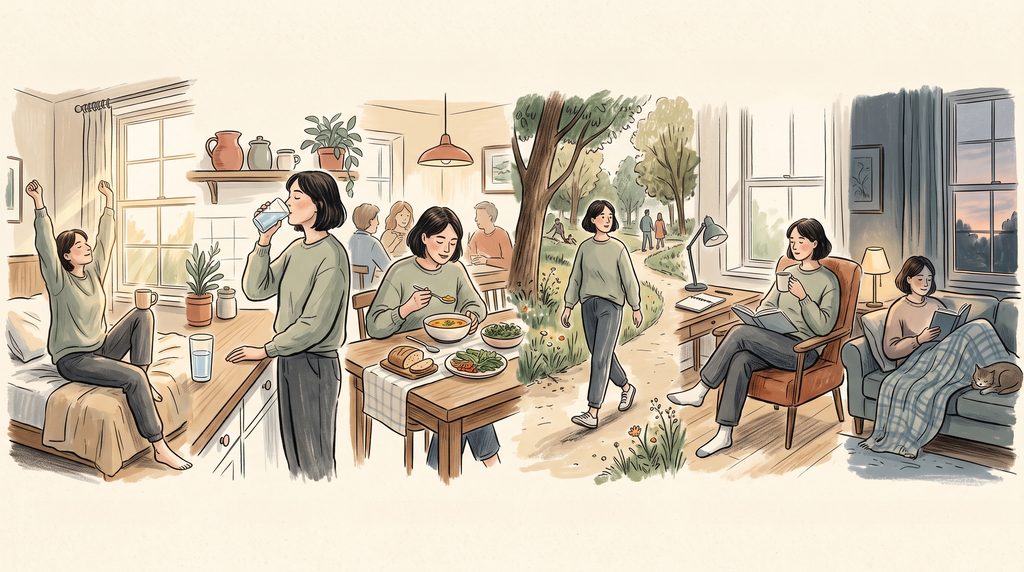
Spending a long stretch at a desk can leave you feeling less alert or engaged. A short movement break may provide a useful change of pace by interrupting prolonged sitting, although the effect can vary from person to person.
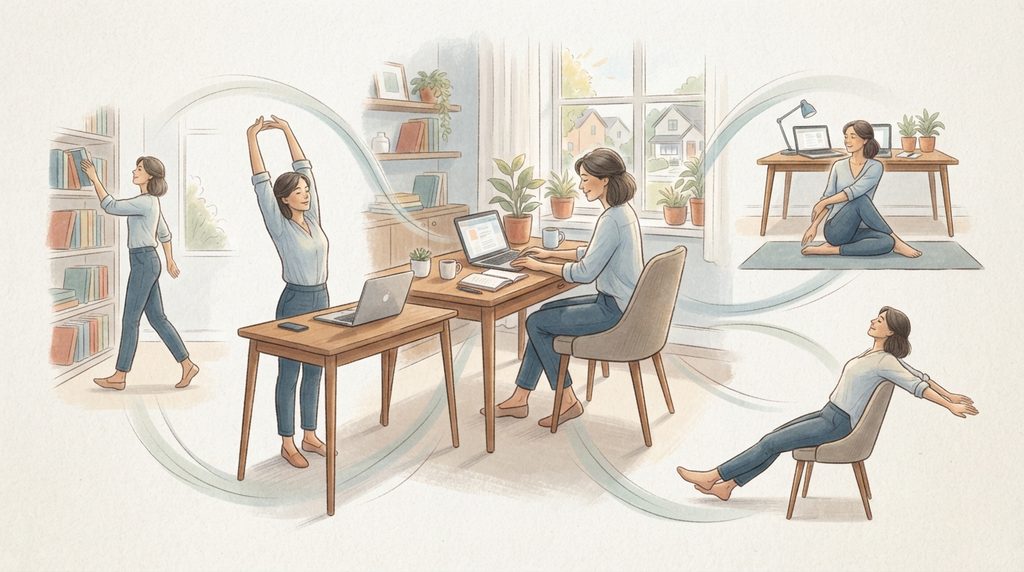
A break might involve standing, walking briefly, changing position, or choosing a comfortable seated movement. It does not need to become a workout.
Federal physical activity guidance encourages adults to move more and sit less throughout the day. That broad recommendation does not establish one ideal break schedule, but it supports looking for realistic opportunities to interrupt sedentary periods.
This guide explains what counts as a movement break, what research suggests about alertness, and how to connect movement with transitions already built into your day.
Quick Takeaways
- Short movement breaks can interrupt long periods of sitting or inactivity.
- Some people may feel more alert after moving, but research findings are not consistent in every setting.
- A break does not need to be intense or require special equipment.
- Finishing a call or changing tasks can serve as a practical reminder to move.
- Persistent tiredness that affects daily life may be a reason to seek medical guidance.
What Counts as a Short Movement Break?
A movement break is a brief interruption in a period of sitting or low activity. You might stand, walk to another room, change your position, or move your arms and legs in a comfortable way.
The break can be planned, such as moving between study sessions, or spontaneous, such as standing after a phone call. No special clothing or exercise space is required.
There is no single duration that automatically makes a movement break effective for alertness. Research has tested different activities, intensities, schedules, and populations, so one experimental routine should not be treated as a universal rule.
Can Movement Breaks Help You Feel More Alert?
Movement breaks may help some people feel more alert or less fatigued after prolonged sitting. The evidence is promising in certain settings, but it does not show that every type of break will produce the same result.
What the Research Suggests
A 2022 systematic review examined seven studies on interrupting prolonged sitting and cognitive performance. Three reported improvements in some measures, including attention or working memory, while the others did not find the same pattern. The activities and break schedules also differed considerably.
Another systematic review and meta-analysis found possible cognitive benefits from exercise breaks during prolonged sitting, but the findings varied by outcome and study design.
A practical conclusion is that movement may help some people return to a task feeling more engaged, but it should not be presented as a guaranteed energy or concentration boost.
Why the Effect May Differ
How you feel after a break may depend on:
- how long you have been sitting;
- the activity you choose;
- your sleep;
- the time of day;
- the demands of the task;
- your usual activity level;
- your health and mobility;
- your individual response.
A short walk might feel refreshing one afternoon and make little noticeable difference on another. Movement is only one of several factors that can influence daytime alertness.
What Research Can—and Cannot—Tell Us
| What research suggests | What it does not establish |
|---|---|
| Activity breaks may support certain cognitive or fatigue outcomes in some settings. | That one schedule or type of break works for everyone. |
| Moving more and sitting less aligns with federal guidance. | That short breaks replace regular physical activity. |
Movement Breaks Are Not a Replacement for Exercise
A movement break offers a simple way to interrupt a long period of inactivity. It can complement regular physical activity, but it does not replace it.
Current guidance recommends that adults get at least 150 minutes of moderate-intensity aerobic activity each week and complete muscle-strengthening activities on at least two days. Activity can be divided into smaller amounts across the week.
People who cannot meet the full recommendations can still begin with activity that fits their abilities and circumstances. The goal of a short break is not to complete an entire fitness routine but to create another opportunity for everyday movement.
Simple Movement Break Ideas for Work, Study, and Home
A practical starting option is one that fits your surroundings and feels comfortable.
At a Desk
You might:
- stand after completing a task;
- walk to refill your water;
- change your seated position;
- walk during a phone call when it is safe;
- move your shoulders or arms comfortably.
While Studying
Try moving between natural study blocks instead of interrupting yourself in the middle of a task.
You could walk briefly before opening the next assignment, change study locations, or stand while reviewing a short section of notes when standing is comfortable.
At Home
Consider walking during a natural television break, completing a small household task between activities, or standing before beginning the next episode of a show.
The goal is to create an opportunity to change position—not to turn every pause into a workout.
During a Safe Travel Stop
During a long drive, wait until you are safely parked before standing or walking. A planned rest stop can provide a natural opportunity for a brief break.
Do not follow movement prompts while driving.
READ MORE:
When Standing Is Not Practical
A seated break might involve changing position, moving your feet, lifting your heels, or moving your arms within a comfortable range.
Different types of movement should not be assumed to have identical effects. Choose an option that fits your mobility needs.

Movement Break Ideas for Different Parts of the Day
| Situation | Flexible option | Natural cue | Keep in mind |
|---|---|---|---|
| Desk work | Stand, change position, or walk briefly | After finishing a task | Avoid uncomfortable movements |
| Studying | Move between study blocks | Before starting the next assignment | Keep the first version manageable |
| At home | Walk or complete a small household task | During a natural pause | Intensity is not the goal |
| Travel | Move during a safe stop | At a planned break | Wait until you are safely parked |
| When standing is not practical | Choose a comfortable seated option | When changing activities | Individual needs vary |
How to Build Movement Around Natural Transitions
Instead of creating a strict schedule, connect the break to something that already happens during your day.
Choose One Existing Cue
A cue might be:
- finishing a phone call;
- sending a report;
- completing a work task;
- refilling your water;
- ending a study block;
- reaching a natural break in a show.
Choose one that is easy to recognize without becoming disruptive.
Start With One Part of the Day
You do not need to add movement breaks to your entire schedule at once.
Begin with one period when you regularly stay seated, such as the first part of your workday or an afternoon study block. Try one small change before adding more.
Keep the Break Flexible
One day, you might walk to another room. On another, you might stand or change position.
Allow the routine to change when your schedule, environment, or mobility needs change.
Use Reminders Carefully
A calendar notification or phone alarm can be useful, but it is optional. No particular app or device is necessary.
When a reminder repeatedly arrives at an inconvenient time, adjust it or choose a cue that fits your day more naturally.
Choose a Realistic Starting Cue
- After a phone call
- Between work tasks
- When refilling water
- After a study block
- During a television break
- At a safe stop during a long trip
A Flexible Five-Step Movement Break Plan
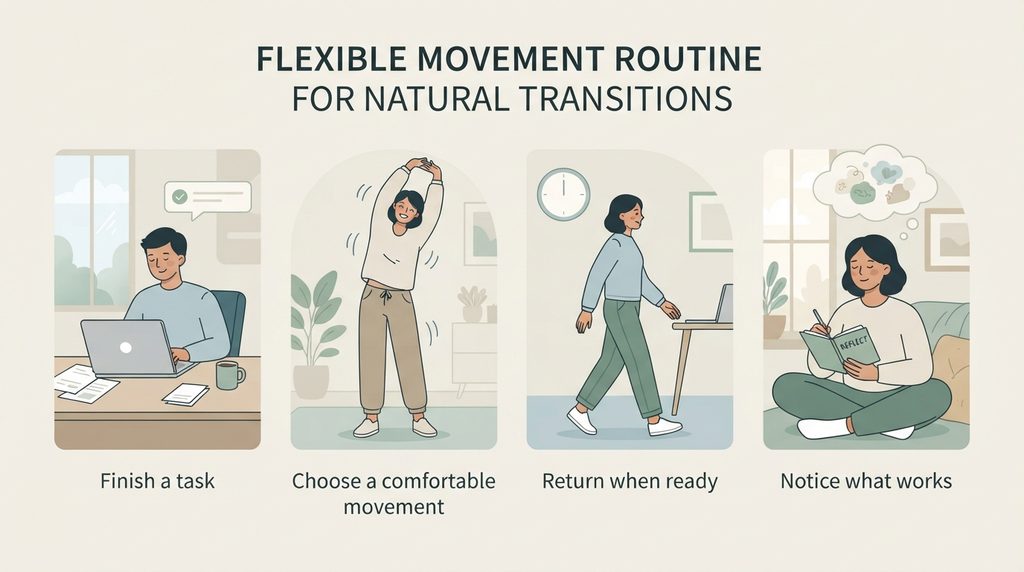
- Notice where you stay still the longest. Choose one ordinary part of your day rather than trying to change everything.
- Select a natural transition. Finishing a task or call may be easier to recognize than waiting for an arbitrary alarm.
- Choose a comfortable movement. This could be standing, walking briefly, changing position, or using a seated option.
- Keep the first version small. The break does not need to be long or perfectly timed.
- Notice what works. Adjust the cue or movement when your routine changes.
Common Expectations to Avoid
Expecting a Break to Replace Sleep
Movement may provide a brief change of pace, but it cannot compensate for consistently inadequate sleep.
Assuming One Schedule Fits Everyone
Studies have tested different activities, break lengths, frequencies, and intensities. Those experimental protocols do not establish that everyone needs to move every 30 minutes—or at any other fixed interval.
Look for opportunities that fit your circumstances rather than treating one schedule as mandatory.
Choosing Movements That Feel Uncomfortable
A movement break should not require pushing through discomfort or instability. Choose an option that feels comfortable and fits your mobility needs.
People with health conditions or concerns about changing their activity routine may benefit from individualized guidance.
Treating Every Energy Dip as a Sitting Problem
Tiredness may have many contributors, including insufficient sleep, emotional stress, medications, and health conditions. A movement break cannot identify or address every possible cause.
When Tiredness May Need More Attention
A movement break is not a substitute for medical evaluation.
Consider speaking with a qualified healthcare professional if fatigue lasts for several weeks, interferes with daily activities, or does not improve despite adequate sleep and basic self-care. Persistent tiredness can have many possible causes, so individual evaluation may be needed.
Medical note: This article provides general educational information and is not a substitute for individualized medical advice. Speak with a qualified healthcare professional about persistent tiredness, symptoms that affect daily life, or concerns about changing your activity routine.
Frequently Asked Questions
How long should a movement break be?
There is no single duration that has been shown to be ideal for everyone. Studies have tested different break lengths and schedules, so a practical approach is to begin with a brief, manageable pause and adjust it to your day.
How often should you take a break from sitting?
Federal guidance encourages adults to move more and sit less, but it does not establish one fixed interval for every person. Look for realistic opportunities to interrupt long periods of sitting rather than treating one schedule as mandatory.
Can seated movement count as a movement break?
Changing position or moving while seated can be a practical option when standing is not comfortable or possible. Different movements may not produce identical effects, so choose an option that fits your abilities and circumstances.
Start With One Small Break
You do not need to redesign your entire day. Start with one comfortable break and adjust it as your routine changes.
A small opportunity to stand, walk, or change position can be a manageable addition to a more active day.
Start with one comfortable movement break today and adjust it as your schedule changes.
Sources
- Office of Disease Prevention and Health Promotion — Physical Activity Guidelines for Americans: Top 10 Things to Know
https://odphp.health.gov/our-work/nutrition-physical-activity/physical-activity-guidelines/current-guidelines/top-10-things-know - Centers for Disease Control and Prevention — Adult Activity: An Overview
https://www.cdc.gov/physical-activity-basics/guidelines/adults.html - Chueh et al. — Acute Effect of Breaking Up Prolonged Sitting on Cognition: A Systematic Review
https://pubmed.ncbi.nlm.nih.gov/35292487/ - The Acute Effects of Physical Exercise Breaks on Cognitive Function During Prolonged Sitting: A Systematic Review and Meta-Analysis
https://pubmed.ncbi.nlm.nih.gov/35483298/ - MedlinePlus Medical Encyclopedia — Fatigue
https://medlineplus.gov/ency/article/003088.htm