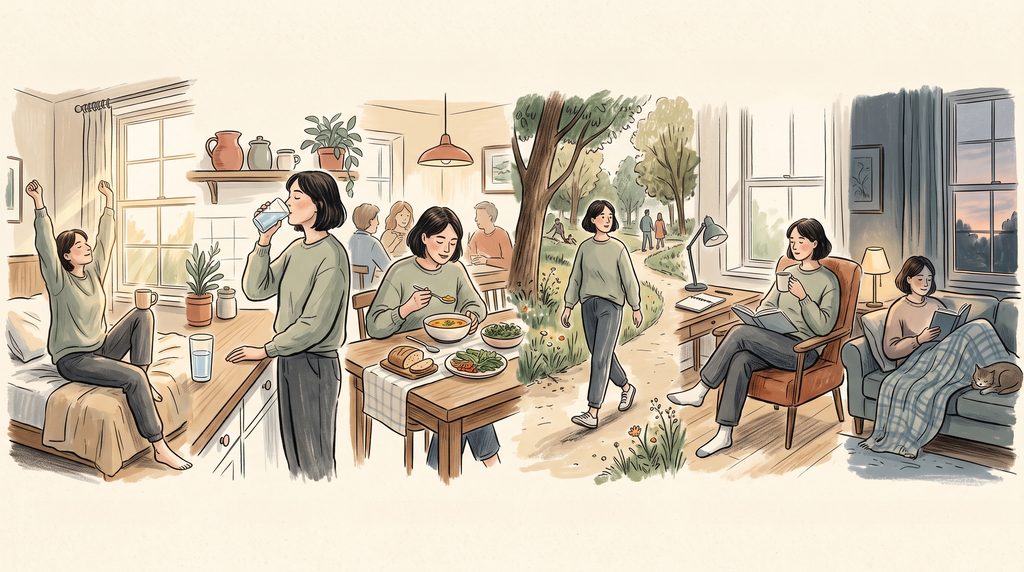
You may feel focused in the morning, slower in the afternoon, and ready to wind down by evening. These changes do not necessarily mean something is wrong.
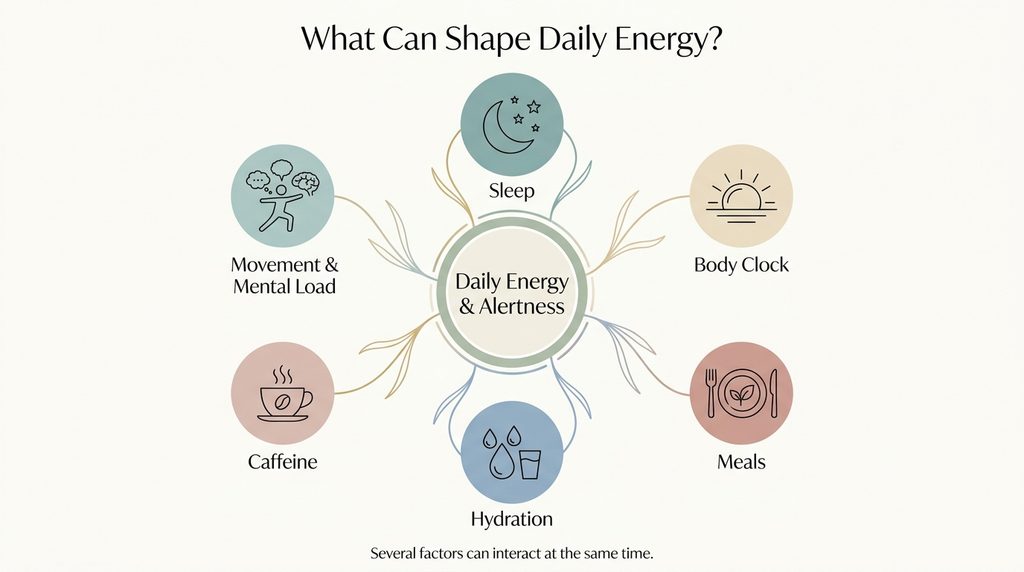
Daily energy can shift as your body clock and growing need for sleep interact with the way you slept and the demands of your day. Meals, caffeine, hydration, movement, and mental workload may also shape how alert you feel.
Circadian rhythms help organize physical, mental, and behavioral changes across an approximately 24-hour cycle. Light and darkness are important timing signals for this system, according to the National Institute of General Medical Sciences.
This guide explains why energy levels rise and fall during the day, what may make those changes more noticeable, and when ongoing fatigue deserves professional guidance.
Quick Takeaways
- Your body clock and the need for sleep that builds while you are awake both influence alertness.
- Sleep quality and schedule can make daytime energy changes more noticeable.
- Meals, hydration, caffeine, movement, and mental workload may affect how you feel.
- An afternoon energy dip is not always caused by lunch.
- Persistent, unexplained, or safety-related fatigue deserves professional attention.
Why Energy Is Not Constant All Day
In everyday conversation, “energy” usually describes how alert, focused, and physically capable you feel. It is not the same as metabolic energy measured in calories.
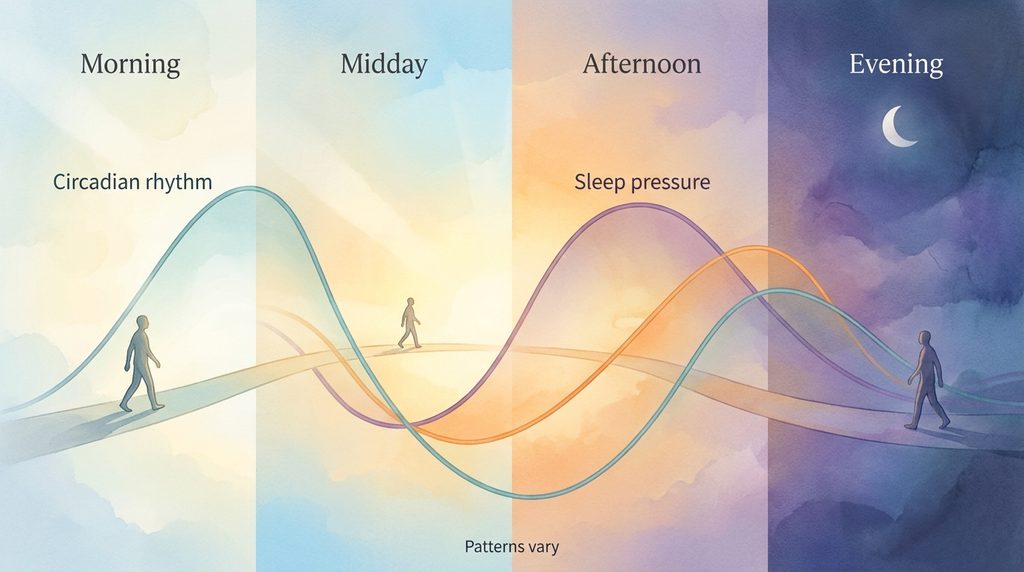
How energetic you feel can change with the time of day, the previous night’s sleep, and what you are doing. Two processes help explain much of this pattern: circadian timing and sleep pressure.
Your Circadian Rhythm Helps Set the Timing
Circadian rhythms are recurring changes that follow a roughly 24-hour cycle. Biological clocks help control these rhythms and respond to environmental signals, especially the daily pattern of light and darkness.
This timing system influences when you tend to feel more awake or sleepy. Your pattern may also reflect your sleep schedule, work hours, light exposure, and personal tendencies.
One person may feel mentally sharp soon after waking, while another reaches their best focus later in the day.
Sleep Pressure Builds While You Are Awake
Your need for sleep generally becomes stronger the longer you remain awake. Sleep reduces that pressure, while extended wakefulness allows it to build again.
Your body clock can help you stay alert even as the need for sleep increases. The balance between these systems changes throughout the day, so concentration and wakefulness may not remain perfectly steady.
Insufficient or poor-quality sleep can make normal changes in alertness more noticeable. The National Heart, Lung, and Blood Institute notes that sleep deficiency may leave you tired during the day and interfere with work, school, driving, and social activities.
Why You May Feel an Afternoon Dip
Research has observed a midafternoon decline in alertness or performance in some settings. This period is sometimes called the “post-lunch dip,” although its timing and intensity are not the same for everyone.
The dip may reflect the interaction between circadian timing and the sleep pressure that has accumulated since waking. The previous night’s sleep and the demands of the day may make it more noticeable.
A mild, predictable slowdown is different from intense sleepiness that repeatedly interferes with work, driving, or daily activities.
It Is Not Always Caused by Lunch
Despite its name, the post-lunch dip can occur even when a person has not eaten lunch. That means the meal itself is not always the sole cause.
Some people notice changes in alertness after eating, but the pattern can depend on the meal, the previous night’s sleep, and individual response. Rather than assuming one food is responsible, look for a repeated pattern.

Poor Sleep Can Make the Dip More Noticeable
A late bedtime, interrupted sleep, or an irregular schedule may leave you less refreshed the following day.
Sleep deficiency can reduce daytime alertness and make an ordinary afternoon slowdown harder to manage.
Everyday Factors That Can Shape Your Energy Pattern
Your body clock provides part of the explanation, but everyday circumstances may change how the pattern feels.
Factors That May Shape Daily Energy
| Factor | What It May Influence | What to Notice |
|---|---|---|
| Body clock | Timing of alertness and sleepiness | When you naturally feel more focused or slower |
| Sleep | Daytime alertness and concentration | Duration, interruptions, and schedule |
| Meals | Comfort and perceived energy | Timing and repeated patterns |
| Hydration | How tired or focused you feel | Thirst, activity, and climate |
| Caffeine | Temporary alertness and later sleep | Amount, timing, and sensitivity |
| Movement | How you feel after sedentary periods | Sitting time and activity breaks |
| Mental workload | Perceived mental fatigue | Demanding tasks, task switching, and breaks |
Sleep, Meals, and Hydration
Sleep is a useful place to start when looking at daytime alertness. Notice whether lower-energy days tend to follow shorter, interrupted, or irregular sleep.
Some people also notice changes after eating or after unusually long gaps between meals. Record the pattern without assuming that a particular food is always responsible.
Fluid intake is another factor worth noticing. Tiredness can occur with dehydration, particularly alongside signs such as thirst, dry mouth, darker urine, reduced urination, or dizziness. Fatigue has many possible causes, however, so tiredness alone does not show that you are dehydrated. The MedlinePlus dehydration guide provides additional information about common signs.
READ MORE:
Caffeine Timing and Sensitivity
Caffeine can temporarily increase alertness, but people vary in their sensitivity and in how quickly their bodies process it.
Too much caffeine may contribute to restlessness, shakiness, insomnia, anxiety, or other unwanted effects. Research also indicates that caffeine can affect later sleep, with the effect depending partly on timing and amount.
For some people, poor sleep may lead to greater caffeine use, while caffeine later in the day may make the next night less restful.
Instead of following a universal cutoff time, notice whether caffeine appears to affect your own sleep and next-day energy.
Movement and Mental Load
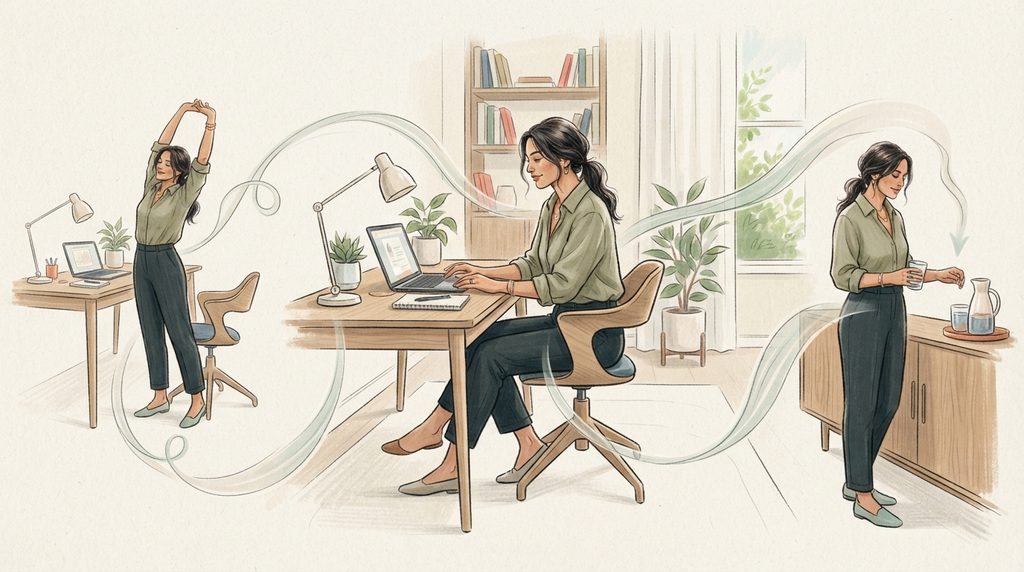
After sitting for a long period, a brief standing or movement break may be a manageable way to change pace. It should not be viewed as a treatment for persistent fatigue.
Mental work can also feel draining. Long periods of concentration, frequent task switching, and ongoing stress may leave you feeling depleted even when the work is not physically demanding.
How to Notice Your Daily Energy Pattern
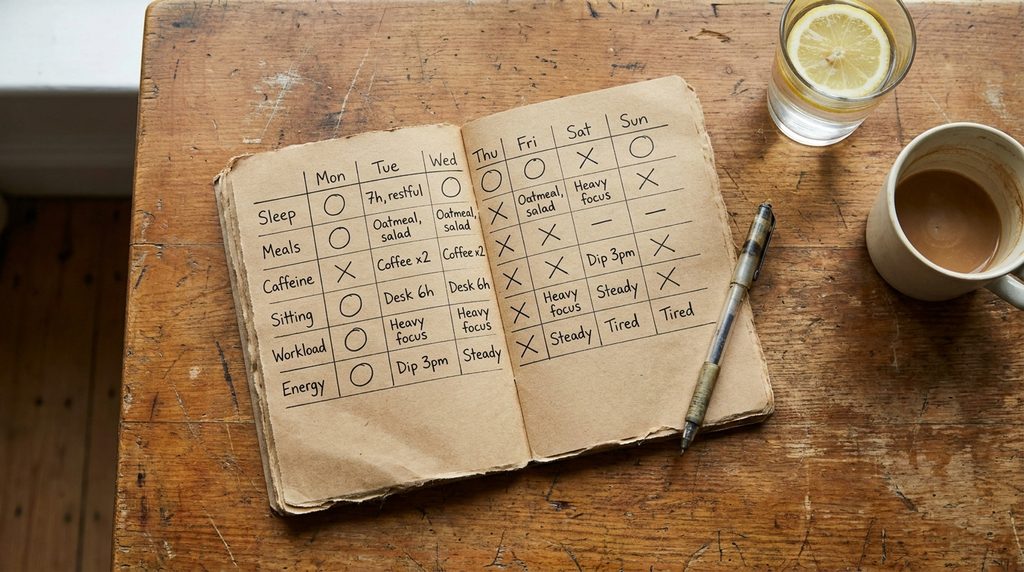
A short record can help you recognize context without turning every change into a problem to solve.
The goal is not to diagnose yourself. It is to notice patterns that may help you make a practical adjustment or ask better questions.
Start here: For one week, write down when your energy noticeably rises or falls and what was happening in the few hours beforehand. Keep the notes simple.
A One-Week Energy Pattern Check
- Note your usual sleep and wake times
- Mark noticeable rises or dips in alertness
- Record caffeine timing
- Note meals and unusually long gaps
- Mark long periods of sitting
- Add a brief note about workload or stress
Compare several days before deciding that a factor is consistently related to your energy. Workdays, weekends, travel, illness, and changes in routine may produce different patterns.
Small Ways to Support More Consistent Energy
You do not need to change your entire routine at once. Start with one factor that appears repeatedly in your notes.
Consider these manageable options:
- Keep sleep and wake times reasonably consistent when possible.
- Notice whether caffeine later in your day appears to affect sleep.
- Pay attention to hunger, thirst, and repeated meal patterns.
- Break up long periods of sitting with brief movement.
- Plan demanding tasks for times when you usually feel more alert.
- Change one part of your routine at a time.
These steps may help make your routine more predictable, but they cannot guarantee constant energy.
When Changes in Energy Deserve More Attention
Daily variation is not the same as persistent fatigue.
Fatigue can have many causes, including inadequate sleep, lifestyle circumstances, medications, and medical conditions. MedlinePlus advises contacting a healthcare professional when fatigue does not improve after several weeks.
Consider seeking guidance when low energy:
- persists or continues to worsen;
- is difficult to explain;
- interferes with work or everyday activities;
- begins after a medication change;
- appears with other new or concerning symptoms;
- makes you likely to fall asleep while driving or performing safety-sensitive tasks.
Sleep deficiency can impair alertness and interfere with safe driving. If you feel too sleepy to drive safely, stop driving and arrange another way to reach your destination.
Medical note: This article provides general educational information and is not a substitute for individualized medical advice. Speak with a qualified healthcare professional if fatigue is persistent, worsening, unexplained, or interfering with daily life. Do not drive or perform safety-sensitive tasks when you are too sleepy to do so safely.
Frequently Asked Questions
Is it normal for energy levels to change during the day?
Some change in alertness can occur as your circadian rhythm and sleep pressure interact. A predictable mild dip is different from ongoing fatigue or sleepiness that interferes with daily life.
Why do I feel tired in the afternoon?
A midafternoon slowdown may reflect daily biological timing, the need for sleep that has built since morning, and the previous night’s rest. Lunch may influence how you feel, but it is not always the sole cause.
When should I talk to a doctor about low energy?
Speak with a healthcare professional when fatigue persists for several weeks, worsens, has no clear explanation, or interferes with normal activities.
Prompt guidance is also important when sleepiness affects driving or other safety-sensitive tasks.
Your Daily Pattern Matters More Than a Perfect Routine
Your energy does not need to feel identical from morning to night.
Start by noticing when changes tend to happen and which everyday factors appear around them. One simple observation is usually more useful than trying to change sleep, meals, caffeine, hydration, and movement all at once.
If fatigue persists or interferes with daily life, a healthcare professional can help you look beyond everyday habits.
Notice when your energy tends to change and what was happening beforehand. For a broader view, explore our practical guide to everyday energy.
Sources
- National Institute of General Medical Sciences — Circadian Rhythms
https://www.nigms.nih.gov/education/fact-sheets/Pages/circadian-rhythms - National Institute of Neurological Disorders and Stroke — Understanding Sleep
https://www.ninds.nih.gov/health-information/public-education/brain-basics/brain-basics-understanding-sleep - National Heart, Lung, and Blood Institute — How Sleep Affects Your Health
https://www.nhlbi.nih.gov/health/sleep-deprivation/health-effects - National Heart, Lung, and Blood Institute — What Are Sleep Deprivation and Deficiency?
https://www.nhlbi.nih.gov/health/sleep-deprivation - Monk TH — The Post-Lunch Dip in Performance
https://pubmed.ncbi.nlm.nih.gov/15892914/ - U.S. Food and Drug Administration — Spilling the Beans: How Much Caffeine Is Too Much?
https://www.fda.gov/consumers/consumer-updates/spilling-beans-how-much-caffeine-too-much - Gardiner C, et al. — The Effect of Caffeine on Subsequent Sleep: A Systematic Review and Meta-Analysis
https://pubmed.ncbi.nlm.nih.gov/36870101/ - MedlinePlus — Dehydration
https://medlineplus.gov/dehydration.html - MedlinePlus — Fatigue
https://medlineplus.gov/fatigue.html