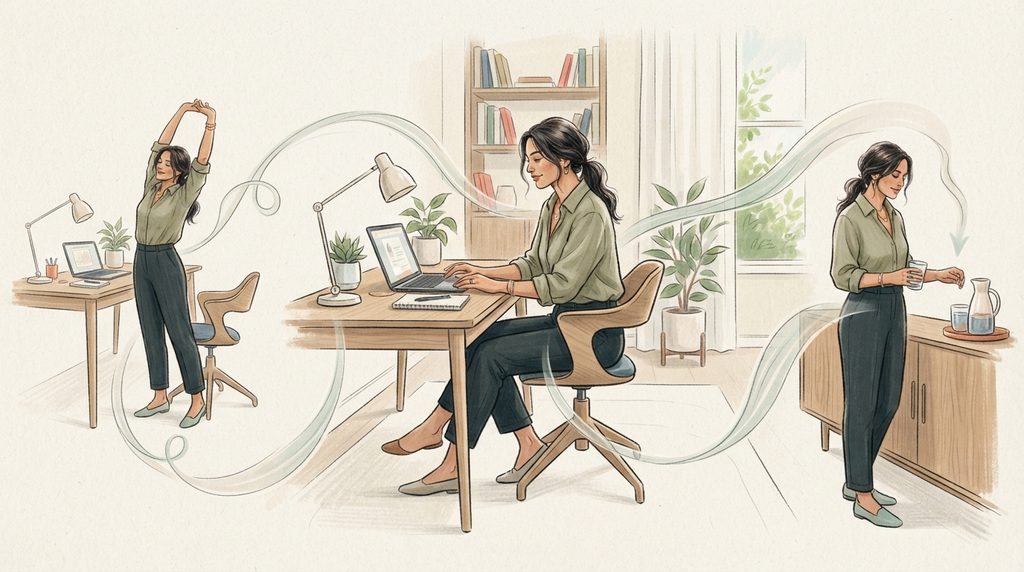
Having more consistent energy throughout the day usually depends on more than one habit. Sleep, meals, hydration, movement, light, caffeine and mental workload can all affect how alert or tired you feel at different times.
That does not mean you need to rebuild your entire routine. A more useful starting point is to notice when your energy changes and which part of your day may be creating the most friction.
This guide explains the foundations of everyday energy, offers realistic ways to observe your patterns and clarifies why ongoing fatigue deserves more than another cup of coffee.
Quick Takeaways
- Energy naturally changes throughout the day.
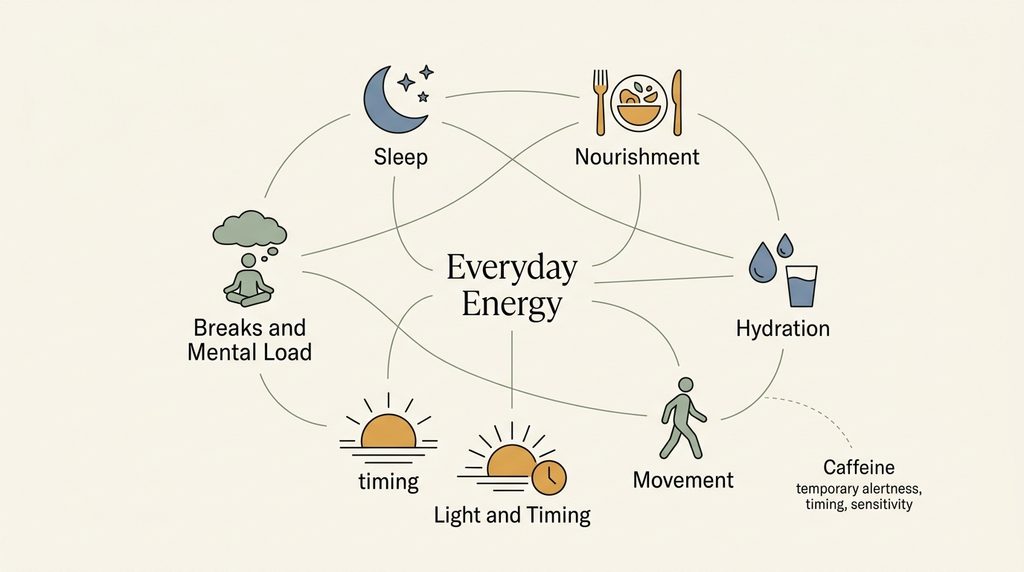
- Sleep, nourishment, hydration, movement and daily timing often work together.
- Caffeine may temporarily improve alertness, but sensitivity varies.
- Observing a few patterns can be more useful than changing everything at once.
- Unexplained fatigue that lasts for weeks deserves professional attention.
What Does “Everyday Energy” Mean?
In this guide, everyday energy means your general sense of alertness and capacity for normal activities. It may affect how ready you feel to work, prepare food, move, socialize or manage routine responsibilities.
Low energy, sleepiness and fatigue can overlap, but they do not always describe the same experience.
| Term | Simple meaning | Why it matters |
|---|---|---|
| Low energy | Feeling less able or willing to manage usual tasks | It may be temporary or related to the day’s demands |
| Sleepiness | Feeling likely to fall asleep | It may relate to sleep quantity, quality or timing |
| Fatigue | Ongoing physical or mental weariness | Symptoms that continue may need professional evaluation |
Fatigue can have many possible causes, including everyday circumstances, medications and physical or mental health conditions. A checklist or habit tracker cannot determine the cause.
MedlinePlus advises contacting a healthcare professional if you have been feeling tired for weeks.
The habits in this guide are general wellness foundations. They are not treatments for a medical condition.
Why Your Energy Changes During the Day
Your level of alertness does not need to remain identical from morning to evening.
The body follows circadian rhythms—physical, mental and behavioral changes that occur over an approximately 24-hour cycle. Light and darkness have the greatest influence on these rhythms, although food intake, stress, physical activity, the social environment and temperature may also affect them.
How you feel may also reflect what happened the night before, how demanding the day has been, when you last ate or drank, how long you have been sitting and whether caffeine is still affecting you.
An afternoon dip may occasionally be part of a broader daily pattern. However, intense sleepiness, a major change from your usual experience or fatigue that regularly interferes with normal activities should not automatically be dismissed.
Six Everyday Foundations That May Support Steadier Energy
These factors do not operate separately. A late night may affect the following morning. A demanding schedule may leave fewer opportunities to eat, drink or move.
The goal is not to perfect every category. It is to identify the part of your day that may be worth examining first.
1. Start With Sleep and a More Predictable Schedule
Sleep is a central foundation of daytime alertness. The CDC recommends seven or more hours of sleep in a 24-hour period for adults ages 18 to 60. Recommendations differ somewhat for older age groups, and personal sleep needs can still vary.
Duration is only part of the picture. Difficulty falling asleep, repeated waking or an irregular schedule may also affect how rested you feel.
A practical first step could be making one part of your schedule more predictable. For example, you might begin with a reasonably consistent wake time rather than trying to redesign your entire evening.
2. Make Nutritious Food Easier to Access
A busy schedule can make eating patterns unpredictable and leave little time to choose or prepare food.
Rather than searching for one “perfect energy food,” consider whether you have a practical way to access nutritious food during the busiest part of your day. Federal dietary guidance can provide a general framework for food choices, but it does not create one meal schedule that fits everyone.
A realistic step might be preparing one dependable meal or snack before a demanding work period or travel day. Personal needs vary, especially for people with medical conditions, food allergies or prescribed dietary plans.
A temporary change in energy does not prove that you have a blood sugar problem or nutritional deficiency. Recurring symptoms and individualized nutrition questions belong with a qualified healthcare professional.
3. Make Hydration Easier to Maintain
Water supports normal body functions, but it can be easy to overlook fluids during meetings, travel, caregiving or long periods of focused work.
The CDC notes that dehydration may cause unclear thinking, mood changes and overheating, among other effects. However, not every episode of low energy is caused by dehydration, and drinking more water is not a treatment for ongoing fatigue.
There is no single fluid target that fits every person in every situation. Needs can change with physical activity, climate, diet, pregnancy, health conditions and medications.
Instead of relying on a universal rule, make access easier. Keeping water near your usual work area or remembering to bring it when you leave home may be a manageable starting point.
4. Include Movement Without Turning It Into a Workout Plan
Movement does not have to mean completing an intense workout whenever you feel tired.
Current federal guidance encourages adults to move more and sit less. It also emphasizes that some physical activity is better than none.
During a sedentary day, a manageable movement break could mean standing, changing position, walking to another room or taking a brief walk when it fits your health and environment.
Regular movement can be part of a broader wellness routine, but it should not be presented as an immediate or guaranteed fix for low energy. People with unexplained fatigue, pain, mobility limitations or health concerns may need individualized guidance.
5. Pay Attention to Light and Daily Timing
Light is an important signal for the body’s circadian timing system. Day and night help coordinate biological clocks involved in sleep and other daily processes.
You do not need a complicated light-therapy routine to begin noticing this factor. Start by observing how much brighter light you encounter during the day and how your evening environment differs.
Daily timing can be harder to control for shift workers, caregivers, frequent travelers and people whose schedules regularly change. The aim is not a perfect routine but a clearer picture of the signals your schedule provides.
One morning habit cannot be assumed to “reset” your circadian rhythm. Daily timing is more complex, and personal circumstances matter.
6. Account for Breaks and Mental Load
Low energy is not always a sign that you need to push harder. Continuous decisions, difficult conversations, caregiving, noisy surroundings and long periods of focused work can make a day feel more demanding.
A brief pause will not treat a mental health condition or remove serious stress. It may provide a practical transition between tasks.
Consider whether your schedule leaves room to:
- step away from a screen;
- change position;
- eat or drink;
- move to a quieter setting;
- decide what can wait;
- create a reasonable stopping point when possible.
Some people have far less control over their time than others. A useful routine must account for work requirements, disability, health, family responsibilities and access—not assume that low energy reflects poor discipline.

Everyday Factors That Can Shape Your Energy
| Factor | What to notice | A manageable first step |
|---|---|---|
| Sleep | Timing, duration and how rested you feel | Make one part of the schedule more predictable |
| Food | Limited access to nutritious meals or snacks | Prepare one reliable option for a busy period |
| Hydration | Long periods without fluids | Keep water within easy reach |
| Movement | Extended periods of sitting | Add one manageable movement break |
| Light | Limited brighter light during the day | Notice how your light exposure changes |
| Breaks | Long periods of mental demand | Plan one brief pause |
| Caffeine | Amount, timing and sensitivity | Record when you consume it |
Caffeine Can Change Alertness, but It Is Not the Whole Answer
Caffeine is a stimulant, so it may temporarily increase alertness. It does not replace sleep, nourishment, recovery or medical evaluation for ongoing symptoms.
People vary widely in their sensitivity to caffeine and in how quickly they eliminate it from the body. The FDA cites 400 milligrams per day as an amount not generally associated with negative effects for most adults. That figure is not a personal target, and some people may experience effects at lower amounts.
Caffeine can come from coffee, tea, soda, energy drinks, chocolate and certain medications or other products. Looking only at coffee may therefore underestimate total intake.
When evaluating how caffeine fits your routine, pay attention to both quantity and timing. People who are pregnant, take medications or have health concerns should seek individualized guidance rather than assuming a general reference applies to them.
READ MORE:
Notice Your Patterns Before Changing Your Routine
A simple record can help you separate one difficult day from a pattern that repeats.
For three to seven days, note only the factors that are easy to capture. This is not a medical test, and there is no score to calculate.
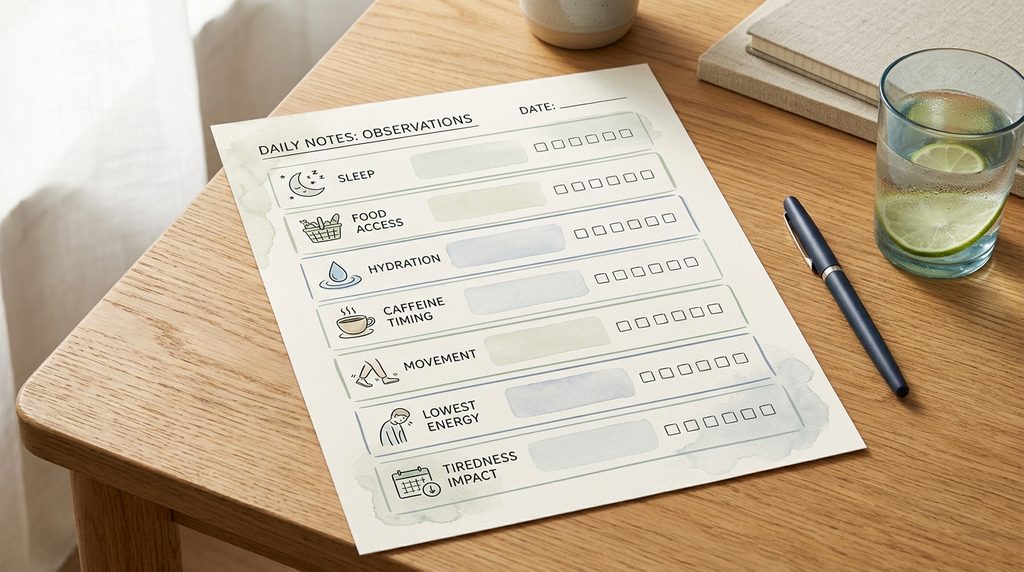
A Simple Daily Energy Check-In
- How long and how well did I sleep?
- Did I have practical access to food?
- Did I have regular access to water?
- When did I use caffeine?
- How long was I sitting without a break?
- When did my energy feel lowest?
- Did tiredness interfere with my usual activities?
Look for broad patterns. Perhaps your lowest-energy period follows a short night, a long block of meetings or an afternoon without a meaningful pause.
The record does not prove cause and effect. It can simply help you choose a useful question and describe your routine more clearly if you decide to speak with a healthcare professional.
Choose One Realistic Place to Start
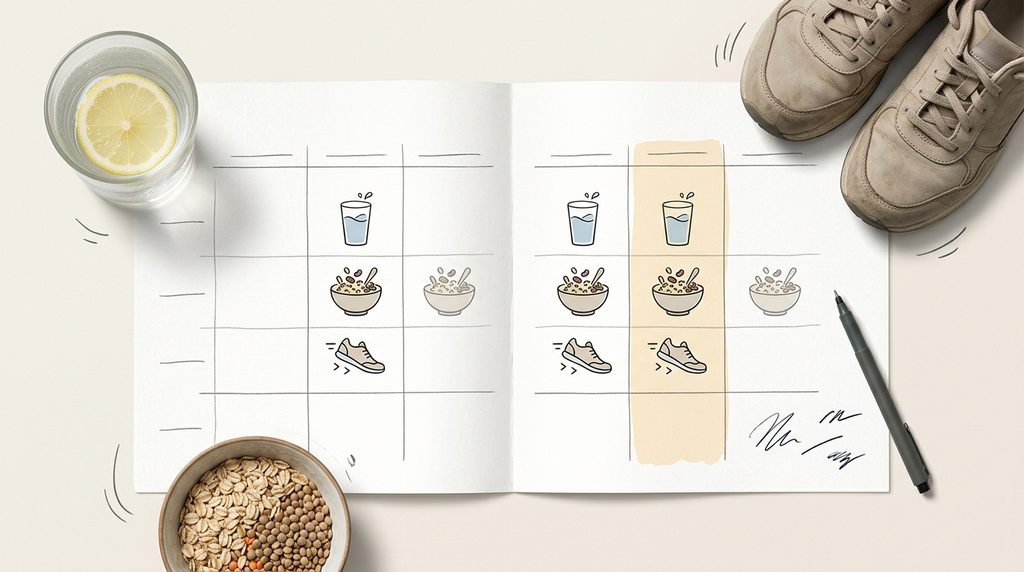
Once you notice a pattern, choose a small adjustment rather than a complete lifestyle overhaul.
- Identify the main source of friction.
Notice the part of the day that repeatedly feels difficult. - Choose one manageable adjustment.
Keep it small enough to fit a normal week. - Make it easier to repeat.
Prepare your environment rather than relying only on motivation. - Review what you notice.
Consider whether the adjustment is practical before adding another.
Your starting point might be keeping a more predictable wake time, preparing food for a busy afternoon, placing water near your workspace, taking a brief movement break or recording when you use caffeine.
The purpose is not to create a perfect day. It is to make your routine easier to understand and manage.
When Low Energy Deserves Professional Attention
Everyday habits can provide useful context, but they cannot explain every case of low energy.
Speak with a qualified healthcare professional if fatigue:
- lasts for weeks;
- becomes more severe;
- has no clear explanation;
- interferes with work, relationships or usual activities;
- occurs with other new or concerning symptoms.
MedlinePlus notes that fatigue can interfere with usual activities and may sometimes be a sign of a physical or mental condition.
When to get help: Ongoing fatigue is not something you have to solve through willpower or lifestyle experimentation alone. Seek professional guidance when symptoms continue, worsen or disrupt daily life. Seek prompt medical care for sudden, severe or concerning symptoms.
Everyday Energy FAQ
Can dehydration make you feel tired?
Dehydration may affect clear thinking, mood and physical comfort, which can contribute to feeling less capable during the day. However, tiredness has many possible causes, and drinking water is not a treatment for ongoing fatigue.
Does movement help with low energy?
Regular physical activity is part of federal health guidance, and adults are encouraged to move more and sit less. A brief movement break may feel useful during a sedentary day, but responses differ. Do not push through severe or unexplained fatigue without appropriate guidance.
How does caffeine affect daily energy?
Caffeine can temporarily increase alertness, but individual sensitivity and processing speed vary. The effects may also depend on the amount consumed, medications and health conditions. Record quantity and timing rather than assuming every person needs the same limit.
When should I seek help for feeling tired all the time?
Contact a healthcare professional when fatigue lasts for weeks, becomes worse, remains unexplained or interferes with your usual activities. A professional can help investigate causes that a habit tracker cannot identify.
Build Awareness Before You Build a Bigger Routine
Consistent energy throughout the day is rarely controlled by one habit. Sleep, nourishment, hydration, movement, light, caffeine and mental workload can overlap differently for each person.
Choose one pattern to observe this week. A clearer view of your routine can help you decide which small adjustment deserves attention—and whether ongoing symptoms need professional guidance.
Start here: Choose one pattern to observe this week, then explore related guidance on healthy sleep and thoughtful caffeine timing as those resources become available.
Medical note: This article provides general educational information and is not a substitute for personalized medical advice. Persistent or unexplained fatigue can have many possible causes. Speak with a qualified healthcare professional if low energy lasts for weeks, becomes more severe or interferes with your usual activities.
Sources
- Centers for Disease Control and Prevention — About Sleep
Used for adult sleep-duration guidance.https://www.cdc.gov/sleep/about/index.html - National Institute of General Medical Sciences — Circadian Rhythms
Used for circadian timing and the influence of light and other environmental signals.https://www.nigms.nih.gov/education/fact-sheets/Pages/circadian-rhythms - MedlinePlus — Fatigue
Used for the definition of fatigue and guidance on symptoms lasting for weeks.https://medlineplus.gov/fatigue.html - MedlinePlus Medical Encyclopedia — Fatigue
Used for background on possible causes and medical evaluation.https://medlineplus.gov/ency/article/003088.htm - Centers for Disease Control and Prevention — About Water and Healthier Drinks
Used for hydration and the possible effects of dehydration.https://www.cdc.gov/healthy-weight-growth/water-healthy-drinks/index.html - U.S. Food and Drug Administration — Spilling the Beans: How Much Caffeine Is Too Much?
Used for caffeine sensitivity, common sources and the general 400-milligram reference for most adults.https://www.fda.gov/consumers/consumer-updates/spilling-beans-how-much-caffeine-too-much - Office of Disease Prevention and Health Promotion — Current Physical Activity Guidelines
Used for federal guidance to move more and sit less.https://odphp.health.gov/our-work/nutrition-physical-activity/physical-activity-guidelines/current-guidelines - Dietary Guidelines for Americans — Current Guidance
Used for the general federal nutrition framework.https://www.dietaryguidelines.gov/