
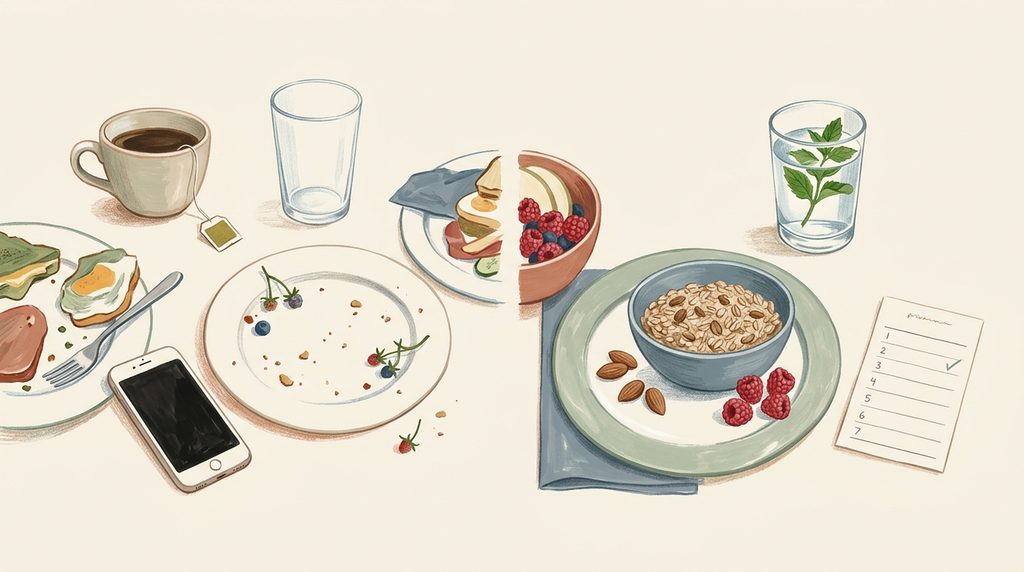
When your usual meal, hydration, and eating routines feel off, the answer does not have to be a strict cleanse or a complete diet overhaul. This seven-day digestion reset is a practical way to return to a few everyday habits, one manageable step at a time.
The goal is not to transform your digestive system in a week. In this guide, “reset” refers to your routine—not a biological restart or a treatment plan.
What “Reset” Means Here
It means:
- Returning to familiar habits
- Making one change at a time
- Noticing what fits your routine
- Choosing what to continue
It does not mean:
- Detoxing or cleansing
- Treating digestive symptoms
- “Resetting” your microbiome
- Expecting guaranteed results in seven days
Quick Takeaways
- Focus on one manageable habit each day.
- Increase fiber gradually rather than all at once.
- Adapt the plan to your schedule and individual needs.
- You do not need supplements or special products.
- After seven days, keep only the habits that feel realistic.
What a Digestion-Friendly “Reset” Really Means
A digestion-friendly habit reset is a short period for returning to routines that have become inconsistent. It is not a cleanse, treatment plan, or promise of a specific result.
The seven-day format simply gives you one manageable area to focus on at a time. You can repeat a day, change the order, or skip an action that does not fit your circumstances.
Before You Start: Keep the Plan Flexible
Choose a Realistic Pace
You can follow the days in order, but the sequence is not a medical protocol. Shift workers, caregivers, travelers, and people with changing schedules may need to adapt the timing.
A small action that fits your schedule may be easier to repeat than a complicated plan.
Notice Your Current Routine
Before changing anything, briefly consider:
- When you usually eat
- When you tend to drink fluids
- Whether meals often feel rushed
- Which fiber-containing foods you already enjoy
- Where comfortable movement fits into your day
This is simple observation, not a symptom score or diagnostic exercise.
Avoid Changing Everything at Once
Large changes can make a plan harder to follow. This matters especially with fiber: increasing it too quickly may cause gas, bloating, or abdominal cramps, so gradual changes are a more practical starting point.
Your 7-Day Plan at a Glance
| Day | Focus | First step |
|---|---|---|
| 1 | Meal rhythm | Make one eating time more predictable |
| 2 | Fluids | Pair a drink with an existing routine |
| 3 | Eating pace | Slow down one meal |
| 4 | Fiber | Add one familiar fiber-containing food |
| 5 | Variety | Include a different plant food |
| 6 | Movement | Take a comfortable movement break |
| 7 | Review | Choose what to continue |
Treat this as a flexible guide. You can repeat one step for several days before adding another.
Your 7-Day Digestion-Friendly Habit Reset
Day 1: Return to a More Consistent Meal Rhythm
Begin with one meal or snack instead of trying to reorganize your entire day.
Choose an eating time that has become unpredictable and consider what would make it easier to manage. You might keep a simple breakfast available or plan an afternoon snack before a long work period.
The goal is not to eat at the exact same minute every day. It is to create a little more predictability where your schedule allows it.
Small version: Choose one meal or snack time to make more predictable today.
Day 2: Pay More Attention to Fluids
Instead of setting an arbitrary target, connect one drink with something you already do. You might have water with breakfast, refill a cup during a work break, or keep an appropriate beverage near your lunch spot.
Fluid needs vary, and some medical conditions require individualized guidance.
It is also useful to pay attention to fluids when adding more fiber. MedlinePlus recommends getting enough fluids as fiber intake increases and advises asking a healthcare professional or dietitian about individual fluid needs.
Small version: Pair one glass of water or another appropriate beverage with breakfast, lunch, or an afternoon break.
Day 3: Slow Down One Meal
Choose one meal when you can reduce the feeling of rushing, even slightly. Sit down when possible, place your phone aside for a few minutes, or pause once or twice while eating.
You do not need to count every bite or follow a formal mindful-eating exercise. The purpose is simply to notice your pace and how comfortable the meal feels.
When time is limited, slow down only the first few bites rather than trying to create a long, uninterrupted break.

Small version: Put your fork down once or twice during one meal and take a brief pause.
Day 4: Add Fiber Gradually
Fiber-containing foods can be part of a digestion-friendly eating pattern, but adding a large amount at once may cause gas, bloating, or cramps. Increase fiber gradually rather than changing every meal at the same time.
Start with one familiar food. Options may include oats, beans, lentils, fruit, vegetables, or whole grains.
Pay attention to appropriate fluids as you increase fiber. People with medical conditions or specific dietary restrictions may need individualized guidance.
Small version: Add one familiar fiber-containing food to a meal you already eat.
READ MORE:
Common Everyday Causes of Bloating and What to Track
Fermented Foods, Probiotics and Prebiotics: What Is the Difference?
Day 5: Add a Little More Food Variety
Food variety does not require an elaborate menu. It may mean choosing a different fruit, adding beans to a familiar meal, or rotating the vegetables and whole grains you already use.
The current Dietary Guidelines for Americans provides federal guidance intended to help people meet nutrient needs and build health-supporting eating patterns across the lifespan. Treat variety as a flexible principle rather than a demand to make every meal perfect.
Small version: Choose one fruit, vegetable, bean, or whole grain you have not eaten this week.
Day 6: Add Gentle Everyday Movement
Gentle movement can be part of a broader daily wellness routine. Choose an activity that fits your mobility and circumstances, such as a comfortable walk, light household activity, or a brief movement break during a long period of sitting.
Federal physical activity guidance encourages making regular movement part of everyday life. This plan does not require a demanding workout or a specific exercise target.
Small version: Take a short, comfortable walk or movement break at a time that fits your day.
Day 7: Review What Felt Realistic
The final day is not a test of whether your digestion has been “fixed.” It is a chance to decide which actions were practical.
Ask yourself:
- Which habit was easiest to repeat?
- Which one felt difficult or unnecessary?
- What could fit into next week?
- What did you notice about your routine?
- Where might you need additional support?
Avoid judging the entire week by whether a symptom disappeared. A general habit plan cannot identify the cause of digestive symptoms.
Small version: Choose one habit that felt easy enough to try again tomorrow.
What to Keep After the Seven Days
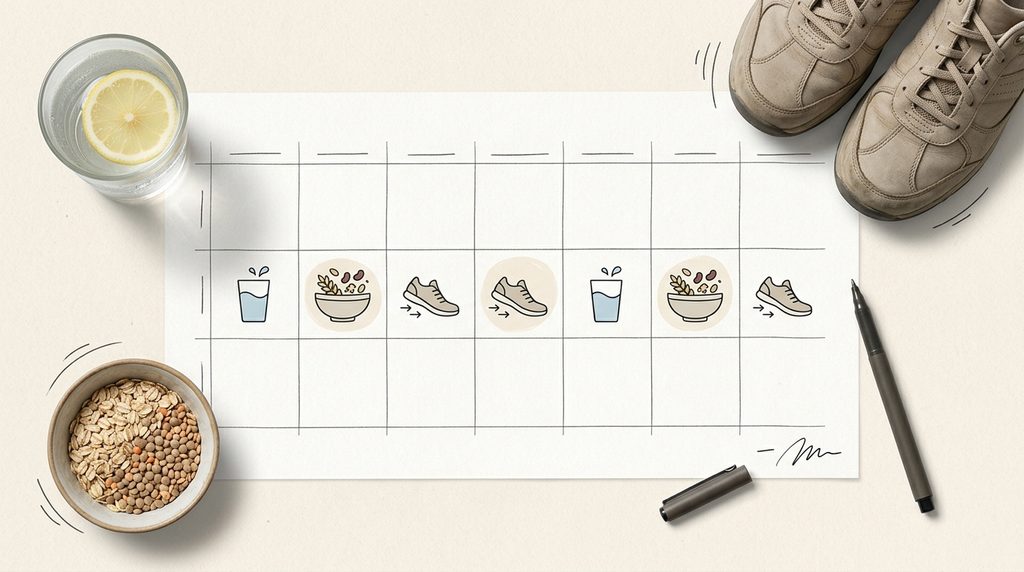
Choose two or three habits that felt realistic and reduce the friction around them.
Keep a drink where you will notice it, add a familiar fiber-containing food to your grocery list, or connect a brief movement break with an established routine. When your schedule changes, return to the smallest version that still feels manageable.
What Will You Keep Next Week?
- A more consistent meal or snack time
- One reliable hydration cue
- One slower meal
- A gradual fiber addition
- A little more food variety
- A comfortable movement break
When a Habit Reset Is Not Enough
Everyday habit guidance is not a substitute for medical evaluation. See a healthcare professional if digestive symptoms do not improve with self-care or occur with rectal bleeding, blood in the stool, constant abdominal pain, vomiting, or unexplained weight loss. NIDDK advises seeing a doctor right away when constipation occurs with these signs.
Seek immediate medical care for possible signs of acute gastrointestinal bleeding, such as vomiting blood or material that resembles coffee grounds, black or tarry stools, fainting, dizziness, or shortness of breath.
When to Get Medical Guidance
Do not rely on a general habit plan to manage severe, persistent, or changing symptoms. A healthcare professional can consider your symptoms, medical history, medications, and individual dietary needs.
Frequently Asked Questions
Can You Really Reset Your Digestion in Seven Days?
Not literally. In this article, a seven-day digestion reset is a framework for returning to manageable habits.
It does not guarantee that symptoms will change or that your digestive system or microbiome will be transformed within a week.
Do You Need Supplements for a Digestion Reset?
No. This plan uses ordinary behaviors and familiar foods. It does not require probiotics, fiber powders, enzymes, or other commercial products.
Individual needs vary, especially for people with medical conditions, dietary restrictions, or medications.
What If Adding Fiber Causes Discomfort?
Slow the pace of the change rather than continuing to add large amounts. Increasing fiber too quickly may cause gas, bloating, or abdominal cramps.
Talk with a healthcare professional or registered dietitian nutritionist if discomfort persists, is significant, or occurs with other concerning symptoms.
A Simple Next Step
Choose two or three habits from this plan that feel realistic enough to repeat next week. The most useful routine is not necessarily the most ambitious one; it is the one you can adapt when life changes.
Explore our guide to everyday habits that may support better digestion for a broader foundation.
Medical note: This article provides general educational information and is not a substitute for individualized medical advice. Speak with a qualified healthcare professional about persistent, severe, or changing digestive symptoms, medical conditions, medications, supplements, or major dietary changes.
Sources
- MedlinePlus — Dietary Fiber
Used for: gradual fiber increases and possible gas, bloating, or cramps.
URL: https://medlineplus.gov/dietaryfiber.html - MedlinePlus Medical Encyclopedia — Fiber
Used for: the effects of increasing fiber too quickly.
URL: https://medlineplus.gov/ency/article/002470.htm - MedlinePlus Medical Encyclopedia — High-Fiber Foods
Used for: gradual fiber increases and individual fluid considerations.
URL: https://medlineplus.gov/ency/patientinstructions/000193.htm - Office of Disease Prevention and Health Promotion — Current Dietary Guidelines
Used for: current federal nutrition guidance and eating-pattern context.
URL: https://odphp.health.gov/our-work/nutrition-physical-activity/dietary-guidelines/current-dietary-guidelines - Office of Disease Prevention and Health Promotion — Physical Activity Guidelines for Americans
Used for: movement as part of a broader wellness routine.
URL: https://odphp.health.gov/our-work/nutrition-physical-activity/physical-activity-guidelines - National Institute of Diabetes and Digestive and Kidney Diseases — Symptoms & Causes of Constipation
Used for: symptoms that warrant prompt medical guidance.
URL: https://www.niddk.nih.gov/health-information/digestive-diseases/constipation/symptoms-causes - National Institute of Diabetes and Digestive and Kidney Diseases — Symptoms & Causes of GI Bleeding
Used for: possible signs of acute gastrointestinal bleeding.
URL: https://www.niddk.nih.gov/health-information/digestive-diseases/gastrointestinal-bleeding/symptoms-causes