
A walking plan can help with the small decisions that come before a walk. How far should you go? Is the weather suitable? What if you feel tired halfway through?
The checklist below offers practical reminders without requiring a strict schedule or a daily step target. You’ll find what to check before, during, and after your walk, plus ways to adapt your pace and route to the day ahead.
The Everyday Walking Plan Checklist
You don’t need special equipment or a complicated tracking system. Treat these reminders as a flexible guide to preparation, comfort, and safety—not a set of requirements you must complete perfectly.
Before You Go
- Check how you feel. Notice your energy, comfort, and any unusual symptoms. If you’re unwell, consider postponing your walk. Don’t begin exercising with concerning symptoms.
- Choose a manageable amount of walking. Consider your available time and current abilities. A shorter walk may be more appropriate than your usual route on a demanding day.
- Select a suitable route. Look for reasonably even surfaces, safe crossings, and places to rest if needed. Consider accessibility and any mobility aids you use.
- Check outdoor conditions. Review the weather and, when relevant, local air quality. Heat, ice, storms, or pollution may change your plans.
- Wear appropriate shoes and clothing. Choose comfortable footwear with stable footing. Dress for the temperature and make yourself visible near traffic.
- Prepare what you may need. Depending on the walk, consider water, a phone, identification, or emergency contact information.
The National Institute on Aging (NIA) recommends planning routes, checking conditions, wearing suitable shoes, and staying aware of your surroundings. These are useful checks for almost any outdoor walking plan.
While You’re Walking
- Begin at a comfortable pace. Give yourself time to settle into the activity instead of immediately walking as quickly as possible.
- Notice your breathing and effort. Pay attention to whether the pace feels manageable. You don’t need to reach a particular speed.
- Stay aware of your surroundings. Watch for uneven pavement, obstacles, vehicles, and changes in the walking surface.
- Adjust or pause when necessary. Slow down, take a break, shorten the route, or stop if the situation calls for it.
Your walking plan can change as you go. You don’t need to push through discomfort to make a walk worthwhile.
After Your Walk
- Finish gradually. Slow to an easier pace before stopping, allowing your breathing and heart rate to settle.
- Review how you feel. Consider your comfort, energy, and any difficulties you experienced. Decide whether something should change next time, and seek advice for persistent or unusual symptoms.
You can note where you walked, roughly how long you were active, or what you’d adjust. Tracking is optional. The NIA describes activity tracking as one possible way to review goals and progress; you don’t need a written log or app to follow a walking plan.
How to Fit the Checklist Into a Real Day
A walking plan needs room for work, appointments, changing weather, and differences in energy. Use the checklist to identify a reasonable option rather than expecting every outing to look the same.
Keep Your Walk Manageable
Someone returning to activity after a break might start with a brief, comfortable route. Someone who walks regularly may prefer a longer outing. Choose what suits your circumstances.
The Centers for Disease Control and Prevention (CDC) encourages adults to add activity gradually and find opportunities for movement that fit their lives. A walking plan can include shorter periods of activity when a longer outing isn’t realistic.
Adapt the Plan When Conditions Change
If your walking plan no longer fits today’s conditions, choose an alternative rather than forcing the original route.
| Situation | Practical Adjustment |
|---|---|
| You have less time than expected | Choose a shorter route or another opportunity to walk. |
| It’s unusually hot or air quality is poor | Consider an indoor location or reschedule for more suitable conditions. |
| Your usual route has uneven or slippery surfaces | Choose a more accessible, stable route with places to rest. |
| You feel more tired than usual | Consider an easier activity, a shorter walk, or rest, depending on how you feel. |
An adjustment doesn’t mean your routine has failed. It reflects what is appropriate for that day.
Check Your Pace Without Chasing Numbers
Your walking plan doesn’t require a step counter or fitness watch. Walking intensity depends partly on your fitness: the same pace may feel easy to one person and demanding to another.
Use the Talk Test
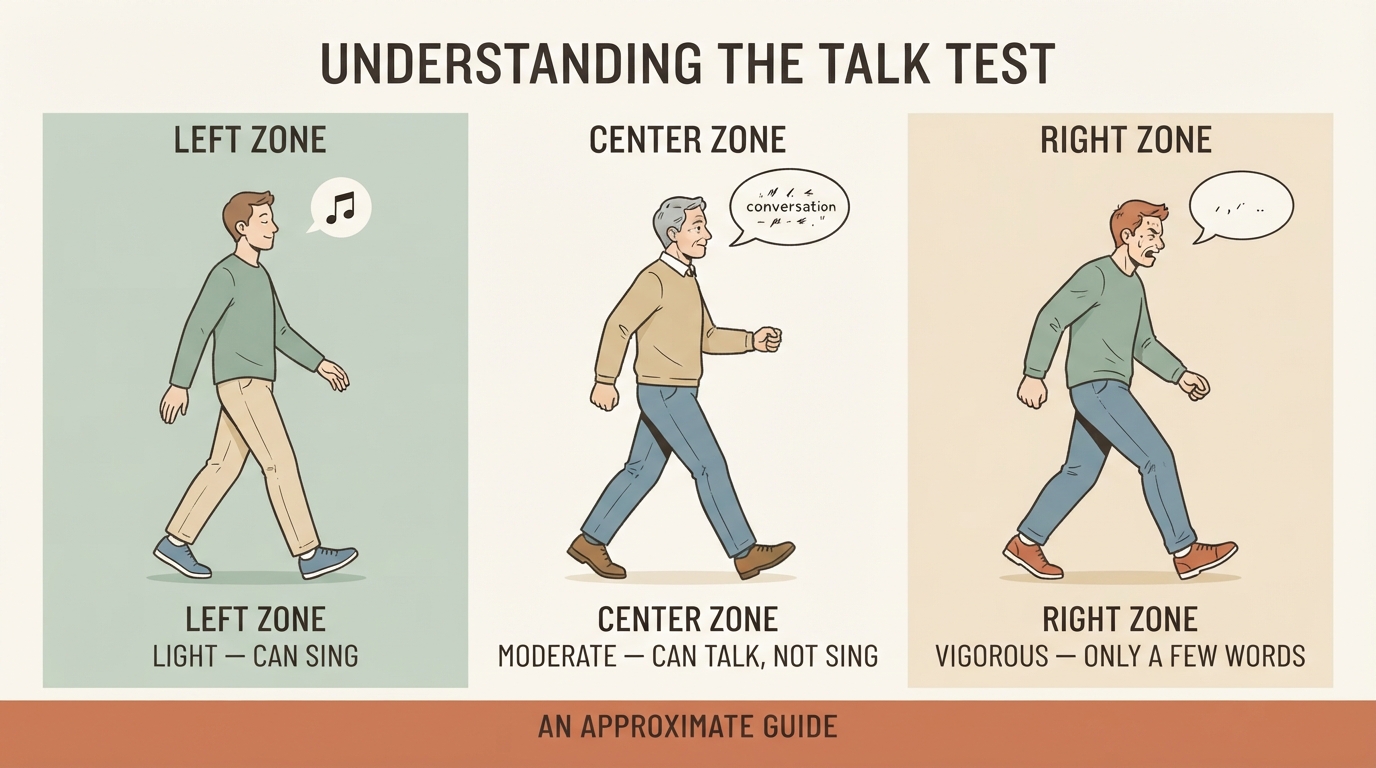
The talk test offers a simple way to estimate exercise intensity. According to the CDC, someone exercising at a moderate intensity can generally talk but not sing comfortably.
Being able to talk doesn’t necessarily mean your effort is light; moderate-intensity activity usually still allows conversation. If you can sing comfortably, the effort may be relatively light. If you can say only a few words before catching your breath, it may be vigorous.
The test is an approximate guide, not a medical assessment. You don’t need to force yourself into moderate-intensity activity during every walk.
Respond to How You Feel
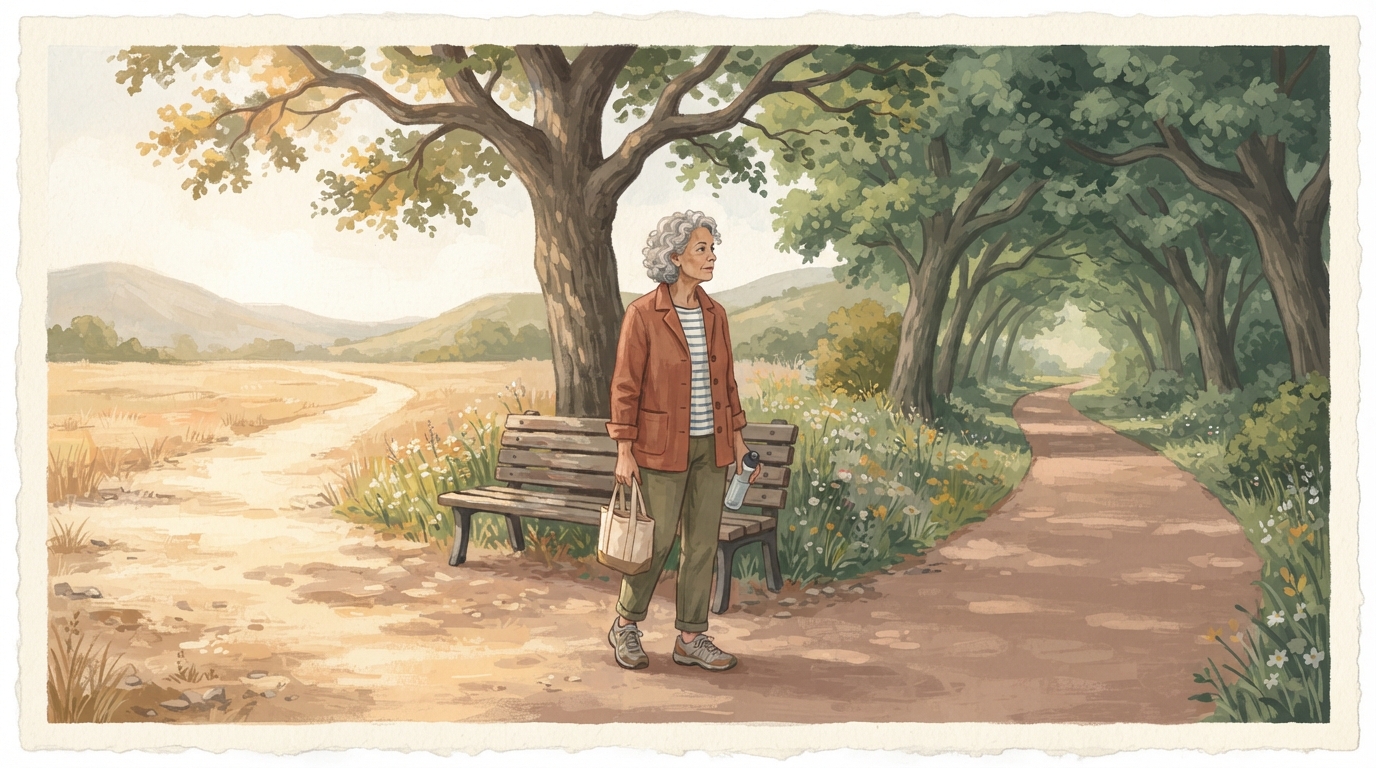
Pay attention to breathing, fatigue, stability, and comfort. If you’re returning to regular movement, an easy pace may be appropriate. With experience, a brisker pace may become manageable.
When the effort feels too demanding, slow down or rest. Adjust your walking plan as your abilities and circumstances change. Unusual symptoms deserve attention rather than an attempt to push through them.
READ MORE:
Safety Checks That May Change Today’s Walk
A walking plan should account for outdoor conditions and personal health needs, not just the distance you intended to cover.
Weather, Air Quality, and Your Route
High humidity, strong winds, icy sidewalks, poor lighting, and heavy traffic can affect comfort and safety. Check conditions before committing to an outdoor walking plan.
Hot weather deserves particular attention for adults aged 65 and older. The CDC explains that older adults may be more vulnerable to heat-related illness because of changes in temperature regulation, certain chronic conditions, and medications.
On very hot days, consider a cooler indoor environment or rescheduling. Take suitable precautions against dehydration. If a health care professional has told you to limit fluids, ask how to manage hydration in hot weather.
The Environmental Protection Agency’s AirNow service provides local Air Quality Index information to help people make decisions about outdoor activity.
If you have mobility limitations or concerns about falling, favor routes with stable surfaces, accessible crossings, and places to rest.
When to Pause, Stop, or Ask for Help
Ordinary physical effort and potentially serious symptoms aren’t the same thing. Breathing somewhat faster during activity can be expected. However, chest pain or pressure, fainting, severe or unusual shortness of breath, sudden confusion, or significant dizziness should not be treated as normal exercise discomfort.
Stop exercising if these symptoms occur. Seek immediate medical help for severe or potentially life-threatening symptoms, and call 911 in the United States when a medical emergency is suspected. The American Heart Association identifies chest discomfort, dizziness, confusion, and unusual shortness of breath among warning signs requiring attention during exercise.
If you have recurring pain, frequent instability, previous falls, or limitations related to a chronic condition, a health care professional or physical therapist can help you consider appropriate adjustments to your walking plan. Having a medical condition doesn’t automatically mean you must avoid walking; the activity needs to suit your circumstances.
Keep Walking Guidelines in Perspective
A walking plan can support long-term activity without turning every outing into a performance target.
Weekly Goals Aren’t Daily Requirements
The CDC recommends at least 150 minutes of moderate-intensity aerobic activity per week for adults, including those aged 65 and older, with activity adapted to individual abilities and conditions.
This is a weekly recommendation for health benefits, not a requirement to walk 30 minutes every day. The CDC also emphasizes that some physical activity is better than none. Your walking plan can develop gradually.
Walking Isn’t the Whole Activity Picture
Walking can contribute to aerobic activity, but it doesn’t automatically replace other forms of exercise. For adults aged 65 and older, CDC guidance also recommends muscle-strengthening activities on at least two days per week and activities that improve balance.
These can complement walking, especially when strength, stability, and everyday mobility are priorities.
Common Questions About the Checklist
Do Short Walks Count?
Yes. Short periods of walking contribute to overall activity, even when you can’t fit in a longer session. Intensity matters when considering progress toward moderate-intensity aerobic recommendations. Light walking may not meet that intensity, but it still offers an opportunity to move.
Do I Need 10,000 Steps?
No. The widely recognized 10,000-step target isn’t a universal requirement in U.S. physical activity guidelines. The U.S. Department of Health and Human Services explains in the Physical Activity Guidelines for Americans, Second Edition that 10,000 steps is one approach people may choose, not a guideline itself.
Step counts can help some people track movement, but a particular daily total isn’t necessary for your walking plan.
Can Indoor Walks Count?
Yes. Walking in a shopping mall, community center, or another suitable indoor space provides physical activity. Indoor walking may be particularly useful during extreme weather, poor air quality, or unsafe outdoor conditions. The NIA includes indoor walking among practical alternatives when outdoor conditions create barriers.
As with outdoor walking, intensity and duration determine how an indoor walk contributes toward aerobic exercise recommendations.
Use the Checklist Your Way
A walking plan checklist is most useful when it helps you make practical decisions. Use it for a neighborhood walk, a short indoor route, or a longer outing that suits your abilities. You don’t have to complete the same distance or follow the same schedule every time.
Before your next walk, review the checklist, adjust what doesn’t fit your day, and return to it whenever your needs change.
Medical Note
This article provides general educational information and is not a substitute for individualized medical advice. If you have a medical condition, significant mobility limitations, recurring symptoms, or concerns about exercising safely, consult an appropriate health care professional. Seek urgent medical attention for potentially serious symptoms.
Sources
- Centers for Disease Control and Prevention (CDC). Adult Activity: An Overview.
https://www.cdc.gov/physical-activity-basics/guidelines/adults.html - Centers for Disease Control and Prevention (CDC). Older Adult Activity: An Overview.
https://www.cdc.gov/physical-activity-basics/guidelines/older-adults.html - Centers for Disease Control and Prevention (CDC). How to Measure Physical Activity Intensity.
https://www.cdc.gov/physical-activity-basics/measuring/ - Centers for Disease Control and Prevention (CDC). Adding Physical Activity as an Adult.
https://www.cdc.gov/physical-activity-basics/adding-adults/ - National Institute on Aging (NIA). Exercising Outdoors: Safety Tips for Older Adults.
https://www.nia.nih.gov/health/exercise-and-physical-activity/safety-tips-exercising-outdoors-older-adults - National Institute on Aging (NIA). Tips for Getting and Staying Active as You Age.
https://www.nia.nih.gov/health/exercise-and-physical-activity/tips-getting-and-staying-active-you-age - Centers for Disease Control and Prevention (CDC). Heat and Older Adults (Aged 65+).
https://www.cdc.gov/heat-health/risk-factors/heat-and-older-adults-aged-65.html - U.S. Environmental Protection Agency (EPA) / AirNow. Using the Air Quality Index.
https://www.airnow.gov/aqi/aqi-basics/using-air-quality-index/ - American Heart Association (AHA). Develop a Physical Activity Plan for You.
https://www.heart.org/en/health-topics/cardiac-rehab/getting-physically-active/develop-a-physical-activity-plan-for-you - U.S. Department of Health and Human Services (HHS). Physical Activity Guidelines for Americans, Second Edition.
https://odphp.health.gov/sites/default/files/2019-09/Physical_Activity_Guidelines_2nd_edition.pdf