
Mobility does not have to begin with a long workout or a complicated stretching routine. Simple mobility habits can be connected to moments that already happen during your day, such as getting up after sitting, preparing for a walk, or waiting for your coffee.
This guide explains what everyday mobility means and how to start with manageable movement cues. You will also learn how to adjust a habit to your current ability and recognize situations in which professional guidance may be appropriate.
Quick Takeaways
- Connect movement with something that already happens during your day.
- Begin with a short, controlled movement rather than a complicated routine.
- Mobility overlaps with flexibility, strength, and balance, but these terms are not interchangeable.
- Special equipment is not required for the general habits in this guide.
- Stop exercising and seek help if you experience pain, dizziness, or extreme shortness of breath.
What Does Mobility Mean in Everyday Life?
For this guide, think of mobility as the ability to move through everyday tasks with a level of control that fits your current ability.
You use mobility when you turn to reach an object, stand up from a chair, walk through your home, or change direction. These ordinary actions may involve range of motion, strength, balance, and coordination working together.

Mobility is only one part of a broader movement routine. Current federal guidance for adults age 65 and older recommends combining aerobic activity, muscle-strengthening activity, and balance work rather than relying on one type of movement alone.
Mobility Is More Than Stretching
Mobility and flexibility overlap, but they are not identical.
Flexibility focuses on the available range in a joint or body area. Mobility also considers how you use that range with control during movement. Strength helps you produce force, while balance helps you remain stable.
MedlinePlus presents endurance, strength, balance, and flexibility as different parts of a well-rounded activity routine.
Everyday Mobility Shows Up in Ordinary Tasks
Everyday examples include:
- turning to look behind you;
- standing after sitting;
- reaching for an object;
- stepping around furniture;
- changing direction while walking;
- moving between rooms.
Thinking about mobility this way makes it less of a fitness test and more of a practical part of daily life.
Start With Moments That Already Exist
A daily mobility habit may feel more manageable when you connect it with something you already do.
Instead of immediately creating a separate workout, choose one predictable moment and use it as a reminder to move. The goal is not to complete a perfect routine. It is to give movement a clear place in your day.
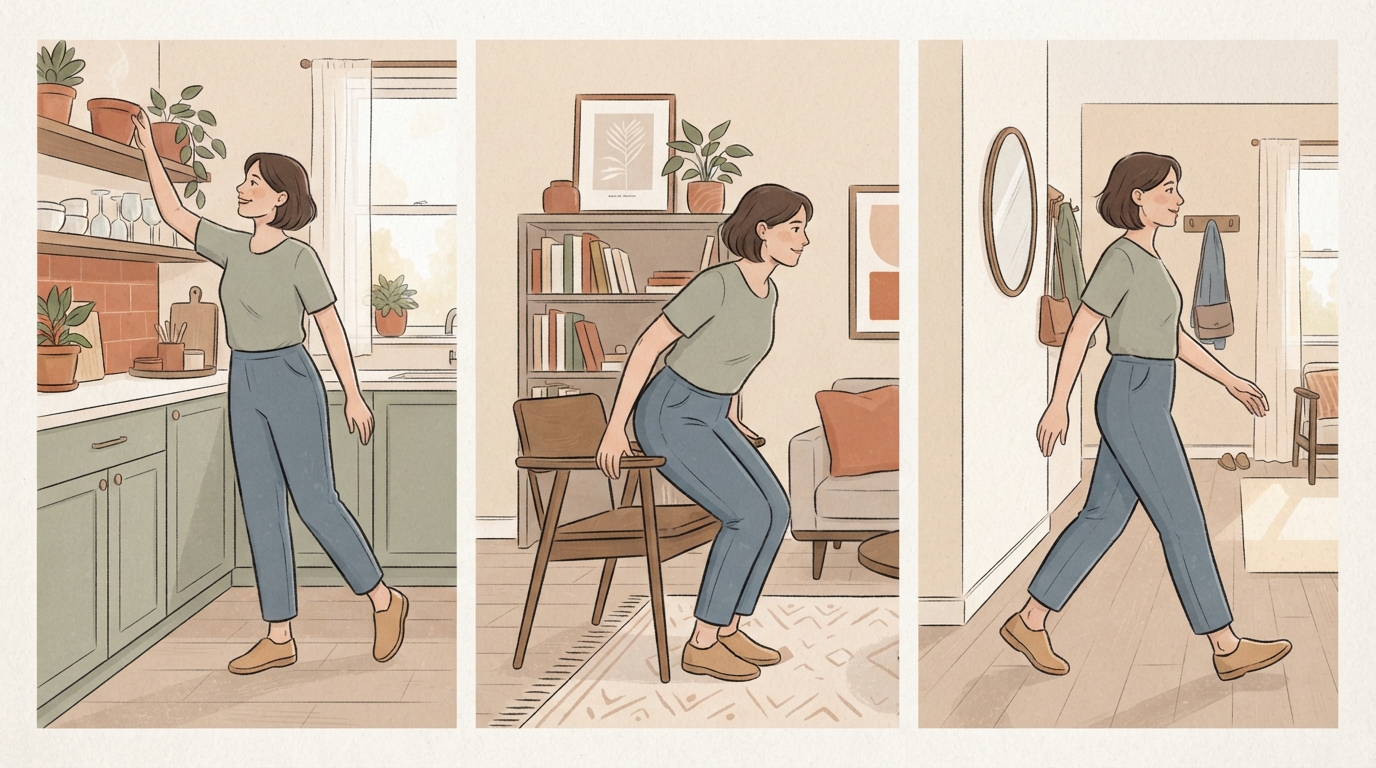
The National Institute on Aging encourages older adults to make physical activity part of everyday life and to consider how health conditions may affect their ability to be active.
After You Have Been Sitting
Standing, walking briefly, or changing position can create an opportunity to move after you have been sitting.
The Physical Activity Guidelines for Americans advise adults to move more and sit less throughout the day. This broad guidance supports making room for movement, but it does not mean that every short break produces a particular health result.
At the Beginning or End of the Day
Morning and evening routines can also become useful reminders.
You might connect movement with getting dressed, preparing breakfast, turning off the television, or getting ready for bed. Choose a cue that happens reliably in your actual schedule.
During Everyday Tasks
Small waiting periods can become movement cues. You might change position while waiting for coffee, move your shoulders after a phone call, or walk briefly during a television break.
These habits do not replace recommended aerobic, strengthening, or balance activities. They simply create additional opportunities to move.
Everyday Moments That Can Become Mobility Cues
| Everyday moment | Movement opportunity | Manageable starting point |
|---|---|---|
| After sitting | Change position | Stand or walk briefly when appropriate |
| While making coffee or tea | Use waiting time as a cue | Move one body area comfortably |
| After a phone call | Transition to another activity | Stand or walk through the room |
| During a television break | Interrupt a long seated period | Change position or move briefly |
| At the end of the day | Check in with your routine | Choose one calm, controlled movement |
Simple Mobility Habits to Try
The most useful movement habit is one you can adjust to your ability and repeat without turning it into a complicated project.
The following ideas are general starting points, not a prescribed exercise program.
Change Positions Regularly
Avoid treating one posture as the only correct position.
When practical, alternate among sitting, standing, and walking. There is no universal schedule that fits everyone. Your health, work, balance, and physical environment all affect what is realistic.
Use a Range You Can Control
A larger movement is not automatically better.
Use a range that feels controlled rather than forcing your body farther. Move slowly enough to notice whether you feel steady and whether the movement remains manageable.
Some people use a stable wall, countertop, or chair for support. Support does not make every movement appropriate, especially when balance is a concern.
Move Different Areas Over the Course of the Day
You do not need to focus on the same part of the body every time.
Over the course of the day, you may notice opportunities to move your shoulders, upper back, hips, knees, or ankles. This does not require a separate exercise for every area. It simply keeps your everyday movement from being limited to one repeated action.
READ MORE:
Pair Mobility With Walking
Walking can contribute to an active routine, but it does not replace every other type of movement. Federal guidance for older adults also includes muscle-strengthening and balance activities.
Keep in mind: Movement needs vary. A habit that feels manageable for one person may not fit another person’s ability, health history, or balance.
How to Make the Habit Easier to Maintain
Your movement habit does not need to look exactly the same every day. It needs to be simple enough that you can return to it.
Make the First Version Small
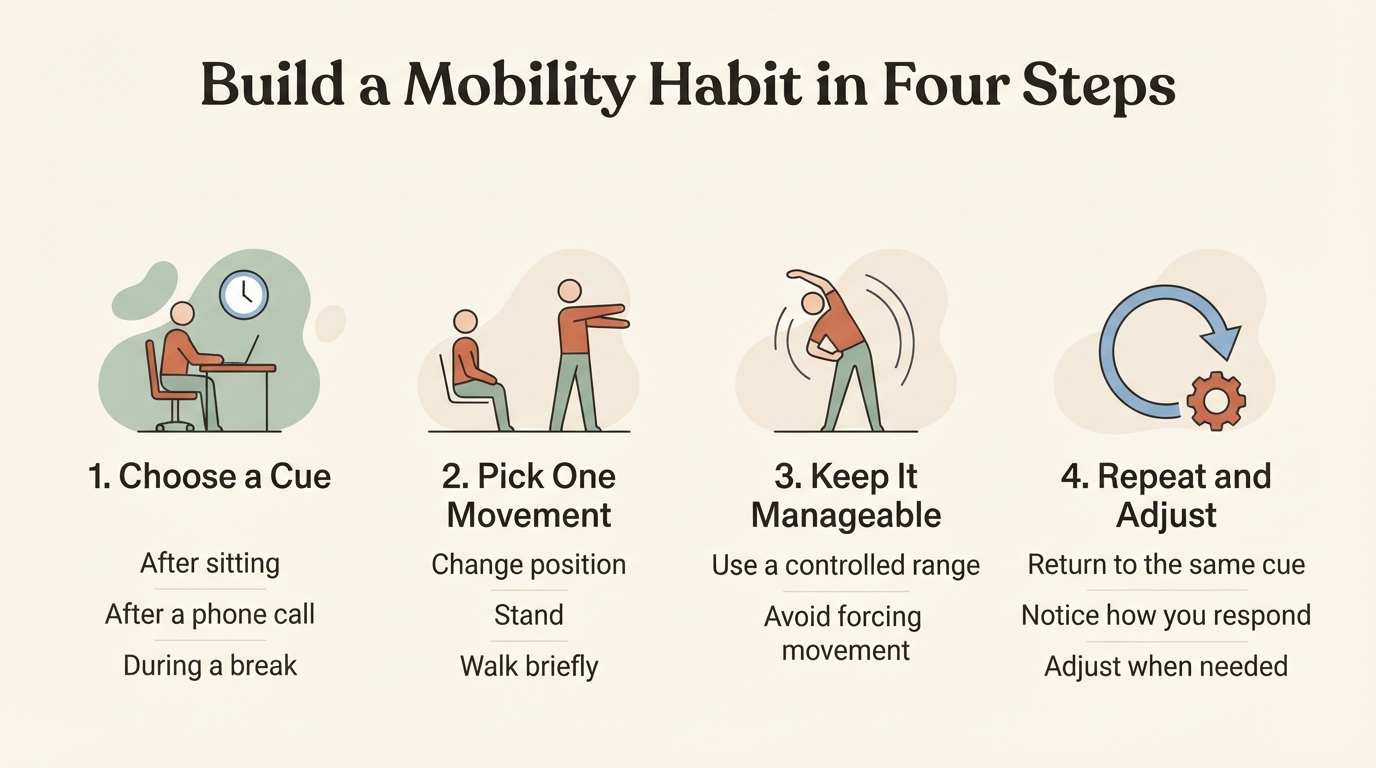
Choose one cue and one movement rather than building a full-body routine immediately.
For example, finishing a phone call might remind you to stand or change position. Once that habit feels familiar, you can decide whether adding another action would be useful.
Use the Same Cue
Using the same cue gives the habit a predictable place in your day.
Possible cues include finishing breakfast, standing after a meeting, taking a television break, returning from a walk, or preparing for bed.
Adjust the Habit on Busy Days
A smaller version can preserve the routine when your schedule changes.
On a busy day, you might make one comfortable position change instead of following a longer sequence. This avoids treating the habit as an all-or-nothing commitment.
Notice Patterns, Not Perfection
Pay attention to whether the cue fits naturally into your routine and whether the movement feels controlled.
You may need to choose a different time, reduce the range, or use a simpler movement. The purpose is to find a realistic practice, not to grade your performance.
Common Mobility Habit Mistakes
Starting With Too Much
A long routine may be difficult to maintain. Begin with a version that fits your current schedule and ability.
Copying Someone Else’s Routine Exactly
A routine created for another person may not account for your balance, health history, previous injuries, or movement limitations.
Forcing a Movement
Greater range does not automatically mean a better result. Stay with movement you can control.
Assuming Equipment Is Necessary
The habits in this guide do not require special tools. Equipment should not be treated as a prerequisite for everyday movement.
When to Pause and Get Professional Guidance
General movement advice is not a substitute for an individualized assessment.
Stop exercising and seek help if you experience pain, dizziness, or extreme shortness of breath. MedlinePlus distinguishes concerning breathing difficulty from becoming slightly winded during normal physical activity.
Speak with a qualified healthcare professional about symptoms that persist or keep returning. Individualized guidance may also be helpful if you have a recent injury or surgery, balance concerns, or a health condition that affects your ability to move.
Medical note: This article provides general educational information and is not a substitute for individualized medical advice. Speak with a qualified healthcare professional about persistent symptoms, a recent injury or surgery, balance concerns, medical conditions, or questions about which movements are appropriate for you.
A Realistic First Step
Choose one predictable moment in your day and connect one manageable movement with it.
Keep the first version easy to repeat. Notice whether the cue fits your routine and whether the movement feels controlled. Adjust the habit as your schedule or needs change.
Frequently Asked Questions
What is the difference between mobility and flexibility?
Flexibility concerns the available range in a joint or body area. Mobility also involves using that range with control during movement. In everyday life, strength, balance, and coordination may also contribute to how you complete a task.
Do I need equipment for a mobility routine?
No special equipment is required for the general habits in this guide. Some people use a stable surface for support, but that does not make every movement suitable for every person.
Should mobility movements hurt?
Pain is not the goal. Stop exercising and seek help if you experience pain, dizziness, or extreme shortness of breath. Speak with a qualified healthcare professional about symptoms that persist or recur.
CTA
Choose one manageable movement habit to try this week. Start with a version that fits your current routine, and adjust it as your needs change.
Sources
- Centers for Disease Control and Prevention — Older Adult Activity: An Overview
Used for guidance on aerobic, muscle-strengthening, and balance activities for adults age 65 and older.
https://www.cdc.gov/physical-activity-basics/guidelines/older-adults.html - U.S. Department of Health and Human Services — Physical Activity Guidelines for Americans, 2nd Edition: Executive Summary
Used for guidance to move more and sit less throughout the day.
https://odphp.health.gov/sites/default/files/2019-10/PAG_ExecutiveSummary.pdf - National Institute on Aging — Exercise and Physical Activity
Used for integrating physical activity into everyday life and considering health-related limitations.
https://www.nia.nih.gov/health/exercise-and-physical-activity - MedlinePlus — Exercise and Physical Fitness
Used for distinctions among activity components and guidance about pain, extreme shortness of breath, and dizziness during exercise.
https://medlineplus.gov/exerciseandphysicalfitness.html - MedlinePlus — Breathing Difficulties: First Aid
Used for distinguishing concerning breathing difficulty from becoming slightly winded during normal exercise.
https://medlineplus.gov/ency/article/000007.htm