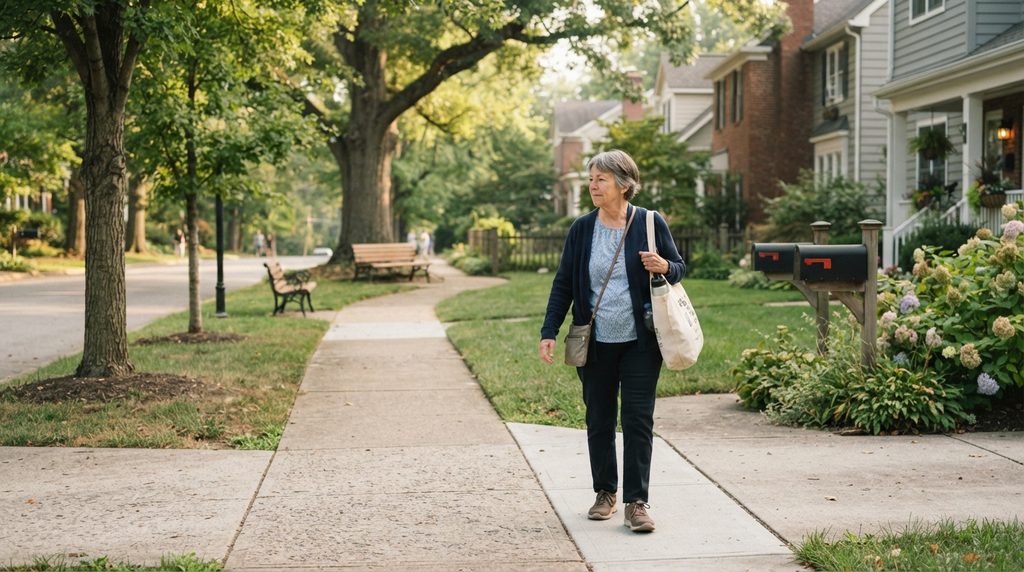
Social routines often change with age. Retirement may reduce everyday conversations with coworkers. Moving, losing someone close, or facing transportation and mobility barriers can also make regular contact more difficult. Health, living arrangements, access to transportation, and community resources can all shape a person’s opportunities to connect.
Social connection does not require a large circle of friends or a busy calendar. It may begin with one trusted person, a shared activity, or a regular point of contact that fits your life.
This guide explains what social connection can look like, how it differs from loneliness and social isolation, and how to choose one manageable way to stay connected.
Quick Takeaways
- Social connection can include close relationships, casual contact, and shared activities.
- A meaningful social life does not require a large group of friends.
- Loneliness and social isolation are related, but they are not the same.
- Brief, regular contact may feel more manageable than a major routine change.
- Persistent loneliness or emotional distress may be a reason to seek additional support.
What Social Connection Can Look Like in Everyday Life
Social connection and healthy aging are not simply about how many people you know. Connection may come from relationships that help you feel supported, included, or valued in everyday life.
It might involve a close friend who listens, a relative who checks in, a neighbor who stops to talk, or a group built around a shared interest. Familiar interactions at a library, community center, place of worship, or neighborhood activity may also provide a sense of participation.
The CDC describes social connection as including the size and variety of a person’s network, the functions those relationships serve, and their positive or negative qualities.
Connection Is More Than the Size of Your Social Circle
Some people enjoy frequent group activities. Others prefer one-to-one conversations or a few dependable relationships. Neither style is automatically better.
Relationships may provide companionship, emotional support, practical help, or a sense of belonging. Different people may also need different levels and types of contact.
Adding more activities may not be the most useful goal for everyone. A better starting point could be strengthening one respectful relationship or making an existing point of contact more regular.
Social Isolation and Loneliness Are Not the Same
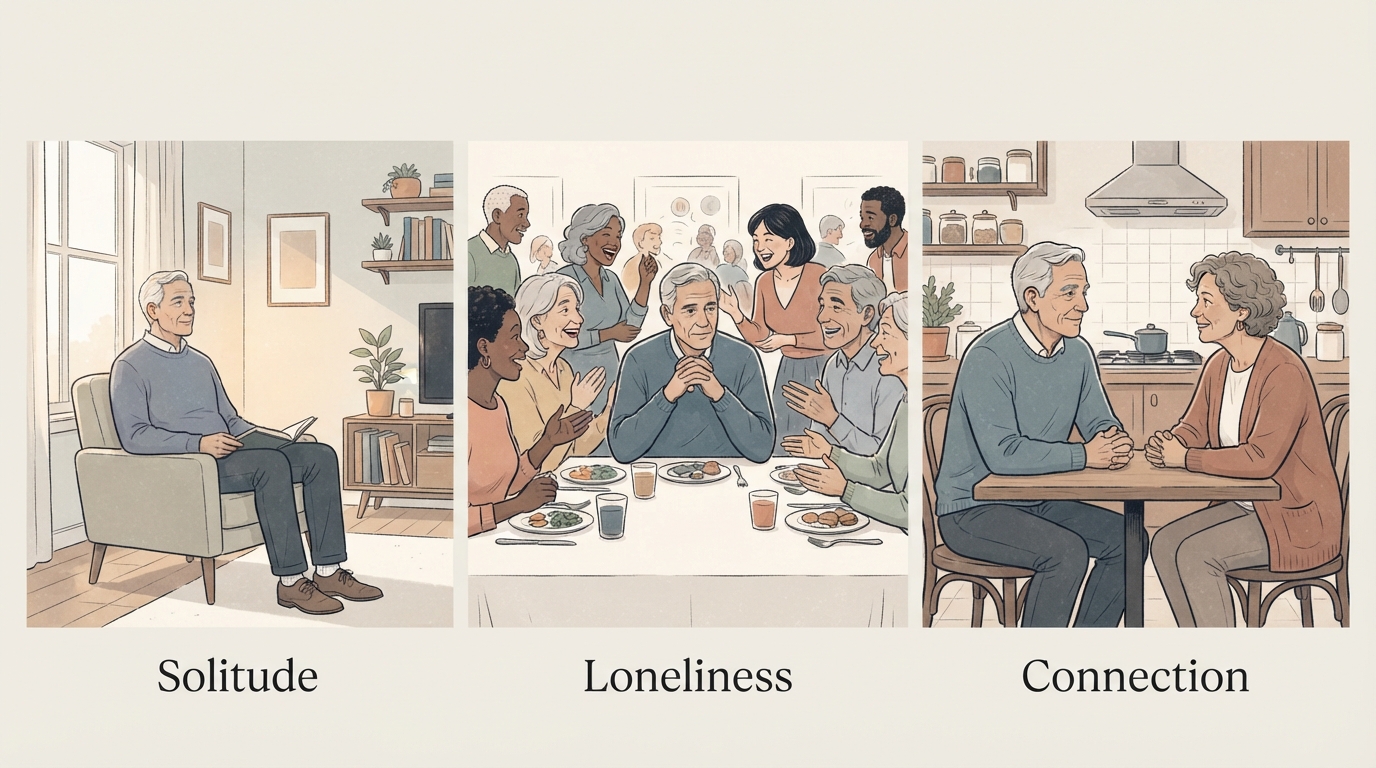
Social isolation generally refers to having few relationships, contacts, or sources of support. Loneliness is the subjective feeling of being disconnected or lacking the closeness you want.
A person can live alone and still feel socially connected. Someone else may interact with many people but continue to feel lonely.
| Term | Plain-language meaning |
|---|---|
| Social isolation | Having few relationships, contacts, or sources of support |
| Loneliness | Feeling disconnected or lacking meaningful closeness |
| Social connection | The relationships, support, and sense of belonging in a person’s life |
These experiences may overlap, but they are not interchangeable.
Why Social Needs May Change as We Age
Changes in social contact do not necessarily mean that someone has done anything wrong. Relationships often shift as routines, responsibilities, and circumstances change.
Life Transitions Can Change Everyday Contact
Retirement can remove conversations that once happened naturally during the workday. Friends or relatives may move farther away, and the loss of a spouse, partner, or friend can leave an important gap.
Living alone, reduced mobility, hearing difficulties, and the loss of family or friends may also make it harder for some older adults to remain connected.
These changes deserve recognition rather than blame. Building a different social routine may take time, especially after a major transition.
Mobility, Transportation, and Energy Can Create Barriers
Wanting more contact does not automatically make participation easy.
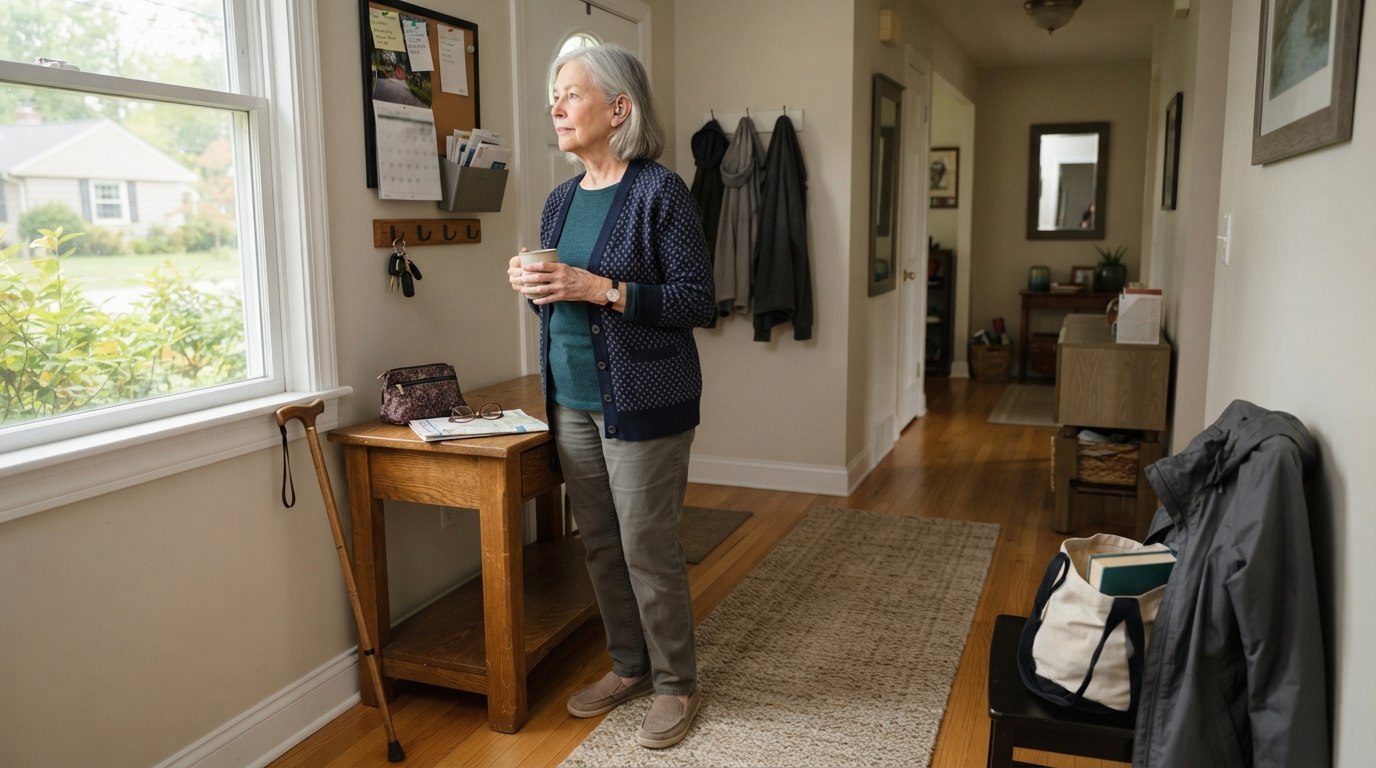
Transportation, mobility, energy, hearing, vision, cost, and access to welcoming community spaces may all affect whether an activity is realistic. The availability of libraries, parks, public transportation, and community programs can also influence opportunities for connection.
A useful plan should account for these barriers instead of assuming that everyone can travel, join a group, or use new technology comfortably.
How Social Connection May Fit Into Everyday Wellness
Meaningful relationships can provide companionship, emotional support, practical help, and a sense of belonging.
They can also create opportunities to share experiences, participate in enjoyable activities, ask for help, or offer support to someone else. Public health guidance describes social connectedness as the extent to which people feel supported, valued, and that they belong in their relationships.
Social contact is best viewed as one part of a broader everyday wellness routine—not as a treatment, guarantee, or requirement to become more outgoing.
Keep in mind: Social needs vary. A routine that feels supportive to one person may feel tiring, uncomfortable, or impractical to another.
Realistic Ways to Stay Socially Connected
There is no single right way to stay connected as you age. A useful option is one that fits your personality, access, mobility, and energy.
Start With One Trusted Person
A small point of contact can feel more manageable than trying to build an entirely new social life.
You might:
- send a brief message to someone you trust;
- ask when they have time for a short call;
- invite someone to coffee or a short walk;
- arrange a regular but flexible check-in.
The relationship should feel respectful and emotionally safe. There is no need to reconnect with someone whose presence was harmful, unwanted, or consistently draining.
The CDC suggests that simple actions such as reaching out or checking on someone can help build supportive relationships.
READ MORE:
Use a Shared Activity to Make Conversation Easier
Conversation may feel less pressured when it happens alongside an activity.
Possibilities include walking with a neighbor, attending a library program, joining a hobby class, volunteering, or participating in a cultural, faith, or neighborhood activity.
Community, group, and intergenerational programs are among the approaches being used or studied to promote social connection. Their suitability and results can vary, so no individual activity should be presented as a universal solution.
Consider Options That Work From Home
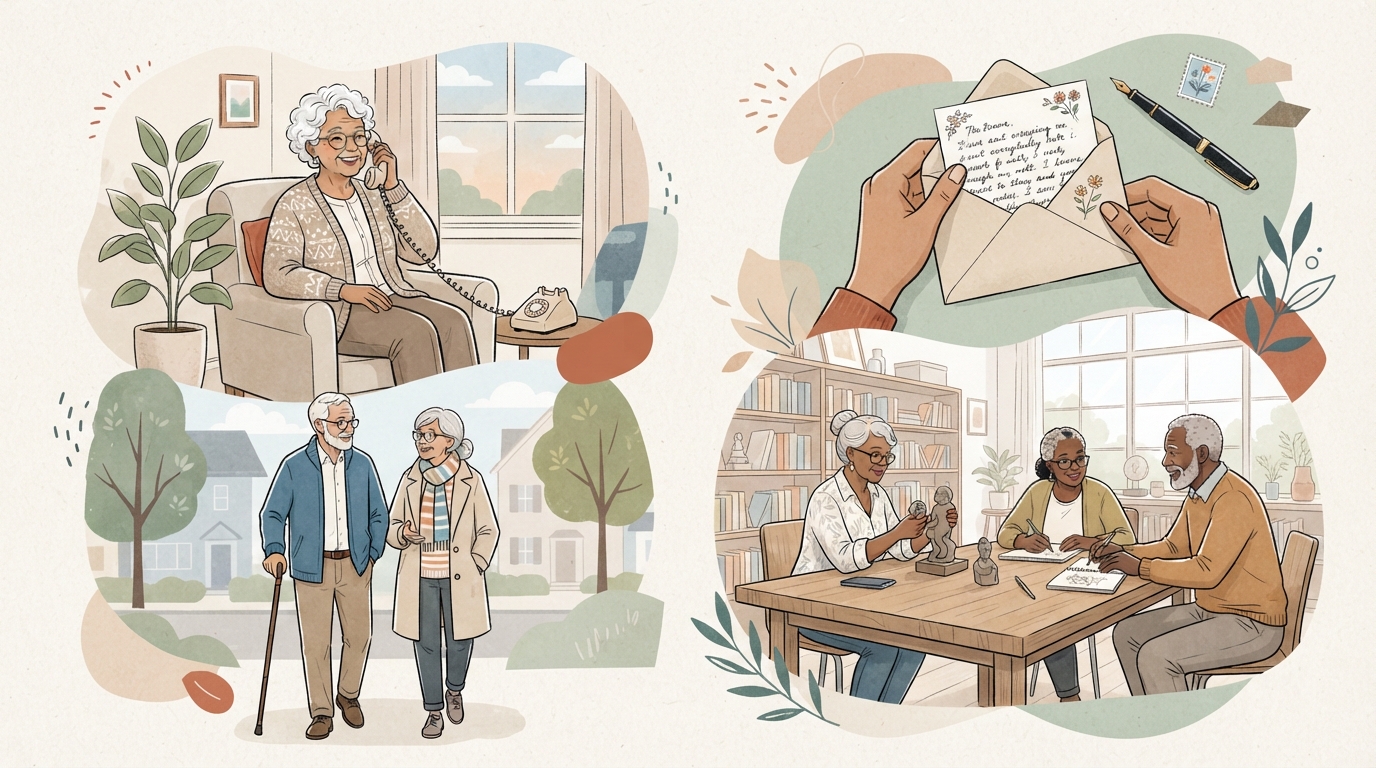
In-person activities are not the only way to maintain relationships. Phone calls, messages, letters, video conversations, and online groups may provide ways to stay in touch when travel, distance, or energy make meetings difficult.
Phone-based programs and communication technologies are among the approaches studied for supporting connection. More research is needed to determine which formats are most useful for different people and settings.
Technology is an option, not a requirement. A voice call may feel more comfortable than video, while a handwritten note may be more meaningful than an online group.
Choose Regularity Over Intensity
A long event may not be realistic when energy changes from day to day. A brief call or visit may be easier to repeat.
Consider choosing a time when you usually have more energy, an accessible setting, and a clear ending time. You can adjust the format or frequency when your circumstances change.
There is no universal number of friends, calls, or activities that everyone needs. Pay attention to whether your current level and type of contact feel supportive to you.
Finding a Form of Connection That Fits
| Situation | Flexible option | First step |
|---|---|---|
| You prefer one-to-one contact | A short call or visit | Contact one trusted person |
| Groups feel tiring | A structured activity | Try one session |
| Travel is difficult | Phone, video, or nearby contact | Schedule a brief call |
| Energy varies | Short, planned contact | Choose a manageable time |
Choose One Manageable First Step
Long lists of possibilities can make change feel harder. Narrow the decision to one low-pressure form of contact.
A Simple Connection Checklist
- Identify the main barrier.
- Decide whether one-to-one or group contact feels better.
- Choose a format that fits your access and comfort.
- Make the first step brief.
- Pick a realistic time.
- Adjust based on how the interaction feels.
Start small: Choose one person, place, or activity that feels manageable. A brief, regular point of contact may be more realistic than changing your entire social routine at once.
The first attempt does not need to become a permanent commitment. Notice whether the interaction feels meaningful, tiring, comfortable, or inconvenient, and adjust from there.
When Additional Support May Help
Everyday suggestions cannot address every cause of isolation or loneliness.
Persistent loneliness, isolation, or emotional distress may be a reason to speak with a qualified healthcare or mental health professional, especially when it interferes with daily life or activities you value.
Professional or community support may also be useful when health, hearing, vision, mobility, transportation, or safety barriers make contact difficult. The National Institute on Aging recommends talking with a healthcare professional about feelings of loneliness or isolation.
Medical note: This article provides general educational information and is not a substitute for individualized medical or mental health advice. Speak with a qualified professional about persistent distress, health concerns, or barriers that affect your daily life.
Frequently Asked Questions
Does Social Connection Have to Be in Person?
No. Phone calls, messages, letters, and video conversations can help maintain relationships when meeting in person is difficult. The most useful format depends on access, circumstances, and personal preference.
Can You Feel Lonely Even When You Have Friends?
Yes. Loneliness reflects how connected or supported a person feels, not simply how many people they know. Someone can have frequent contact and still miss the closeness they need.
Start With One Meaningful Point of Contact
A useful first step can be as simple as one conversation, message, or shared activity that fits your routine.
Choose a form of contact that feels comfortable and realistic, then adjust the timing and format as your circumstances change. Connection does not need to fill your calendar to have a place in everyday wellness.
Choose one manageable way to reconnect, and explore our Healthy Aging guide for more realistic habits that can support everyday well-being.
Sources
- Centers for Disease Control and Prevention — Social Connection
Used for: the dimensions of social connection and social connectedness.
URL: https://www.cdc.gov/social-connectedness/about/index.html - Centers for Disease Control and Prevention — Health Effects of Social Isolation and Loneliness
Used for: definitions, barriers, risk factors, and community conditions.
URL: https://www.cdc.gov/social-connectedness/risk-factors/index.html - Centers for Disease Control and Prevention — Improving Social Connectedness
Used for: small acts of contact and brief check-ins.
URL: https://www.cdc.gov/social-connectedness/improving/index.html - Centers for Disease Control and Prevention — Promising Approaches to Promote Social Connection
Used for: community programs, phone-based contact, communication technology, and limitations of the available evidence.
URL: https://www.cdc.gov/social-connectedness/data-research/promising-approaches/index.html - National Institute on Aging — Loneliness and Social Isolation: Tips for Staying Connected
Used for: older-adult context, ways to maintain contact, and guidance about discussing persistent concerns with a professional.
URL: https://www.nia.nih.gov/health/loneliness-and-social-isolation/loneliness-and-social-isolation-tips-staying-connected - Centers for Disease Control and Prevention — Information for Older Adults: Still Going Strong
Used for: the public health definition of social connectedness and its connection to belonging and support.
URL: https://www.cdc.gov/still-going-strong/older-adults/index.html