
Healthy aging does not require one perfect routine. Movement, strength, rest, nourishing meals, social connection, and personal care may all deserve attention, but not necessarily in the same way every week. The National Institute on Aging presents healthy aging as a broad topic that includes physical activity, nutrition, medical care, mental well-being, and social connection.
This weekly healthy aging checklist is a flexible reflection tool—not a score or medical assessment. Use it to recognize what is going well, notice where your routine feels more difficult, and select a realistic focus for the week ahead.
Quick Takeaways
- You do not need to complete every item.
- Movement, strength, mobility, and balance are related but distinct areas.
- Activities can be adjusted to your current abilities and health circumstances.
- One specific next step may be more practical than changing your entire routine.
- Falls or persistent changes in mobility or daily function are reasons to seek professional guidance.
Federal guidance for older adults includes aerobic, muscle-strengthening, and balance activities as parts of a well-rounded physical activity routine.
How to Use This Healthy Aging Checklist
Treat It as a Check-In, Not a Score
There is no required number of boxes to check. An unfinished item does not mean you failed, and the results do not measure how well you are aging.
Instead, look for patterns. Some weeks may call for more rest, while others may offer more room for movement, meal planning, or time with people you care about.
Start here: Review the week without judging it. Notice what went well, what felt difficult, and which area deserves attention next.
Choose a Realistic Focus
After reviewing the list, select one or two areas that seem manageable for the coming week. This leaves room for appointments, family responsibilities, changing energy, and unexpected events.
Healthy aging routines do not look the same for everyone. Federal guidelines encourage older adults to be as physically active as their abilities and health circumstances allow.
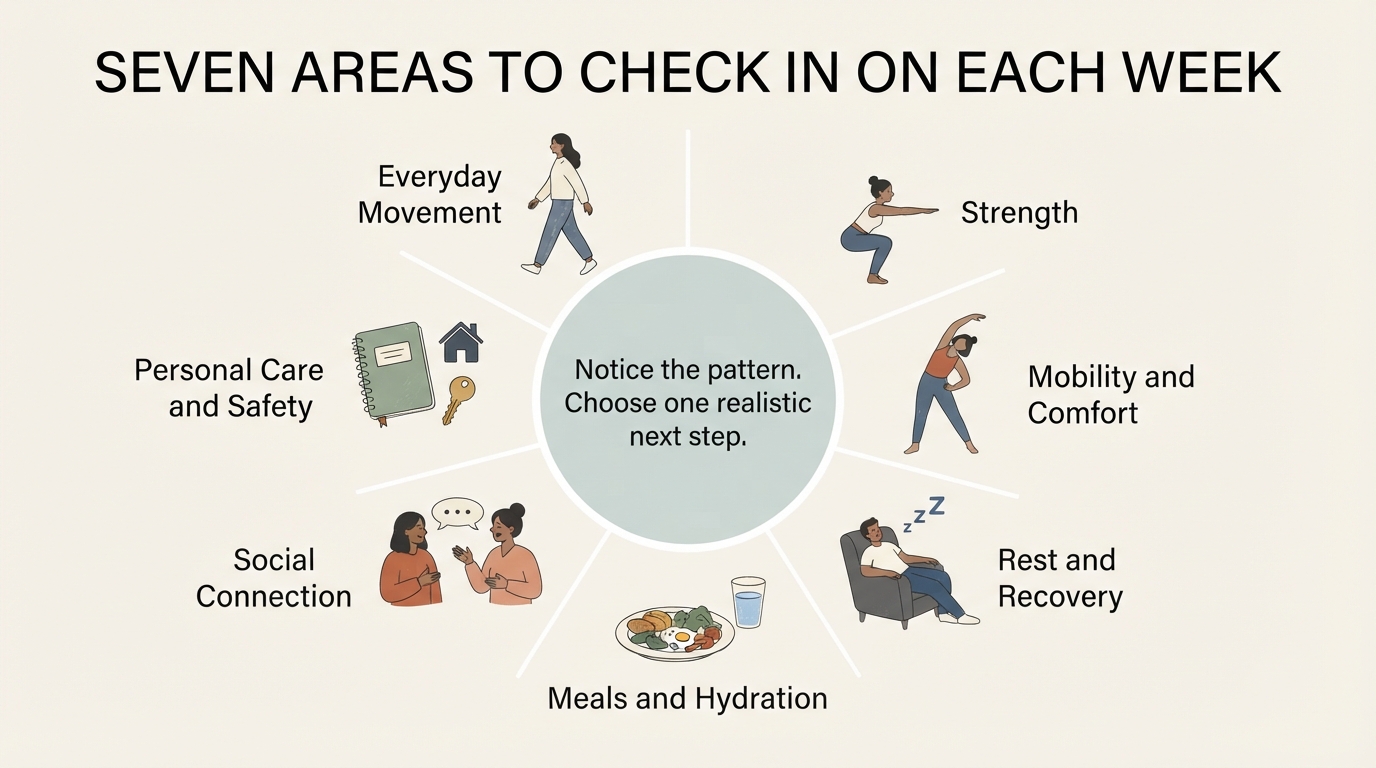
Your Weekly Healthy Aging Check-In
Everyday Movement
Movement may include planned exercise, walking, gardening, household tasks, or other activities that fit your circumstances. Physical activity is an important part of healthy aging and can support the ability to complete everyday tasks.
- I noticed opportunities to move during the week.
- I paid attention to long periods of sitting or inactivity.
- I chose movement that felt appropriate for my current abilities.
Strength and Daily Tasks
Strength is involved in everyday tasks such as standing from a chair, carrying groceries, and climbing steps. Muscle-strengthening activity is one part of the federal guidance for older adults, along with aerobic and balance activities.
- I noticed how strength-related daily tasks felt compared with my usual routine.
- I made room for strength-related activity that fit my abilities and guidance.
- I wrote down questions about changes that felt persistent or concerning.
Mobility, Balance, and Comfort
Mobility can involve reaching, turning, changing position, walking through the home, and feeling steady during ordinary activities. Balance training is included in multicomponent physical activity guidance for older adults.
- I noticed stiffness, discomfort, or changes in movement.
- I considered whether my surroundings made movement easier or harder.
- I wrote down questions about changes I may want to discuss with a professional.
Rest and Recovery
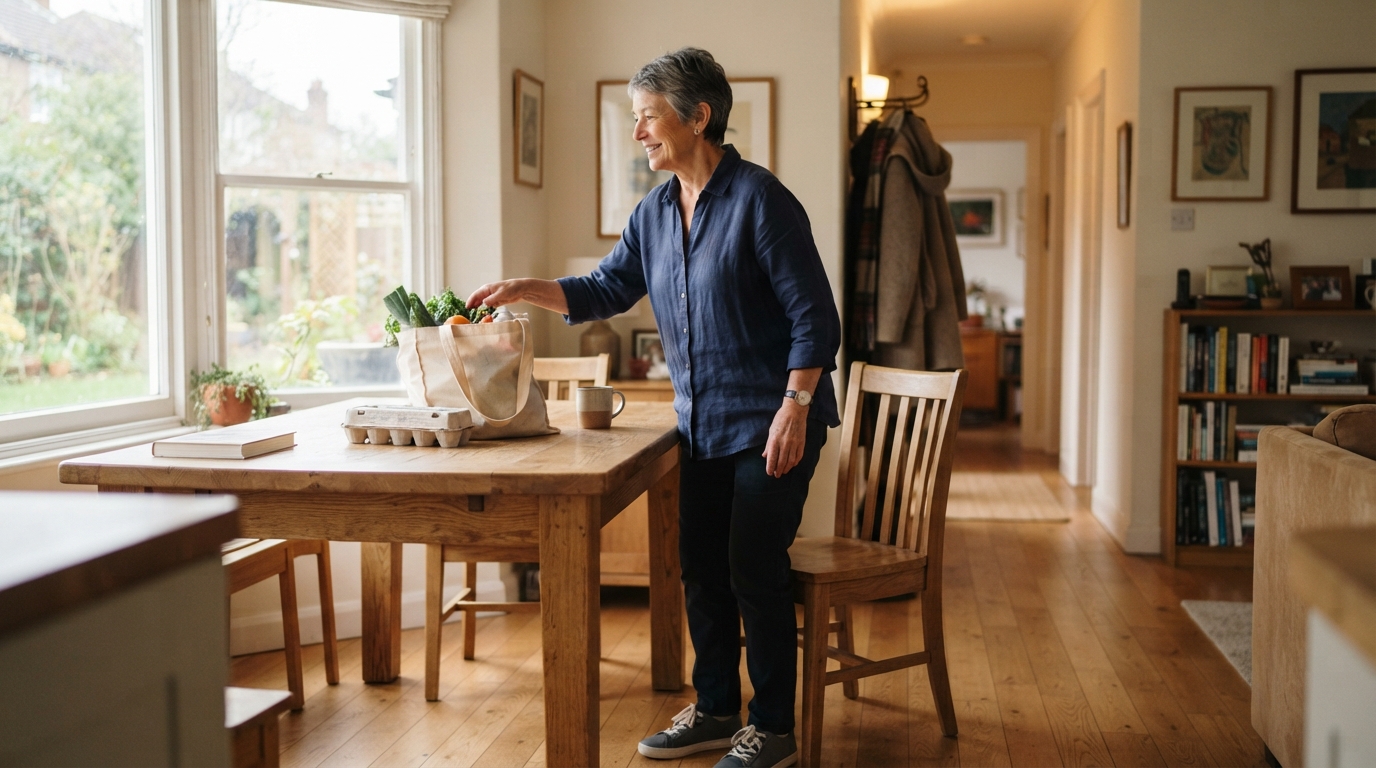
Rest can make a routine easier to sustain. A weekly check-in can also help you notice patterns in sleep, energy, and recovery.
Sleep timing and patterns may change with age. Ongoing difficulty falling asleep, staying asleep, or feeling rested is worth discussing with a healthcare professional.
- I made room for rest when I needed it.
- I noticed patterns in sleep, daytime energy, or recovery.
- I adjusted my plans when the week was unusually demanding.
Meals and Hydration
Meals do not need to be elaborate to deserve attention. Consider whether you were able to eat regularly, include some variety, and manage practical barriers such as shopping, cooking, appetite, or chewing.
Nutrition needs can change with age, and practical or health-related circumstances may affect eating habits.
- I noticed whether I was able to eat regular, nourishing meals.
- I included some variety in foods when possible.
- I drank fluids regularly and followed any guidance specific to my health needs.
Fluid needs are not identical for everyone. Questions about an appropriate amount are best discussed with a qualified healthcare professional, particularly when a medical condition or care plan affects fluid intake.
READ MORE:
Social Connection and Meaningful Activities
Connection can include meeting someone in person, making a phone call, joining a group, exchanging messages, or spending meaningful time with family or friends.
- I had an opportunity for meaningful contact with another person.
- I made time for an activity I value.
- I noticed whether I had enough meaningful connection for my current needs.
Personal Care and Home Safety
This section is not about managing medical care on your own. It is a reminder to organize questions, review tasks already discussed with your healthcare team, and notice concerns that may require help.
The National Institute on Aging recommends keeping an updated list of prescription medicines, over-the-counter products, vitamins, and supplements. Share that information with your healthcare professionals, and do not stop or change a medicine without professional guidance.
- I reviewed care tasks or appointments already discussed with my healthcare team.
- I wrote down questions about symptoms, medicines, or upcoming appointments.
- I noticed obstacles or safety concerns in my home or routine.
CDC STEADI offers resources for identifying fall concerns and reviewing home safety with older adults and caregivers.
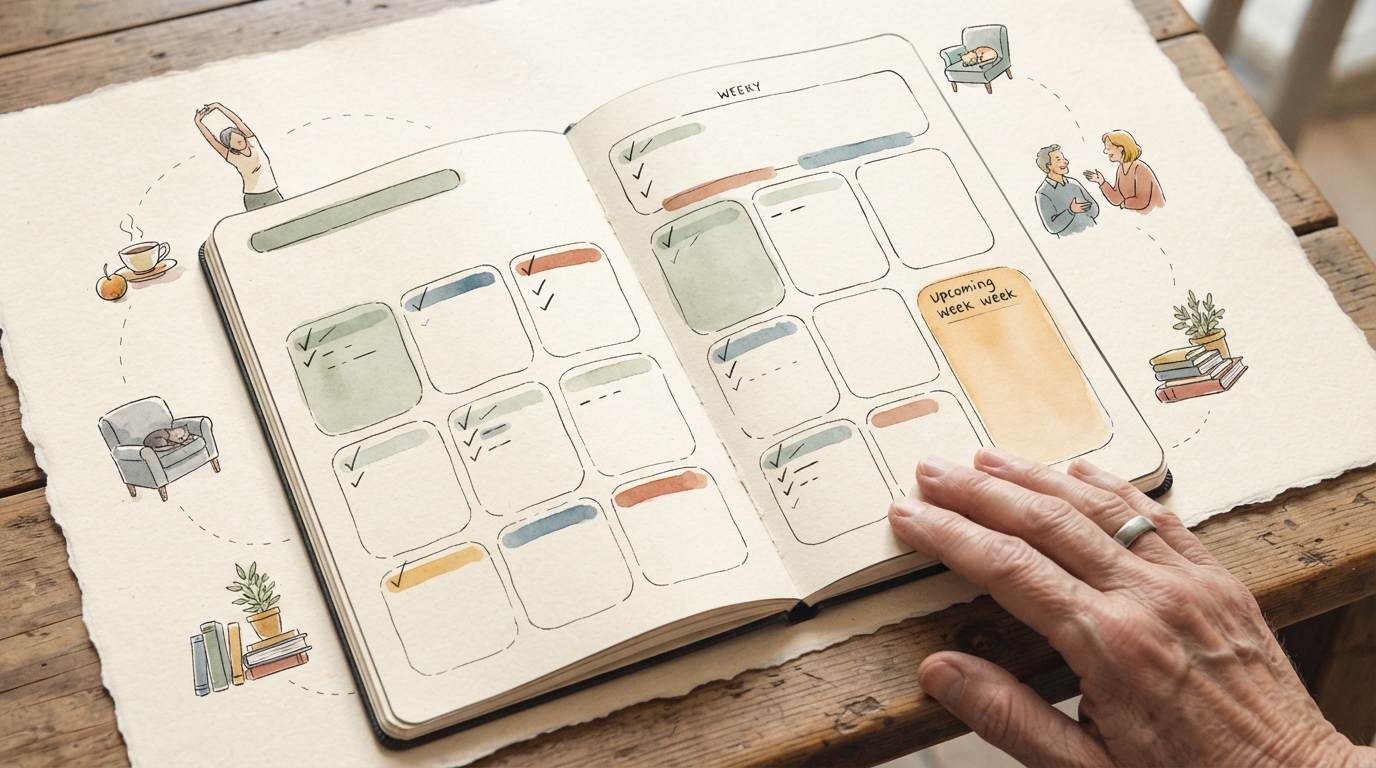
Choose One Focus for the Week Ahead
Once you have reviewed the checklist, look for one area where a small adjustment seems useful. The aim is not to build an ideal routine. It is to choose a step that fits the week you are likely to have.
Make the Step Specific and Manageable
A broad goal such as “be more active” can be difficult to act on. A more specific possibility might be:
Add a comfortable walk after lunch on one or two days that fit my schedule.
This is an example, not a universal recommendation. The type and amount of activity should reflect your abilities and any guidance you have received.
It can also help to plan a smaller version. A walk outside might become a few comfortable minutes of movement indoors. A longer conversation might become a short message to someone you trust.
Review and Adjust
At the end of the next week, ask:
- What felt easier?
- What became more difficult?
- Did the priority fit my routine?
- Should I continue, reduce, or change it?
The answers are observations, not grades.
From Weekly Reflection to One Realistic Step
| What I noticed | One area to focus on | A smaller version |
|---|---|---|
| Movement was difficult to fit in | Add one short walk | Move indoors for a few minutes |
| Meals felt rushed | Plan one simple lunch | Prepare one ingredient ahead |
| I had little social contact | Reach out to one person | Send a short message |
These are examples rather than universal goals. Choose an action that fits your circumstances.

When a Checklist Is Not Enough
A checklist can help organize observations, but it cannot explain why a change is happening.
Tell a healthcare professional about a fall, even when it did not cause an obvious injury. Professional guidance is also appropriate when you notice a persistent or meaningful change in balance, mobility, strength, or your ability to manage everyday activities. CDC STEADI is designed to help healthcare professionals identify fall concerns and connect older adults with appropriate assessment and support.
Questions about symptoms, medication side effects, interactions, missed doses, or supplements should be taken to a pharmacist, physician, or another qualified professional. Do not use this checklist to decide whether to change or discontinue a treatment.
Bring Your Notes to an Appointment
Consider writing down when a change started, how often you notice it, and which daily activities have become more difficult.
These notes may help you explain your concerns, but they do not replace a medical history, examination, or individualized assessment.
When to get help: Speak with a qualified healthcare professional about falls, persistent changes in mobility or daily function, ongoing symptoms, or concerns about medications.
Medical note: This article provides general educational information and is not a substitute for individualized medical advice. Speak with a qualified healthcare professional about falls, persistent symptoms, changes in mobility or daily function, medical conditions, medications, or other health concerns.
Frequently Asked Questions
Do I need to complete every item on the checklist?
No. The checklist is a flexible reflection tool, not a score. Select the areas that apply to your circumstances and focus on one or two realistic priorities.
Can I use this checklist if I have limited mobility?
Yes. The items can be adapted to your current abilities, environment, health circumstances, and professional guidance. Movement does not need to look the same for every person.
How often should I review the checklist?
A weekly review is a practical option, but it is not a medical recommendation or required schedule. You can use the checklist more or less often depending on what is helpful and manageable for you.
Keep the Checklist Flexible
Travel, caregiving, health changes, appointments, weather, and energy can all affect what is realistic from one week to the next.
Use this weekly healthy aging checklist to notice patterns rather than pursue a perfect routine. Select a practical next step, observe how it fits, and adjust it as your needs change.
CTA
Pick one realistic focus for the coming week, then explore our related Healthy Aging guides when you are ready to go deeper.
Sources
- National Institute on Aging — What Do We Know About Healthy Aging?
Used for: the broad healthy aging framework.
URL: https://www.nia.nih.gov/health/healthy-aging/what-do-we-know-about-healthy-aging - National Institute on Aging — Health Benefits of Exercise and Physical Activity
Used for: physical activity and everyday function.
URL: https://www.nia.nih.gov/health/exercise-and-physical-activity/health-benefits-exercise-and-physical-activity - U.S. Department of Health and Human Services — Physical Activity Guidelines for Americans, 2nd Edition
Used for: aerobic, muscle-strengthening, and balance activity guidance for older adults.
URL: https://health.gov/sites/default/files/2019-09/Physical_Activity_Guidelines_2nd_edition.pdf - National Institute on Aging — Sleep and Older Adults
Used for: changes in sleep patterns and persistent sleep difficulties.
URL: https://www.nia.nih.gov/health/sleep/sleep-and-older-adults - MedlinePlus — Nutrition for Older Adults
Used for: age-related nutrition needs and practical eating considerations.
URL: https://medlineplus.gov/nutritionforolderadults.html - National Institute on Aging — Taking Medicines Safely as You Age
Used for: maintaining a medicine and supplement list and consulting professionals before making changes.
URL: https://www.nia.nih.gov/health/medicines-and-medication-management/taking-medicines-safely-you-age - Centers for Disease Control and Prevention — STEADI: Older Adult Fall Prevention
Used for: fall concerns, home safety, and resources for older adults and caregivers.
URL: https://www.cdc.gov/steadi/ - Centers for Disease Control and Prevention — STEADI Patient and Caregiver Resources
Used for: educational materials related to fall prevention and home safety.
URL: https://www.cdc.gov/steadi/patient-resources/index.html