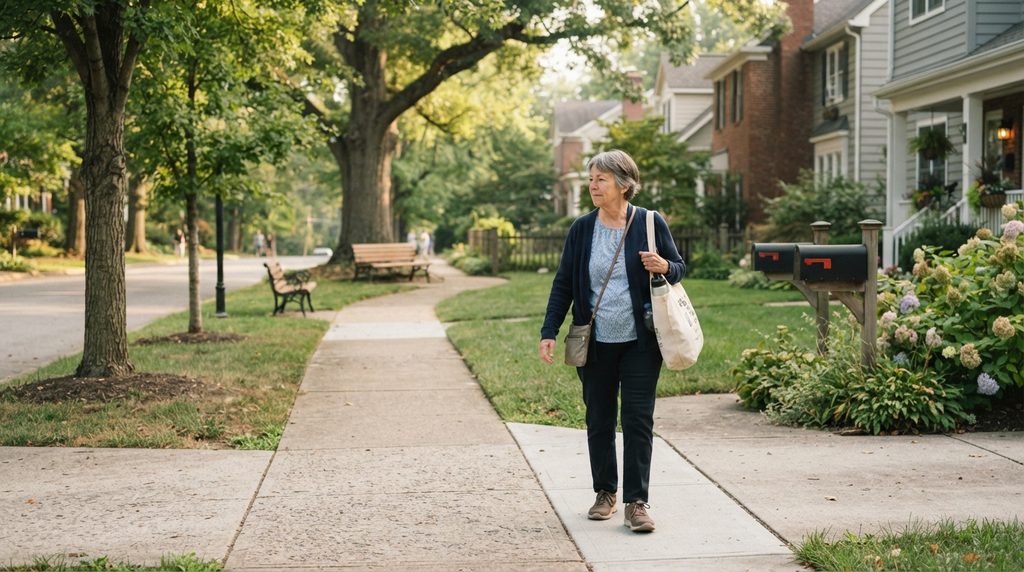
Healthy aging is often associated with staying active, but activity is only one part of a sustainable routine. Sleep, nutrition, social connection, mental well-being, and appropriate health care also belong in the broader picture. The National Institute on Aging describes healthy aging as a combination of habits and circumstances rather than the result of one perfect routine.
Rest and recovery for healthy aging do not require avoiding movement. They involve finding a realistic balance between daily demands and periods with less physical or mental effort.
That balance will not look the same for everyone. Abilities, responsibilities, sleep, health circumstances, and the demands of a particular day may all affect what feels manageable.
Quick Takeaways
- Rest, sleep, and recovery are related, but they are not exactly the same.
- Healthy aging can include regular movement and periods with fewer physical or mental demands.
- Recovery needs may vary with activity, sleep, health circumstances, and everyday stress.
- Small pauses may be more realistic than trying to redesign an entire routine.
- Persistent fatigue, pain, or sleep changes should not automatically be attributed to age.
What Do Rest, Sleep, and Recovery Mean?
These terms are often used together, but distinguishing them can make it easier to build a balanced daily routine.
Rest
Rest is a period with less effort, stimulation, or demand. It might mean sitting comfortably after a walk, pausing between household tasks, or stepping away from noise and decisions for a while.
Rest does not have to involve sleep.
Sleep
Sleep is a natural biological process rather than simply a period of inactivity. Older adults generally need about the same amount of sleep as other adults, although health conditions, medications, and sleep disorders can make restful sleep more difficult. Ongoing sleep problems are worth discussing with a healthcare professional.
Recovery
In everyday use, recovery can describe the time and adjustments that help a person feel ready for the next physical, mental, or emotional demand.
It may include sleep, a quieter period, a lighter task, an enjoyable activity, or a temporary reduction in stimulation. A break may feel helpful on some days and less noticeable on others.
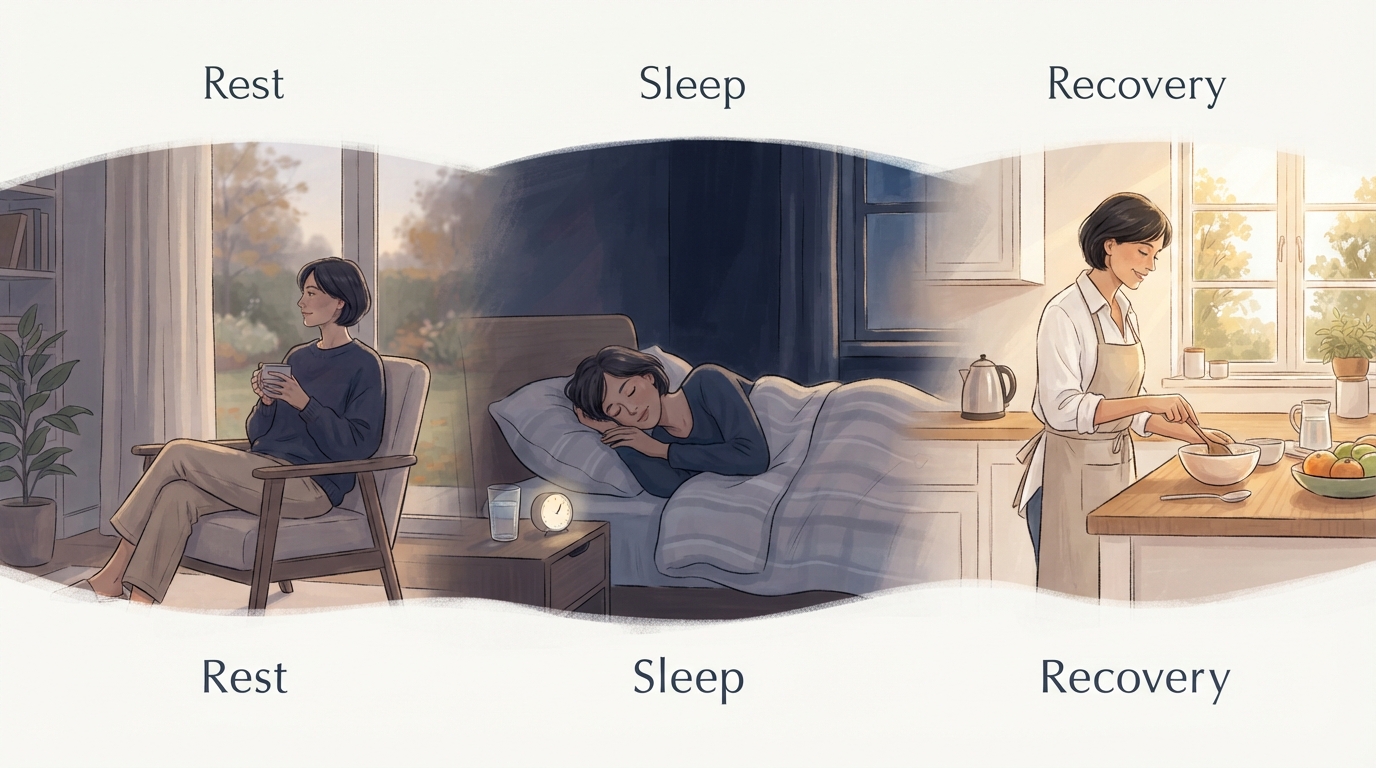
Rest, Sleep, and Recovery: What Is the Difference?
| Concept | Practical meaning | Everyday example |
|---|---|---|
| Rest | A temporary period with less effort or stimulation | Sitting quietly after a demanding task |
| Sleep | A recurring biological process | Following a regular nighttime routine |
| Recovery | Time and adjustments that may help after daily demands | Balancing activity with a quieter period |
These distinctions are useful because a balanced routine may include all three at different times.

Why Recovery Belongs in a Healthy Aging Routine
Healthy aging is broader than physical performance. Guidance from the National Institute on Aging includes movement, sleep, nutrition, mental well-being, social connection, and regular health care as parts of the larger picture.
Recovery belongs within that framework. It is not a replacement for movement, and movement does not eliminate the need for quieter parts of the day.
Activity and Rest Can Work Together
Regular physical activity can help older adults maintain physical function and make everyday activities easier. Federal guidance also recognizes that activity may need to be adjusted to a person’s abilities, fitness level, and health conditions.
Balancing activity and rest might mean following a walk with an unhurried meal or placing a lighter task after a more demanding one.
Recovery Is Not the Same as Avoiding Activity
A recovery period does not need to become an entire day of inactivity. It might be a short transition between tasks or a planned period with fewer demands.
Healthy aging also does not require ignoring pain, unusual fatigue, or symptoms that make normal activities difficult. Changes in symptoms or function may be reasons to pause and seek individualized guidance.
Needs Can Change From Day to Day
A routine that feels comfortable one day may feel demanding on another. Sleep, appointments, caregiving, travel, illness, and emotional demands can all change how much effort a day requires.
That does not mean everyone inevitably needs more rest simply because they are getting older. A useful routine leaves room for adjustment.
How Everyday Stress Can Affect the Way You Feel
Everyday stress can come from caregiving, schedule changes, financial concerns, household responsibilities, health appointments, and constant decision-making.
In this article, stress refers mainly to ordinary pressures that can make it harder to settle down or feel ready for the next task. It should not be treated as a diagnosis.
Physical tasks are only one source of effort. Concentrating for long periods, navigating a busy environment, or supporting another person can also feel demanding.
The National Center for Complementary and Integrative Health describes relaxation techniques such as deep breathing, guided imagery, and progressive relaxation. Evidence and individual responses vary, so these approaches should be considered options rather than universal solutions.
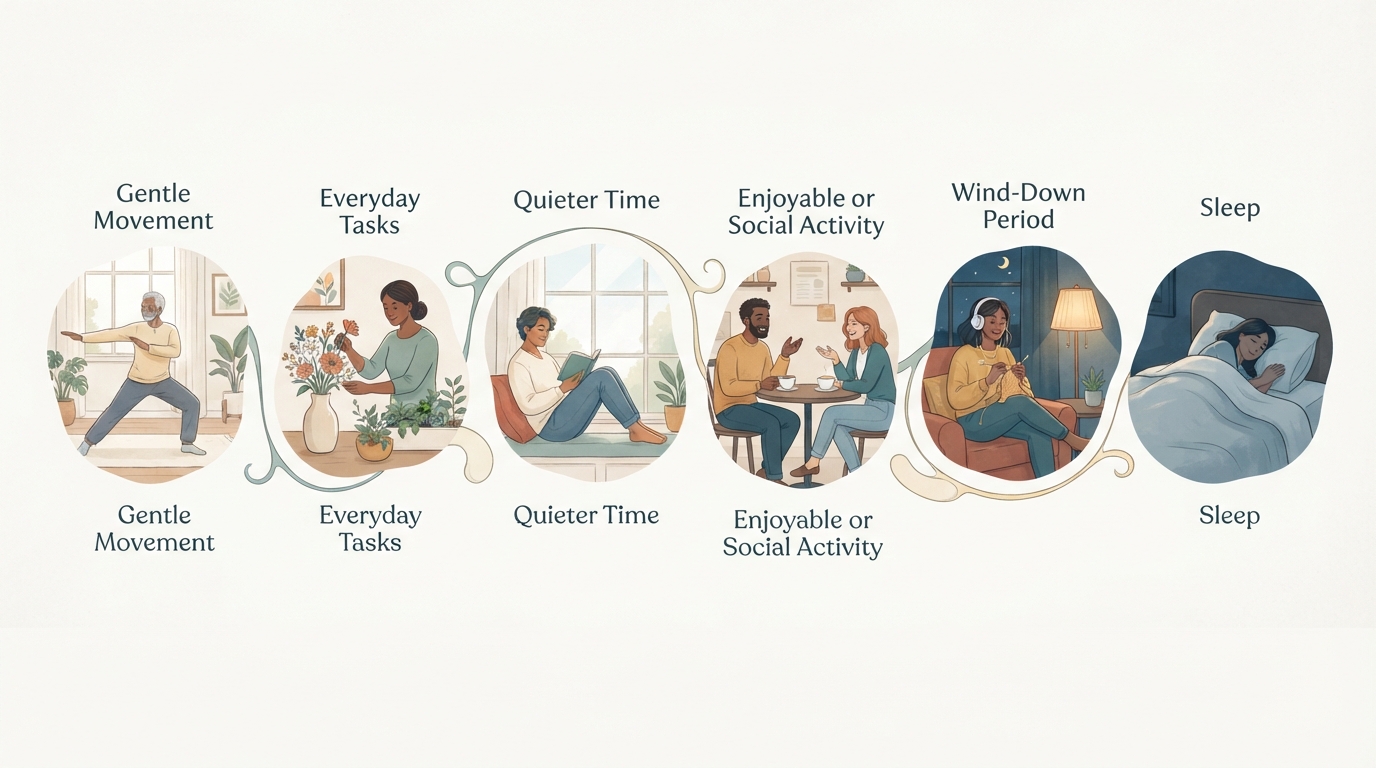
A quieter period might involve turning off background media, delaying a nonurgent decision, sitting outside, or choosing a familiar activity that requires little planning. The useful question is not whether an activity officially “counts” as rest, but whether it temporarily reduces demands in a manageable way.
READ MORE:
How to Build a Sustainable Walking Plan for Healthy Aging
Healthy Aging: Simple Habits for Strength, Mobility and Well-Being
Simple Ways to Make Room for Recovery
An everyday recovery routine does not need a detailed schedule. Start with the part of the day that regularly feels most demanding and consider one small adjustment.
1. Alternate More Demanding and Lighter Tasks
When possible, avoid grouping every demanding task into the same part of the day.
A household project might be followed by a seated activity. An appointment might be followed by an unhurried meal rather than another complicated errand.
2. Use Short Pauses Between Activities
A long, interruption-free break may not fit the day. A brief transition can be easier to place between responsibilities.
This might mean changing position, getting a drink, looking outside, or waiting a few minutes before beginning the next task.
3. Create a Gradual Wind-Down Routine
Moving directly from a busy evening into bed can make the end of the day feel abrupt. A wind-down routine could include quieter activities, dimmer lighting, or fewer notifications.
The National Institute on Aging recommends consistent sleep habits and seeking guidance when sleep problems continue.
4. Choose Enjoyable Activities
One person may prefer reading quietly, while another may enjoy music, time outdoors, conversation, or a creative activity.
Enjoyable, meaningful, and socially engaging activities can be part of a broader healthy aging routine, even when they are not centered on productivity.
5. Protect Time for Sleep
Quiet time during the day does not replace sleep. Both can have a place in a balanced routine, but they serve different purposes.
Ongoing trouble falling asleep, staying asleep, or remaining alert during the day is worth discussing with a healthcare professional rather than addressing only by adding more daytime rest.
6. Adjust After More Demanding Days
Some days involve more travel, movement, social activity, or decision-making than others. It may be reasonable to simplify the next part of the day rather than expecting every day to follow the same pattern.
Adjustment is not failure. It is one way to build flexibility into an everyday routine.
Start here: Choose one part of your day that usually feels demanding. Consider adding a brief period with fewer demands instead of trying to redesign your entire routine.
A Gentle Recovery Check-In
This checklist is a reflection tool, not a score or health assessment. You do not need to check every box.
- Have I had any quieter time today?
- Am I alternating more demanding and lighter tasks when possible?
- Has my sleep pattern changed recently?
- Do the activities I call rest reduce demands for a while?
- Are fatigue, pain, or stress interfering with daily life?
- Would professional guidance help me understand the pattern?
Keep in mind: Preferences, abilities, responsibilities, and health circumstances can all shape what feels manageable.
When Rest May Not Be Enough
Feeling tired after a demanding day can happen at any age. Persistent fatigue, however, has many possible causes and should not automatically be attributed to aging or everyday stress.
MedlinePlus notes that fatigue may be related to physical activity, emotional stress, lack of sleep, medications, or health conditions. Fatigue that continues for weeks or interferes with usual activities should be discussed with a healthcare professional.
Ongoing pain, weakness, major sleep changes, or difficulty completing usual activities also deserve attention. A qualified healthcare professional can consider these symptoms alongside medications, medical history, and other individual circumstances.
When to get help: Speak with a qualified healthcare professional when fatigue, pain, sleep problems, or stress persist, worsen, or interfere with daily life.
Medical note: This article provides general educational information and is not a substitute for individualized medical advice. Speak with a qualified healthcare professional if ongoing fatigue, stress, sleep problems, pain, or other symptoms interfere with daily life.
Build a More Balanced Healthy Aging Routine
Healthy aging does not require constant activity. A realistic goal is to notice when demands are accumulating and create room for a manageable change of pace.
Choose one place to begin. That could mean placing a lighter task after a demanding one, creating a short wind-down period, or discussing persistent tiredness with a healthcare professional.
Choose one manageable way to make room for recovery. Then explore our broader healthy aging guide for more everyday habits related to strength, mobility, and well-being.
Sources
- National Institute on Aging — What Do We Know About Healthy Aging?
https://www.nia.nih.gov/health/healthy-aging/what-do-we-know-about-healthy-aging - National Institute on Aging — Sleep and Older Adults
https://www.nia.nih.gov/health/sleep/sleep-and-older-adults - Office of Disease Prevention and Health Promotion — Physical Activity Guidelines for Americans, 2nd Edition
https://health.gov/sites/default/files/2019-09/Physical_Activity_Guidelines_2nd_edition.pdf - National Center for Complementary and Integrative Health — Relaxation Techniques: What You Need To Know
https://www.nccih.nih.gov/health/relaxation-techniques-what-you-need-to-know - MedlinePlus — Fatigue
https://medlineplus.gov/fatigue.html