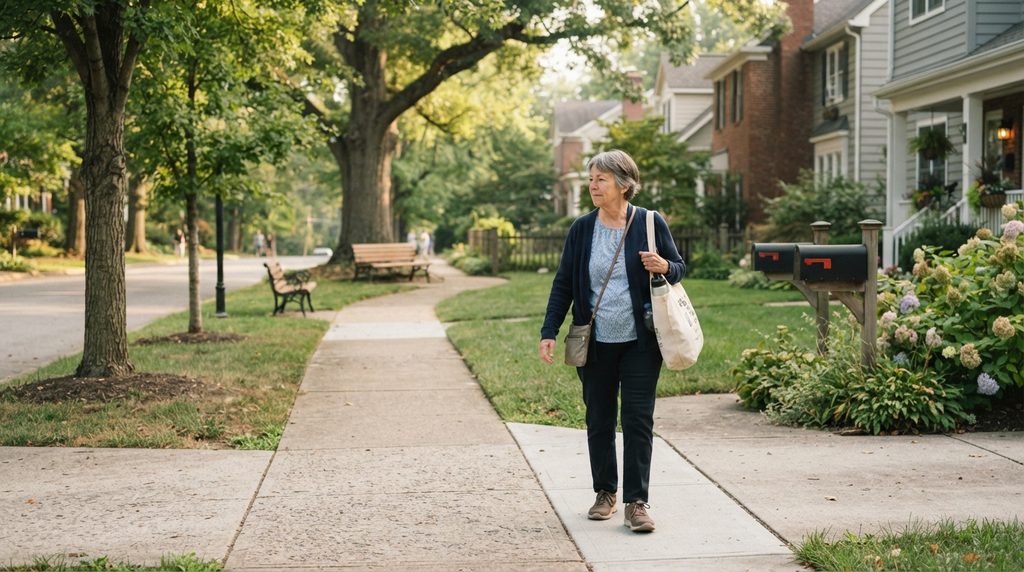
Starting a walking plan is one thing. Finding a way to keep it going through busy weeks, changing energy levels, and everyday responsibilities is another.
A sustainable walking plan doesn’t require a strict daily schedule or a certain number of steps. It starts with what you can comfortably do now and gives you room to adjust.
Whether you’re returning to regular activity or building a new habit as you get older, this guide will help you choose manageable goals, organize your week, find a suitable pace, and make walking part of your life.
Quick Takeaways
- Start where you are. Short, manageable walks are a reasonable starting point.
- Plan for real life. Choose walking days and times you can realistically repeat.
- Stay flexible. Adjust your duration, pace, or schedule as your abilities and circumstances change.
1. Start With Your Current Walking Level
Before building your walking plan, consider what feels manageable for you today.
Check What You Can Comfortably Do
Think about your current activity level. Do you already walk around your neighborhood, run errands on foot, or take occasional walks after meals? Or has regular walking been absent from your routine?
Consider how you feel during and after these activities. Your available time, usual energy level, and any mobility limitations also matter.
You don’t need a formal fitness test to begin planning a simple routine. If you have significant limitations or health concerns, however, professional guidance can help you choose an appropriate starting point.
Choose a Manageable First Goal
Your first walking plan should feel achievable rather than intimidating.
For example, you might plan a comfortable 10-minute walk on three days during the coming week. That’s an illustration, not a required starting prescription. A shorter walk may be more suitable for some people.
The National Institute on Aging recommends starting with activities appropriate for your current fitness level and building up gradually.
You don’t need to reach 30 minutes per walk before your activity becomes worthwhile. Small amounts of movement are a useful place to begin.
2. Build a Flexible Weekly Walking Plan
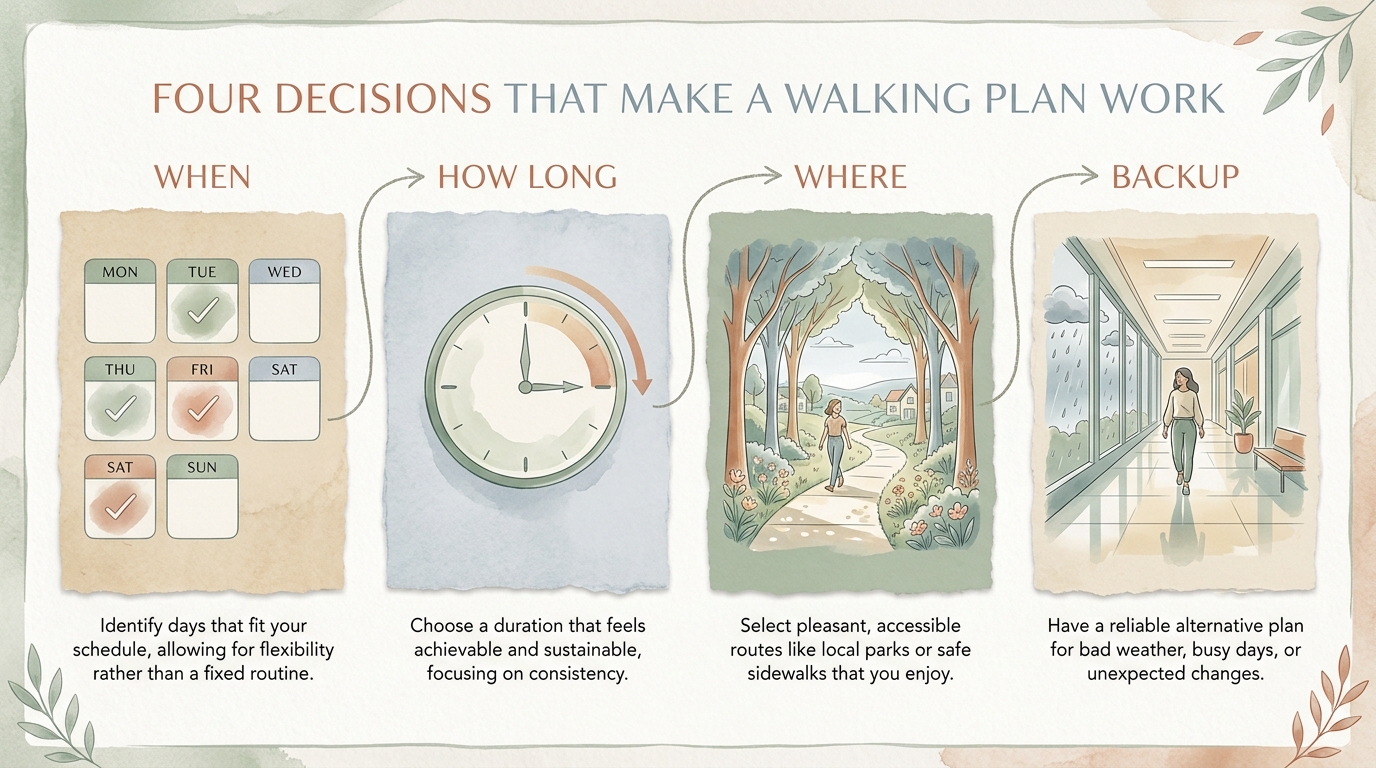
A walking plan becomes easier to follow when you know when and where you’ll walk.
Pick Your Walking Days and Time Windows
Start by looking at your typical week.
Perhaps mornings are more predictable, or a short walk after lunch fits naturally into your day. Choose a few opportunities that are reasonably convenient.
You don’t have to walk every day. A schedule that leaves room for other activities and changing circumstances may be easier to maintain.
Use a Simple Weekly Plan
Here’s an example for someone beginning with three short walks:
| Day | Planned walk | Flexible alternative |
|---|---|---|
| Monday | 10-minute comfortable walk | Shorter walk if needed |
| Wednesday | 10-minute neighborhood walk | Walk indoors |
| Friday | 10-minute walk at a familiar location | Move the walk to another suitable day |
| Other days | Optional everyday movement | No scheduled walk required |
This is an illustrative schedule, not a medical prescription. Adjust the duration, frequency, and pace to your abilities.
Make your own walking plan: Choose the days you want to walk, how many minutes feel manageable, and where you’ll go. Then identify one backup option for days when your original plan doesn’t work.
For example, you could write:
- Walking days: Monday, Wednesday, and Friday
- Minutes per walk: 10, or another manageable duration
- Location: A familiar, comfortable route
- Backup plan: A shorter indoor walk or another suitable day
Keep these choices somewhere easy to review. Your walking plan is a starting point, not a commitment that can never change.
The CDC recommends at least 150 minutes of moderate-intensity aerobic activity weekly for adults 65 and older, along with muscle-strengthening and balance activities.
That recommendation is a useful longer-term reference, not a requirement for your first week. If you cannot currently meet it, being as active as your abilities allow still matters.
Make Room for Shorter Backup Walks
A flexible plan includes alternatives.
If your usual walking window disappears, you might choose a shorter session or move it to another day. You can also divide activity into smaller periods rather than completing everything at once.
The federal Move Your Way Activity Planner offers another way to organize activities throughout the week.
The goal isn’t to complete every planned walk perfectly. It’s to create a routine you can return to.
3. Find Your Pace and Progress Gradually
Your walking plan should account for how hard your body is working, not just how many minutes you spend moving.
Use the Talk Test to Guide Your Pace
You don’t need to reach a particular speed to judge your walking effort.
At an easy pace, conversation should feel comfortable, and your breathing may remain relatively relaxed. This is a general description of effort, not a formal intensity classification.
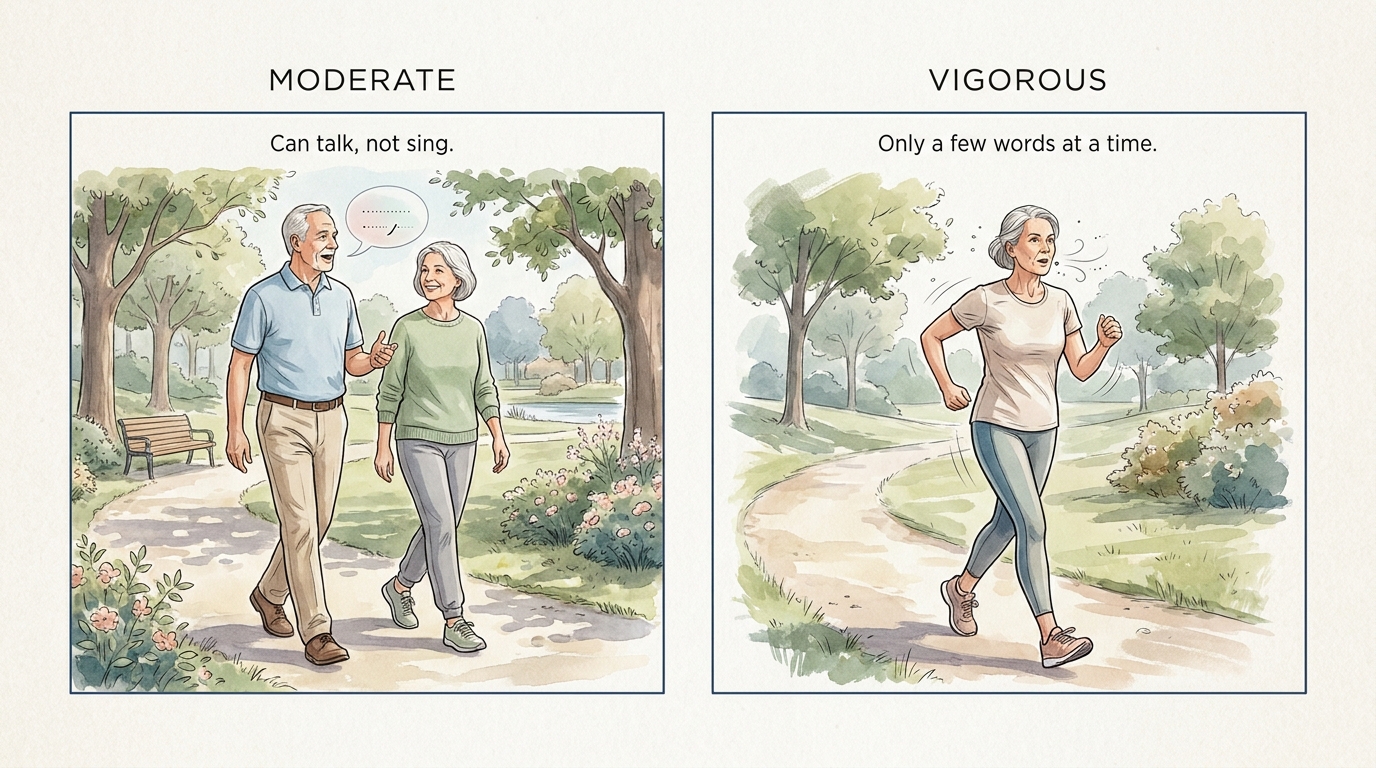
For moderate and vigorous activity, the CDC’s talk test provides a more specific reference:
- Moderate intensity: You can talk, but singing would be difficult.
- Vigorous intensity: You can say only a few words before needing to pause for breath.
The same walking speed can feel different from one person to another. Age alone doesn’t determine the right pace.
Start at an effort appropriate for your ability. If your goal includes moderate-intensity walking, work toward it gradually rather than forcing the pace.
READ MORE:
A Weekly Healthy Aging Checklist for Everyday Life
Healthy Aging: Simple Habits for Strength, Mobility and Well-Being
Increase Your Walking Gradually
Once your current routine feels manageable, consider adjusting one part of your walking plan.
You might extend a walk slightly, add another walking opportunity during the week, or increase your pace when appropriate.
The National Institute on Aging recommends building physical activity gradually over weeks or months rather than making sudden increases.
There is no need to change your duration, frequency, and intensity all at once.
Know When to Stay at the Same Level
Use how your current routine feels to guide your next decision:
- Maintain your schedule if your walks still feel challenging or you need more time to become comfortable with them.
- Consider a small increase if your current activity feels manageable and you’re recovering comfortably afterward.
- Reduce or pause activity if discomfort, unusual fatigue, or health changes make your current plan difficult. Seek professional advice for persistent, worsening, or concerning symptoms.
Progress doesn’t require a weekly increase.
A sustainable walking plan leaves room for improvement without making constant progression an obligation.
4. Make Your Walking Routine Easier to Maintain
Even a well-designed walking plan will occasionally meet obstacles. Planning for them can make the habit more practical.
Connect Walking to an Existing Routine
Look for a regular activity that could serve as a reminder to walk.
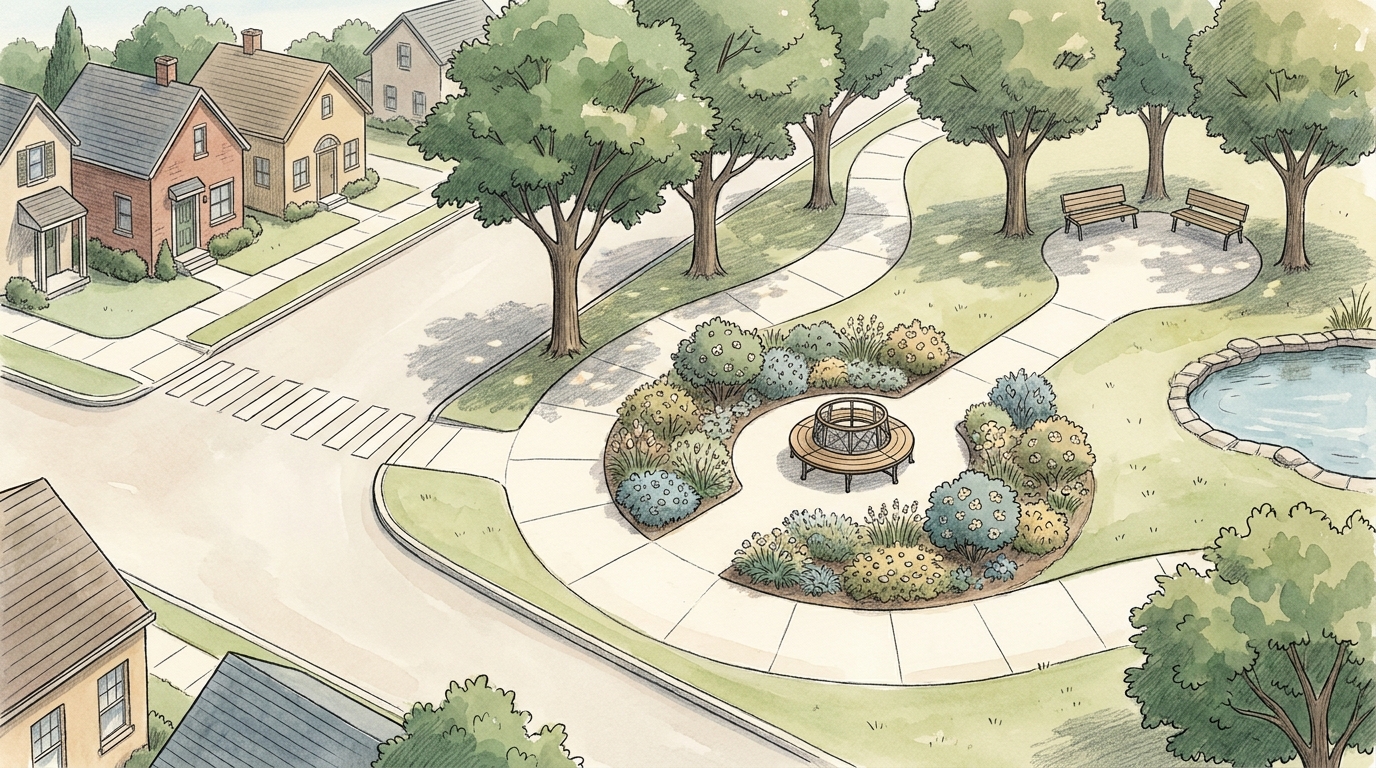
You might walk after breakfast, before an afternoon break, or when visiting a nearby park.
Choose something that fits your preferences. Walking with a friend may make the experience more enjoyable, while others prefer a quiet walk alone.
The National Institute on Aging highlights realistic goals, social support, and progress tracking as strategies for staying active. The U.S. Department of Health and Human Services also discusses behavior-change approaches and supportive environments in its Physical Activity Guidelines Midcourse Report.
These strategies can help people address common barriers, although no single approach guarantees that a habit will last.
Adapt to Weather, Energy, and Busy Days
A rainy afternoon or unusually busy morning doesn’t have to end your routine.
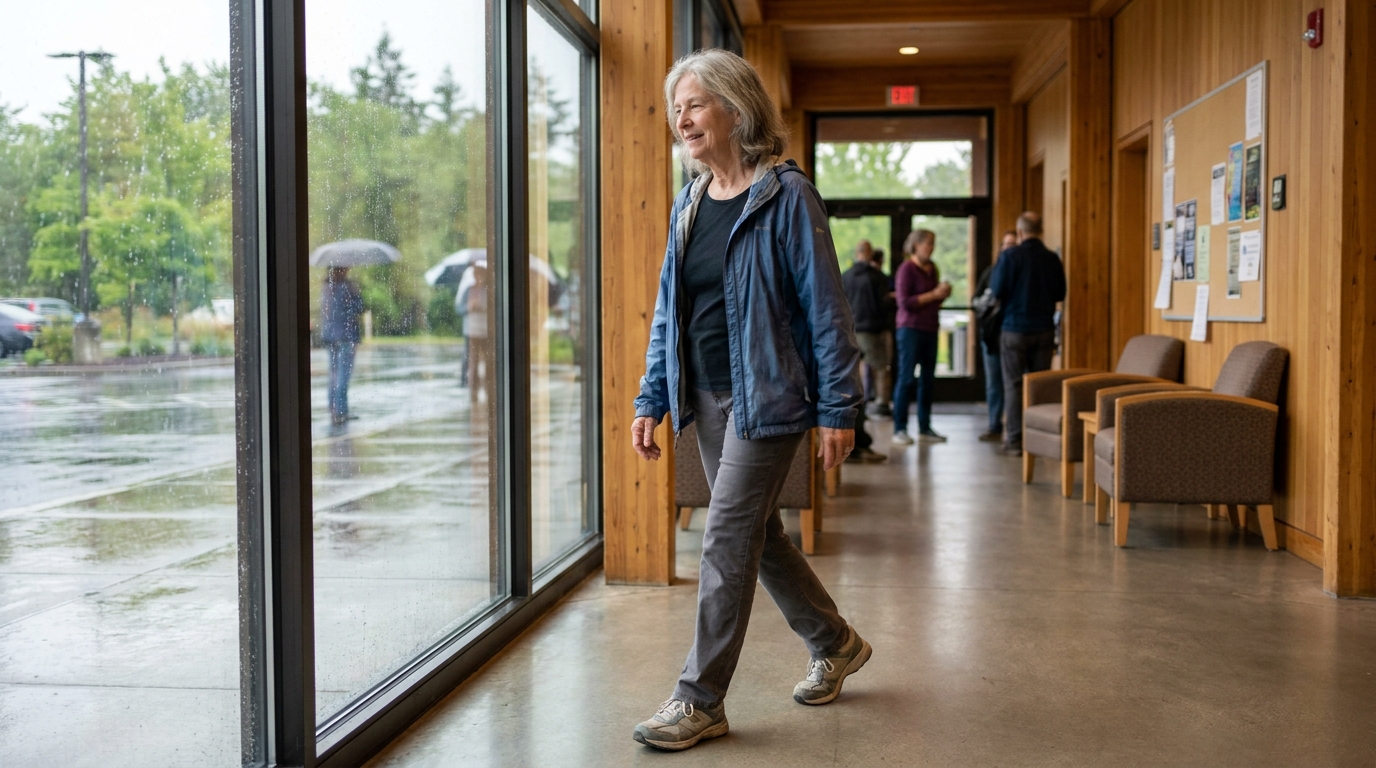
Consider alternatives such as walking in an indoor mall, using a safe indoor space, changing the time, or choosing a shorter session.
If you’re feeling unwell or unusually exhausted, rest or seek appropriate advice rather than treating every missed walk as something to overcome.
Restart After a Break Without Trying to Catch Up
Travel, illness, and changing responsibilities can interrupt any habit.
When you’re ready to resume, consider starting with shorter or easier walks, especially if your fitness or health has changed. After a significant illness or a new medical problem, professional guidance may be appropriate.
You don’t need to compensate for every missed session. Returning at a manageable level is more useful than trying to recover lost minutes immediately.
A flexible walking plan should make restarting possible, not turn an interruption into a setback you have to erase.
5. Track Progress Without Chasing Step Counts
Tracking your walking plan can help you notice patterns, but it shouldn’t make walking feel like another demanding task.
Track What Helps You Stay Consistent
Choose a simple method that works for you:
- Mark completed walks on a calendar.
- Record approximate walking minutes.
- Note how comfortable or challenging a walk felt.
- Use a step counter if you enjoy tracking steps.
A weekly note such as “Walked three times and felt comfortable” may provide enough information to review your plan.
You don’t need a smartwatch, paid app, or elaborate tracking system.
Do You Need 10,000 Steps a Day?
No. Ten thousand daily steps is not a universal requirement for healthy aging.
A 2025 systematic review in The Lancet Public Health found associations between daily step counts and several health outcomes. However, the research was largely observational, and the authors identified limitations, including insufficient age-specific analysis for some outcomes.
The findings don’t establish one ideal target for every individual or prove that reaching a particular step count will produce a specific health result.
Rather than chasing a fixed number, consider whether your current activity level and routine are becoming more manageable and consistent.
6. Keep Your Walking Plan Safe and Adaptable
A sustainable walking plan should account for your surroundings, physical abilities, and health needs.
Choose Comfortable and Safer Walking Conditions
Before heading out, consider a few practical precautions:
- Wear comfortable, supportive shoes with appropriate traction.
- Choose familiar routes with even walking surfaces when possible.
- Look for adequate lighting and safe crossings.
- Check the weather and avoid unsafe heat, cold, or slippery conditions.
- Consider routes with benches or places to rest.
- Carry a phone and let someone know your plans when appropriate.
The National Institute on Aging’s outdoor exercise guidance offers additional precautions.
Starting and finishing at an easier pace can also help your body transition into and out of activity.
Recognize When to Pause or Seek Professional Advice
Many adults can begin gradual, light-to-moderate activity without special medical clearance. Still, individual circumstances matter.
If you have a heart condition, significant mobility limitations, recurrent falls, or a chronic condition that affects exercise safety, discuss appropriate activity with your healthcare professional. The National Institute on Aging provides guidance on adapting physical activity for people living with chronic conditions.
Stop walking if you experience concerning symptoms such as dizziness, unusual shortness of breath, or persistent or worsening pain. Seek medical advice before resuming activity when symptoms are unexplained or concerning.
For possible medical emergencies, act immediately. Chest discomfort, sudden or severe shortness of breath, fainting, or other possible heart attack symptoms require emergency attention. Call 911 in the United States rather than attempting to finish your walk or waiting for symptoms to pass.
The National Heart, Lung, and Blood Institute advises speaking with a healthcare professional about symptoms such as chest pain or dizziness during physical activity. The CDC’s heart attack guidance explains when to seek emergency help.
Safety isn’t separate from consistency. It helps make continued activity more realistic.
7. Remember That Walking Is One Part of Healthy Aging
Your walking plan can contribute to aerobic physical activity, but a well-rounded approach to healthy aging includes other types of movement.
Make Room for Strength and Balance Activities
For adults 65 and older, the CDC recommends aerobic activity, muscle-strengthening activities on at least two days each week, and activities that improve balance.
Strength and balance exercises address needs that walking alone may not fully cover.
The U.S. Preventive Services Task Force also recommends exercise interventions for community-dwelling adults 65 and older at increased risk of falls. These interventions often include balance, gait, and strengthening exercises rather than walking alone.
You don’t need to make every activity part of the same session. Think of walking as one component of a broader, adaptable movement routine.
Start With a Plan You Can Repeat
A sustainable walking plan doesn’t need an ambitious beginning. It needs a starting point that makes sense for your life.
Choose one realistic walking opportunity for the coming week. Decide when you’ll go, how long feels manageable, and what you’ll do if your plans change.
Build from there, adjusting as your needs and abilities evolve.
Medical Note
This article provides general educational information, not individualized medical advice. If you have a health condition, significant mobility limitations, or concerning symptoms during activity, consult an appropriate healthcare professional. Seek emergency care for symptoms that may indicate a serious medical problem.
Sources
- Centers for Disease Control and Prevention (CDC). Older Adult Activity: An Overview. Updated December 2025.
https://www.cdc.gov/physical-activity-basics/guidelines/older-adults.html - CDC. How to Measure Physical Activity Intensity. Updated December 2025.
https://www.cdc.gov/physical-activity-basics/measuring/index.html - National Institute on Aging (NIA). Tips for Getting and Staying Active as You Age. Reviewed January 2025.
https://www.nia.nih.gov/health/exercise-and-physical-activity/tips-getting-and-staying-active-you-age - National Institute on Aging. Exercising Outdoors: Safety Tips for Older Adults.
https://www.nia.nih.gov/health/exercise-and-physical-activity/safety-tips-exercising-outdoors-older-adults - National Institute on Aging. Exercising With Chronic Conditions. Reviewed January 2025.
https://www.nia.nih.gov/health/exercise-and-physical-activity/exercising-chronic-conditions - U.S. Department of Health and Human Services. Move Your Way Activity Planner.
https://odphp.health.gov/moveyourway/activity-planner - U.S. Department of Health and Human Services. Physical Activity Guidelines for Americans Midcourse Report: Implementation Strategies for Older Adults.
https://odphp.health.gov/our-work/nutrition-physical-activity/physical-activity-guidelines/current-guidelines/midcourse-report - Ding D, et al. Daily Steps and Health Outcomes in Adults: A Systematic Review and Dose-Response Meta-Analysis. The Lancet Public Health. 2025;10(8)–e681.
https://pubmed.ncbi.nlm.nih.gov/40713949/ - U.S. Preventive Services Task Force. Falls Prevention in Community-Dwelling Older Adults: Interventions. 2024.
https://www.uspreventiveservicestaskforce.org/uspstf/recommendation/falls-prevention-community-dwelling-older-adults-interventions - National Heart, Lung, and Blood Institute (NHLBI). Physical Activity and Your Heart: Risks.
https://www.nhlbi.nih.gov/health/heart/physical-activity/risks - Centers for Disease Control and Prevention (CDC). About Heart Attack Symptoms, Risk, and Recovery.
https://www.cdc.gov/heart-disease/about/heart-attack.html