
You notice that your energy changes throughout the day. Some mornings feel manageable, while other afternoons leave you unusually tired. You want to understand these patterns, but choosing the right energy tracking tool can be confusing.
Should you buy a wellness journal, wear a fitness tracker, or simply use your phone?
The answer depends on what you want to record. Some tools help you document how energetic you feel. Others collect information about sleep, movement, and heart rate.
This guide explains what energy tracking tools can—and cannot—tell you, which features deserve your attention, and how to choose an option that fits your routine and budget.
Affiliate Disclosure: This article may contain affiliate links. If you make a qualifying purchase through these links, we may earn a commission at no additional cost to you. As an Amazon Associate I earn from qualifying purchases.
Quick Takeaways
- Wellness journals let you record your perceived energy levels alongside sleep, habits, and daily activities.
- Fitness trackers automatically collect certain activity and sleep-related metrics, but they do not directly measure how energetic you feel.
- Free options such as notebooks and spreadsheets may be enough if you are just starting to observe your daily patterns.
What Can Energy Tracking Tools Actually Tell You?
Before comparing products, it helps to understand what energy tracking means.
Your daily energy is partly a subjective experience. You might describe yourself as refreshed, sluggish, mentally alert, or physically exhausted. Those feelings cannot be fully captured by a smartwatch sensor.
Different tools collect different kinds of information.
Tracking How You Feel vs. Tracking Body Signals
A wellness journal allows you to describe your own experience. You might rate your energy from 1 to 5, note when you felt tired, and record relevant details about sleep, meals, or activities.
This is called self-reported energy tracking: you record how you feel rather than relying on a device to interpret physical signals.
A fitness tracker takes another approach. Depending on the device, it may estimate sleep duration, monitor heart rate, count steps, or generate a proprietary recovery score.
For example, Garmin’s Body Battery feature estimates available energy reserves using physiological and activity-related information. However, this score is not a direct measurement of your subjective energy. Garmin describes it as a wellness feature rather than a medical assessment.
Neither approach provides a complete picture on its own.

If you want a straightforward way to record your observations, our Daily Energy Tracking: A Practical Checklist for Everyday Use guide explains what to note and how to review possible patterns.
Why More Data Doesn’t Always Mean Better Insights
Additional metrics may provide useful context, especially when viewed alongside personal observations.
But more information is not automatically more meaningful.
A low sleep score does not necessarily explain why you feel tired. Similarly, feeling energetic after a particular activity does not prove that the activity caused the improvement.
The most useful energy tracking approach is one that helps you notice patterns without treating every number as a medical conclusion.
What to Look For Before Buying an Energy Tracking Tool
Rather than starting with brands or prices, begin with the information you actually want to collect.
Features You’ll Actually Use
If your main goal is to record how you feel, look for a journal with enough space for daily notes, simple energy ratings, and optional habit tracking.
If you prefer automatic recording, a fitness tracker may be more appropriate.
Prioritize features you expect to use regularly:
- A simple way to review previous entries or trends.
- Clear, understandable information.
- Convenient daily recording or automatic data collection.
- Enough flexibility to fit changing routines.
Avoid paying extra for advanced metrics unless you understand what they represent and how you intend to use them.
Comfort, Compatibility, and Ongoing Costs
A tool that becomes inconvenient may be difficult to maintain.
With a journal, consider its size, layout, number of pages, and how much time you want to spend writing. A highly structured planner may be helpful for some people but unnecessarily detailed for others.
With a wearable, check whether it works with your smartphone. Also consider comfort during sleep, charging frequency, screen readability, and any subscription requirements.
Consumer Reports identifies compatibility, battery life, comfort, and available features as important purchasing considerations in its smartwatch and fitness tracker buying guide.
Before buying a connected device, check which sleep and activity features are included at no additional charge. Some advanced insights may require a paid plan, and subscription terms can change.
A lower-priced device may not be the most economical choice if the features you want require ongoing payments.
READ MORE:
Why Energy Levels Rise and Fall During the Day
The Sleep and Energy Connection: Why Better Nights Support Better Days
Data Privacy and Ease of Reviewing Trends
Digital wellness tools may collect personal information about sleep, movement, and other daily activities.
Before choosing an app or connected device, review its privacy policy and available controls.
Consider whether you can export your records, delete stored information, or limit optional data sharing.
A paper journal avoids transmitting entries to a connected service, although you still need to keep your notes somewhere private.
Privacy practices vary by provider, so do not assume that every wellness app offers the same protections.
Helpful Energy Tracking Tools Worth Considering
There is no single product that suits everyone.
A structured journal, a wearable device, and a basic notebook serve different purposes. Understanding those differences can help you avoid spending money on features you do not need.
Wellness Journals: Best for Recording Perceived Energy
If your main question is, “How do I feel at different times of the day?” a structured wellness journal is a practical place to start.
One example is the Clever Fox Wellness Planner Premium.
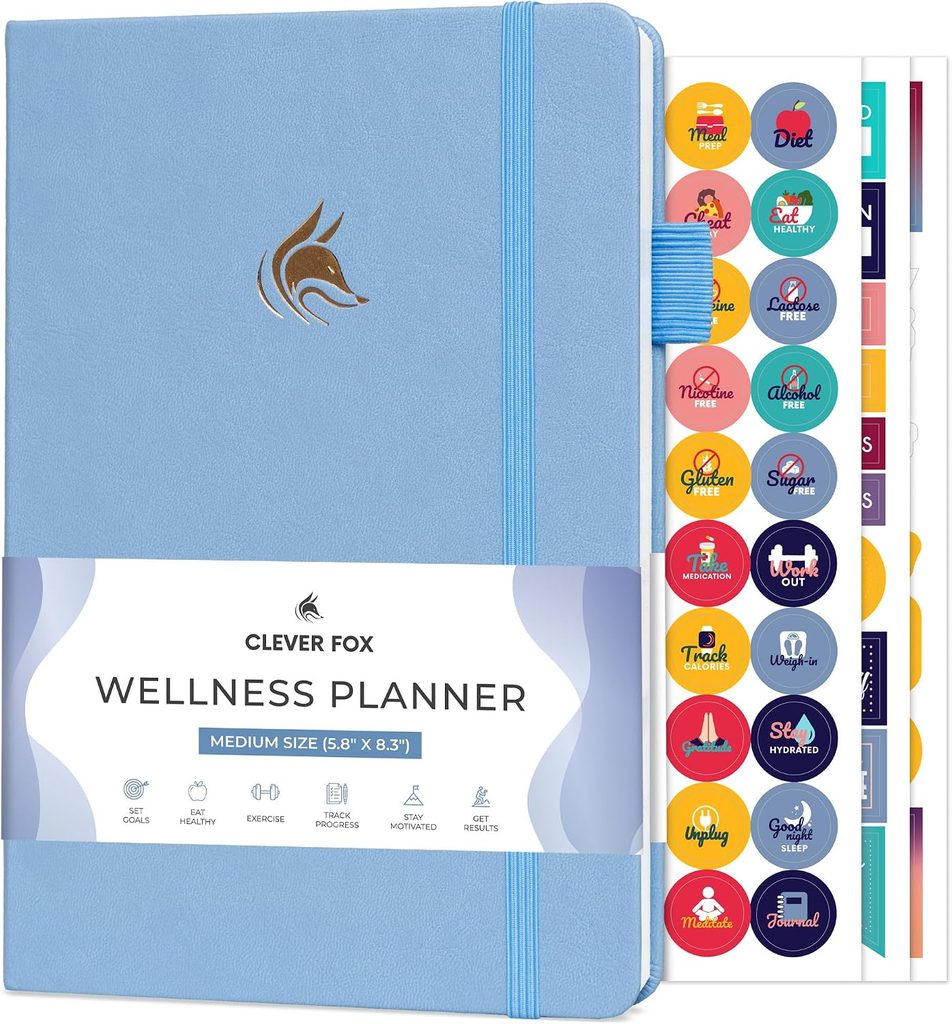
According to the manufacturer’s product information, this planner includes space to track energy levels, sleep hours, physical activity, water intake, and other wellness habits.
It is designed for approximately three months of use and measures 5.8 by 8.3 inches. The manufacturer lists a hardcover, 120 gsm paper, ribbon bookmarks, and additional organizational features.
Its main advantage is structure. Instead of designing an energy tracking system yourself, you can use prepared sections to document your daily experiences.

Potential advantages:
- Directly records your perceived energy.
- Combines several wellness habits in one place.
- Requires no battery, smartphone, or subscription.
- Provides a structured place to review written observations.
Potential drawbacks:
- Requires consistent manual entries.
- Includes sections you may not need.
- Has a limited number of pages.
- May feel overly structured if you prefer brief notes.
The planner also includes meal planning, goal-setting, and other wellness sections. These features may be useful if you want an all-in-one journal, but they could be excessive if tracking energy is your only priority.
This product may appeal to someone who enjoys writing and wants a guided system rather than a blank notebook.
However, its features should not be confused with proven health benefits. A planner can organize information, but there is no established evidence that this specific product increases energy or treats fatigue.
>>> Check the Clever Fox Wellness Planner Premium on Amazon <<<

Fitness Trackers: Best for Automatic Activity and Sleep Data
A fitness tracker may make more sense if you want to observe movement and estimated sleep patterns without recording everything manually.
The Fitbit Inspire 3 is one example worth considering.
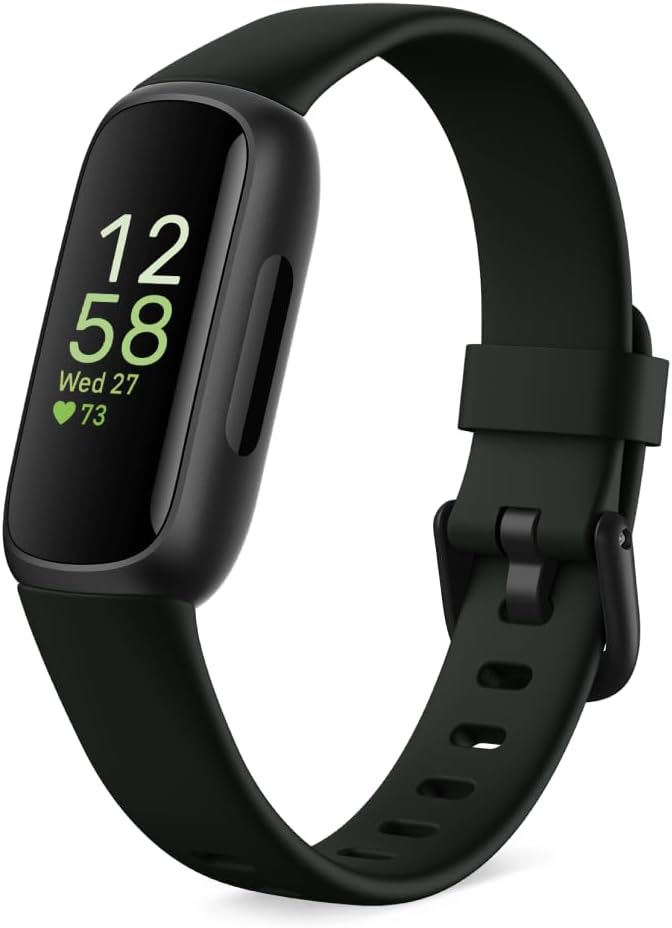
According to Google’s technical specifications, the device offers heart-rate monitoring and activity-related tracking, along with sleep features supported by the Fitbit ecosystem.
Google advertises battery life of up to 10 days, although actual performance varies with settings and use.
Certain advanced insights may require a paid subscription. Before purchasing, check the current distinction between included features and any premium services. Basic activity and sleep tracking should not be confused with access to every advanced analysis offered by the platform.
>>> Check the Fitbit Inspire 3 on Amazon <<<
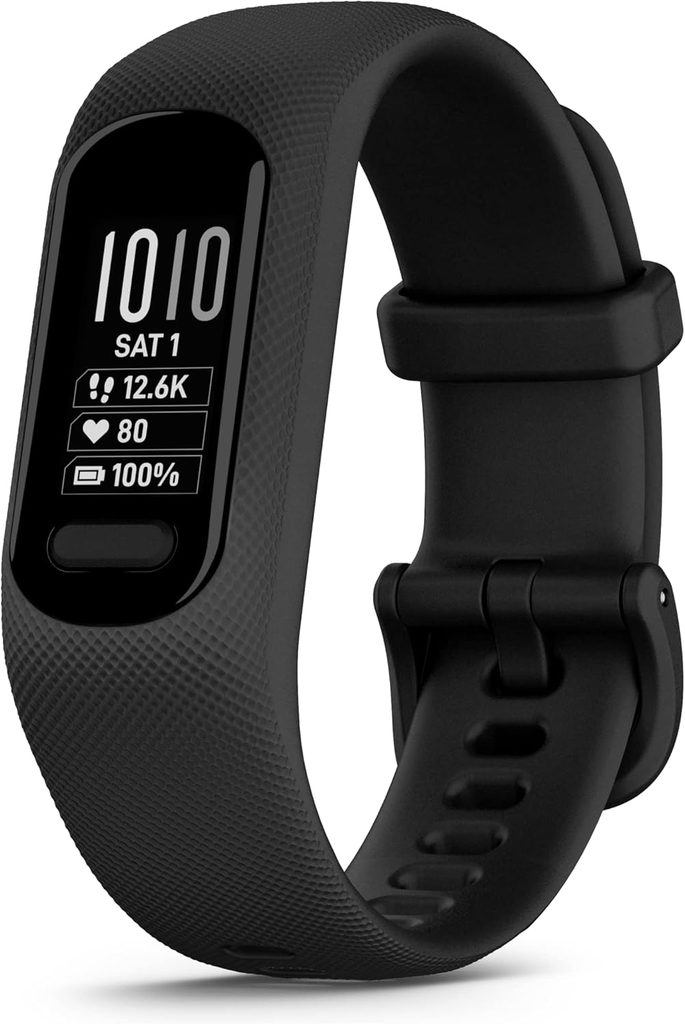
The Garmin vívosmart 5 is another example. It includes activity and sleep-related features, along with Garmin’s Body Battery estimate.
Garmin’s product documentation describes these features as tools for monitoring everyday wellness. Body Battery may provide additional context about physiological stress and recovery, but it does not measure your personal sensation of energy directly.
Because the vívosmart 5 is an older model, check its current availability, smartphone compatibility, and software support before considering a purchase.
Potential advantages of fitness trackers:
- Automatically collect certain activity and sleep-related data.
- Make it easier to review information across multiple days.
- Reduce the need for manual recording of supported metrics.
- Can complement a personal energy journal.
Potential drawbacks:
- Sleep and recovery estimates have accuracy limitations.
- Devices require charging, compatible software, and regular use.
- Some functionality may depend on an app or subscription.
- Wearing a tracker during sleep may be uncomfortable.
- Product age and software support may affect long-term usefulness.
An important limitation is supported by a 2025 meta-analysis published in the Journal of Clinical Sleep Medicine.
Across 24 studies involving 798 participants, researchers found differences between consumer wrist-worn sleep trackers and polysomnography, a clinical sleep study, for several sleep measurements.
The researchers concluded that wearables may be useful for monitoring general sleep patterns, but their results require cautious interpretation.
Importantly, the studies evaluated several wearable models, including earlier generations. Their findings should not be interpreted as direct accuracy tests of the Fitbit Inspire 3 or Garmin vívosmart 5.
A fitness tracker may be useful if automatic records would help you understand your routine. It is less suitable if you expect it to explain the medical cause of fatigue or provide definitive assessments of your health.
>>> Check the Garmin vívosmart 5 on Amazon <<<
Check the Fitbit Inspire 3 on Amazon (paid link) to explore its current specifications, compatibility, and available features before deciding whether it suits your needs.
Free or Low-Cost Options: When You May Not Need to Buy Anything
You can begin energy tracking without purchasing a dedicated product.
A notebook, spreadsheet, or basic notes app can provide enough space to record how you feel, when you notice changes, and what was happening around that time.
For example, you could make a brief entry in the morning and evening, noting your perceived energy and any observations you consider relevant.
You do not need to record every activity or analyze every fluctuation.
Starting with a free method helps you discover which features would genuinely be useful if you eventually decide to buy something more structured.
Comparing Your Options
| Tool | What It Tracks | Main Trade-Off | Best For |
|---|---|---|---|
| Wellness journal | Self-reported energy, sleep observations, and habits entered by the user | Requires manual entries | People who prefer guided written reflection |
| Fitness tracker | Automatically collected activity data and estimated sleep-related metrics | Accuracy limitations, charging, and possible subscriptions | People who prefer automatic data collection |
| Notebook or spreadsheet | Self-reported information chosen by the user | Requires setup and consistent entries | People who want flexibility with minimal expense |
The most expensive option is not necessarily the most suitable.
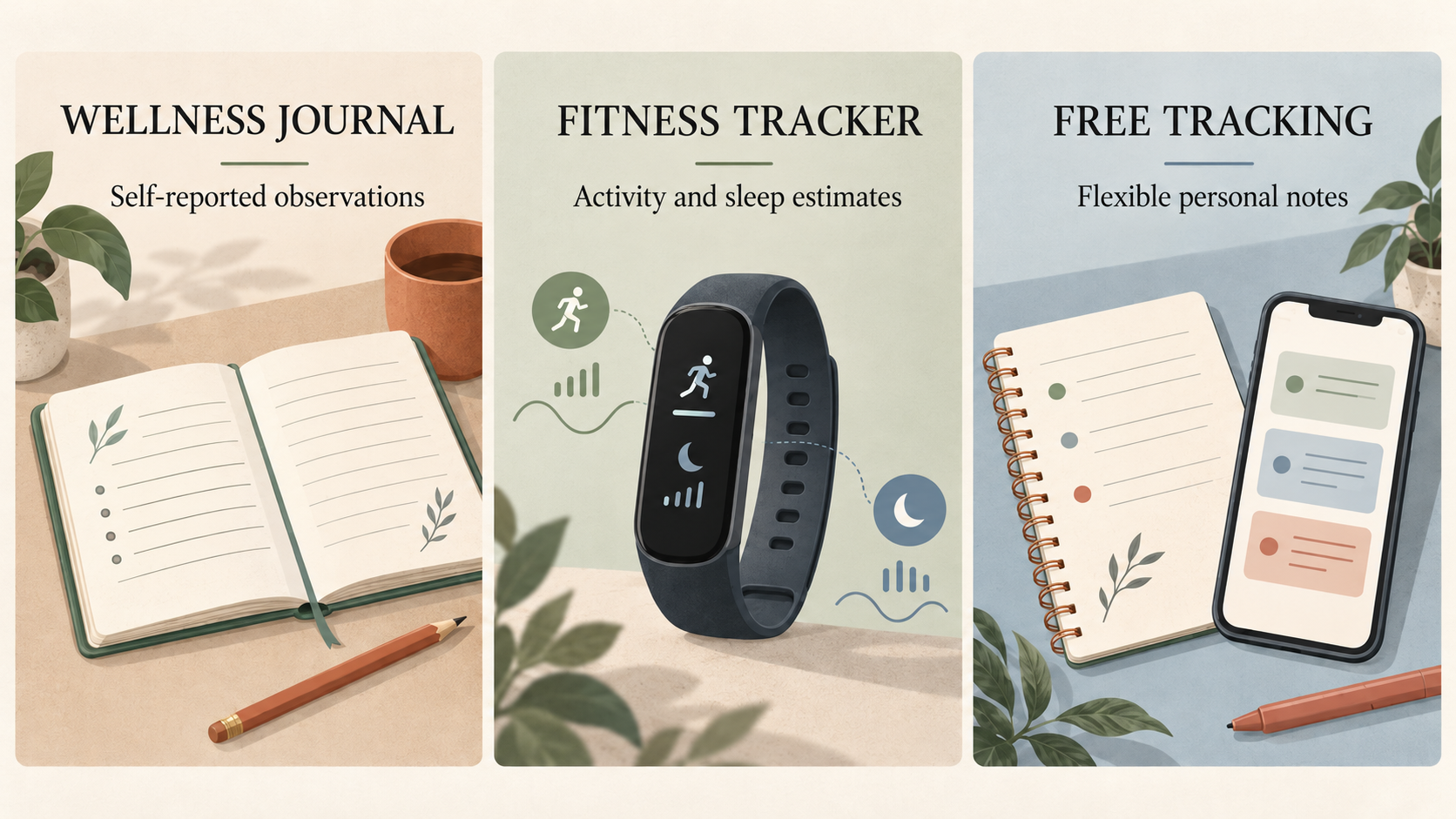
Your decision should reflect what you want to learn and how much effort you are comfortable putting into tracking.
Limitations and Common Mistakes to Avoid
Energy tracking can be useful, but it also has limitations that deserve attention.
Don’t Treat Wellness Scores as Medical Answers
A fitness tracker may report estimated sleep stages, stress-related metrics, or recovery scores.
These are not diagnoses.
Consumer devices use sensors and algorithms to estimate certain measurements. Their accuracy varies by device, metric, and individual circumstances.
The U.S. Food and Drug Administration’s general wellness guidance explains the agency’s approach to certain low-risk wellness products. A general wellness feature should not automatically be treated as a medically validated diagnostic tool.
Do not use a wellness score to diagnose a sleep disorder or determine the cause of ongoing fatigue.
According to MedlinePlus, fatigue can have many causes, including medical conditions. If you have been feeling unusually tired for weeks without improvement, contact a healthcare professional.
Avoid Tracking More Than You Need
Tracking every possible metric may sound thorough, but it can become burdensome.
For some people, repeatedly checking sleep scores or worrying about imperfect numbers can make monitoring less helpful.
Clinical literature has described orthosomnia, a pattern in which excessive concern about sleep-tracking information may interfere with healthy sleep-related behaviors.
A 2017 clinical case report published in the Journal of Clinical Sleep Medicine discussed this concern, but it does not establish how common the problem is or show that fitness trackers generally cause insomnia.
A more balanced approach is to focus on a few meaningful observations and review broader patterns rather than react to individual scores.
If tracking increases your worry or becomes difficult to manage, consider simplifying your approach or taking a break.
A Simple Checklist Before You Buy
Before choosing any energy tracking tool, ask yourself:
- What am I trying to understand? Do I want to record how I feel, monitor activity, or review estimated sleep patterns?
- How do I prefer to track information? Would I rather write short entries or use automatic recording?
- Will I realistically use it? Does the tool fit my routine without becoming another obligation?
- Is it compatible and comfortable? Can I use it with my existing devices, and would I be comfortable wearing it when needed?
- What are the ongoing costs and privacy considerations? Are subscriptions necessary, and can I manage my personal data?
- Could I start for free? Would a simple notebook or spreadsheet answer my questions first?
If you mainly want to understand your personal experience, a journal may be enough.
If automatic sleep and activity information matters more, a fitness tracker may offer useful context.
You can review the product options discussed above once you know which features matter to you.
Frequently Asked Questions About Energy Tracking Tools
Can a Fitness Tracker Measure My Energy Level?
Not directly in the same way you experience it. Fitness trackers collect physiological and activity-related data, and some generate proprietary estimates such as recovery or energy scores. These should not be confused with your self-reported energy.
Do I Need a Paid Subscription to Track Sleep and Activity?
Not necessarily. Some fitness trackers include basic activity and sleep monitoring without a recurring subscription. However, access to advanced reports and insights varies by product and may require a paid plan. Review the current feature list before purchasing.
Is a Wellness Journal Worth Buying?
It may be worthwhile if you prefer writing, appreciate guided prompts, and expect to use the layout regularly. If you only need a few lines of daily notes, an ordinary notebook may be sufficient.
Choosing a Tool That Fits Your Life
A useful energy tracking tool should make your routine easier to understand, not more complicated.
Choose a wellness journal if you value personal reflection, a fitness tracker if automatic sleep and activity data would be helpful, or a simple notebook if you prefer flexibility.
The goal is not to collect the most information. It is to find an approach you can use comfortably and interpret realistically.
Explore the wellness journal and fitness tracker options discussed above, review their current product details on Amazon, and choose the tool that fits your needs, preferences, and budget.
Medical Note: This article is for general educational purposes and is not medical advice. Energy tracking tools cannot diagnose or treat fatigue or other health conditions. If you experience persistent, unexplained, or worsening fatigue, consult a qualified healthcare professional.
Sources
- Clever Fox. Wellness Planner Premium — Product Information.
https://cleverfoxplanner.com/products/wellness-planner-premium - Google Store. Fitbit Inspire 3 — Technical Specifications.
https://store.google.com/us/product/fitbit_inspire_3_specs?hl=en-US - Garmin. vívosmart 5 — Product Information.
https://www.garmin.com/en-US/p/782585/ - Lee, Y. J., et al. (2025). Performance of Consumer Wrist-Worn Sleep Tracking Devices Compared to Polysomnography: A Meta-Analysis. Journal of Clinical Sleep Medicine.
https://doi.org/10.5664/jcsm.11460 - Consumer Reports. Smartwatch and Fitness Tracker Buying Guide.
https://www.consumerreports.org/electronics-computers/smartwatches-fitness-trackers/buying-guide/ - U.S. Food and Drug Administration. General Wellness: Policy for Low Risk Devices.
https://www.fda.gov/regulatory-information/search-fda-guidance-documents/general-wellness-policy-low-risk-devices - MedlinePlus. Fatigue. U.S. National Library of Medicine.
https://medlineplus.gov/fatigue.html - Baron, K. G., et al. (2017). Orthosomnia: Are Some Patients Taking the Quantified Self Too Far? Journal of Clinical Sleep Medicine.
https://doi.org/10.5664/jcsm.6472 - Federal Trade Commission. FTC’s Endorsement Guides: What People Are Asking.
https://www.ftc.gov/business-guidance/resources/ftcs-endorsement-guides-what-people-are-asking - Amazon Associates. Associate Disclosure Requirements.
https://affiliate-program.amazon.com/help/node/topic/GHQNZAU6669EZS98