For many people, walking is a practical way to add more movement to the day. Starting can still feel uncertain, especially when you are unsure how long to walk, how fast to go, or whether a short walk is worthwhile.
Daily walking can fit into a broader healthy aging routine, but it does not need to begin with a demanding schedule. A useful starting point reflects your current ability, health, surroundings, and everyday routine.
Quick Takeaways
- Walking can contribute to the aerobic part of an active routine.
- A regular walking habit does not require a rigid seven-day schedule.
- Your starting point should reflect your current ability and circumstances.
- Strength and balance activities matter alongside walking.
- Pain, dizziness, or other concerning symptoms should not be ignored.
How Walking Fits Into Healthy Aging
For many people, walking is a practical form of physical activity that can fit into different settings and routines. Depending on pace and effort, it may contribute to the aerobic activity recommended for older adults.
Federal guidelines use brisk walking as an example of moderate-intensity aerobic activity. However, intensity is relative: the same pace may feel easy to one person and challenging to another.
Walking is also only one part of an active lifestyle. Current recommendations for adults age 65 and older include aerobic activity, muscle-strengthening activity, and activities that improve balance. Combining these types of activity may support physical function and help reduce the risk of falls or fall-related injuries.
Keep in mind: Walking can contribute to aerobic activity, but healthy aging also includes strength, balance, and other forms of movement suited to your abilities.
You Do Not Need a Perfect Daily Target
A regular walking habit does not require a rigid seven-day schedule. Walking can be spread across the week and adjusted when time, weather, health, or energy changes.
Federal guidance recommends at least 150 minutes of moderate-intensity aerobic activity each week for adults age 65 and older. It also recommends muscle-strengthening activities on at least two days and activities that improve balance. These are general public-health targets, not an automatic first-week plan for every individual.
People who are not meeting the full recommendation can begin with smaller amounts. Current CDC guidance emphasizes that some activity is better than none and that weekly activity can be divided into shorter periods.
After an illness or a longer break, consider restarting with a shorter or easier walk rather than immediately returning to your previous routine.
A Realistic Way to Start Walking More
1. Notice Your Current Starting Point
Consider how much you already walk, how steady you feel, and how you usually feel afterward.
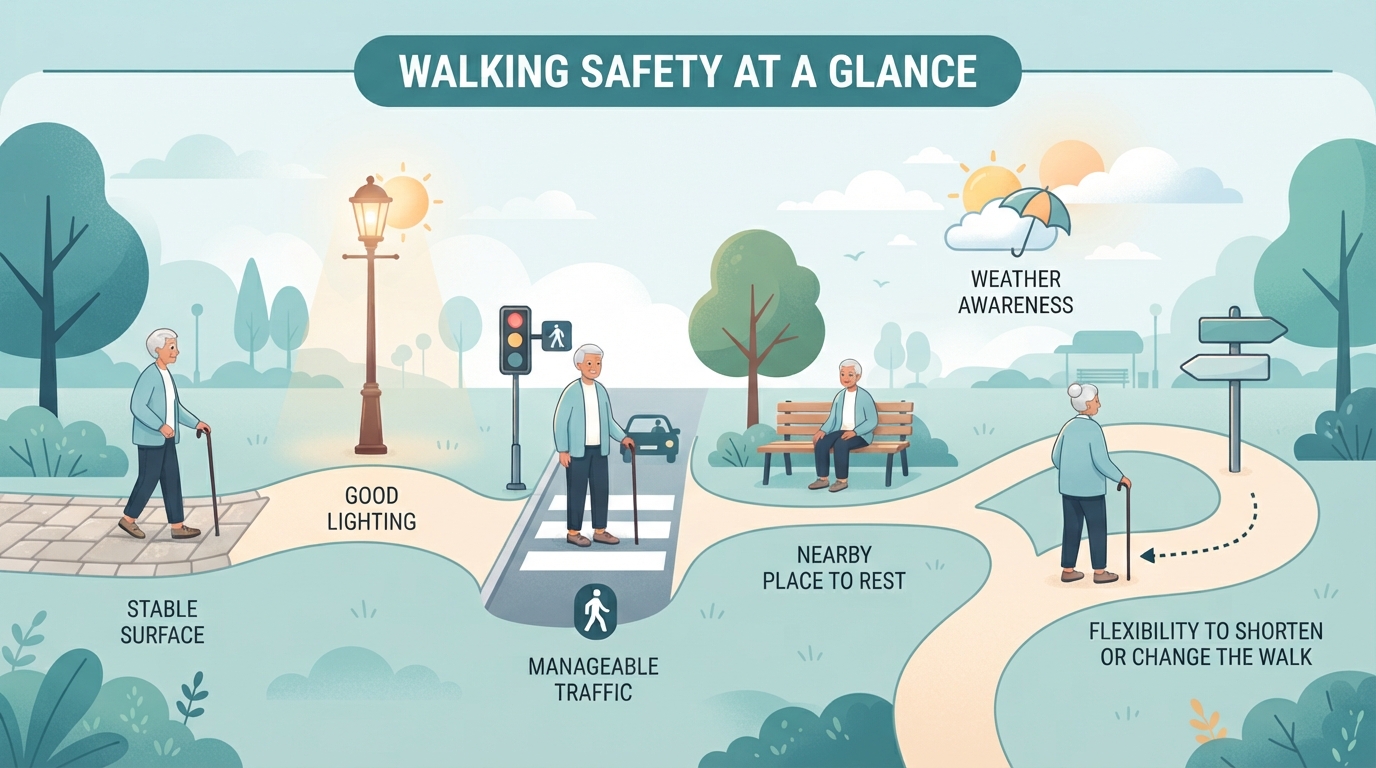
Also notice practical barriers. These might include limited time, uneven sidewalks, heavy traffic, poor lighting, bad weather, or a lack of places to rest. This is not a fitness test. It is simply a way to choose a more workable first step.
2. Choose a Manageable First Walk
Your first walk does not need to be long. It might be:
- one short trip on a familiar route;
- several laps in a clear indoor space;
- a walk close to home;
- two brief walks at different times of day.
Choose a version that does not feel overwhelming. A smaller walk can help you notice how your body responds before you add more.
3. Use an Appropriate Level of Effort
A beginner walking routine does not need to start at the fastest pace you can manage.
Brisk walking is one example of moderate-intensity activity, but the appropriate pace varies with fitness and health. An easier walk may be a better starting point after inactivity or when mobility is limited.
4. Notice How You Feel
Pay attention to balance, breathing, pain, unusual fatigue, and recovery.
Normal exertion can feel different from person to person. However, sudden pain, chest pressure, fainting, severe dizziness, or unusual shortness of breath should not be ignored.
5. Adjust Gradually
When your current walk feels manageable, you may decide to adjust its duration, frequency, or route.
There is no need to increase everything at once. You can also reduce the walk when weather, health, energy, or schedule changes. A useful routine is one that can adapt to ordinary life.
READ MORE:
Match the Walk to Your Current Situation
| Starting question | What to consider | Practical adjustment |
|---|---|---|
| Where can you walk? | Surface, lighting, traffic, and places to rest | Choose a familiar, level route |
| How hard does it feel? | Breathing, balance, and comfort | Use an effort suited to your current fitness |
| What can you repeat? | Schedule, access, and recovery | Choose a version that fits ordinary days |
Ways to Make Walking Easier to Repeat
Connecting a walk to an existing part of your day can reduce the number of decisions involved. You might walk after a regular task, during a break, or while spending time with a family member or neighbor.
The environment matters too. Look for adequate lighting, a stable surface, manageable traffic, and an easy place to pause or turn back.
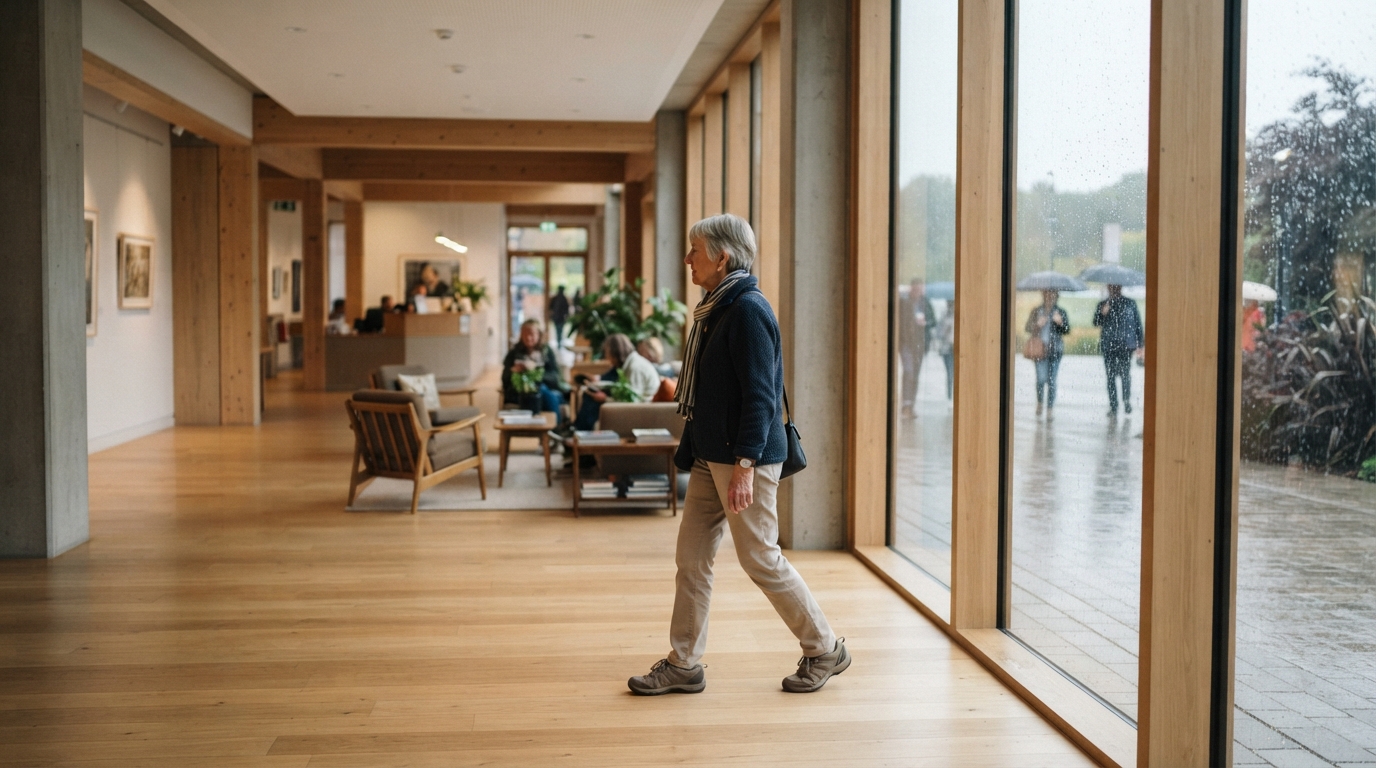
When heat, cold, rain, or unsafe outdoor conditions create a barrier, a clear indoor route may be a practical alternative. A hallway, community space, or other open indoor area can work without requiring dedicated exercise equipment.
Walking With Mobility or Balance Concerns
Mobility and balance needs vary widely. A familiar, level route may be more appropriate than a longer or uneven one. Nearby seating, an easy way to return home, or walking with another person may also make the activity more manageable.
If you use a cane, walker, or another mobility aid, follow the fitting and use guidance provided by a qualified professional.
Consider individualized guidance if you have experienced recent falls, substantial instability, recurring pain, recent surgery, a major change in health, or a long period of inactivity. The National Institute on Aging notes that balance problems can have different causes and that patient-specific exercises may require guidance from a qualified professional.
Basic Walking Safety to Keep in Mind
Before You Head Out
- Choose a route that matches your current mobility.
- Check the weather, lighting, traffic, and walking surface.
- Wear comfortable clothing and footwear.
- Know where you can pause or turn back.
- Plan for hydration when conditions and your health guidance call for it.
- Adjust the walk when the day feels different.
A checklist can help you notice practical concerns, but it cannot determine whether a particular walking routine is appropriate for your individual health circumstances.
When to Pause and Seek Guidance
Stop walking if you develop dizziness, chest pain or pressure, nausea, fainting, unusual shortness of breath, sudden pain, or another symptom that feels serious.
Seek prompt medical guidance when symptoms are new, severe, worsening, or continue after you stop. Call 911 for symptoms that appear life-threatening, such as severe or persistent chest pain or pressure, fainting, or severe breathing difficulty. The National Institute on Aging advises calling 911 for sudden symptoms that may indicate a heart attack rather than assuming they are minor.
People with diagnosed heart disease should follow the activity and symptom plan provided by their healthcare professional rather than relying on general online guidance.
Medical note: This article provides general educational information and is not a substitute for individualized medical advice. Speak with a qualified healthcare professional before starting or substantially changing your activity routine if you have a medical condition, significant mobility limitations, recent surgery, recurring pain, balance concerns, or other health questions.
Frequently Asked Questions
Is Walking Every Day Necessary for Healthy Aging?
No single schedule is appropriate for everyone. Federal guidelines describe weekly activity targets, and that activity can be distributed across the week. Your health, current ability, recovery, and other activities should shape your routine.
Do Short Walks Still Count?
A short walk can be a practical way to add movement and begin building a routine. Smaller periods of brisk activity can contribute to a weekly total, although the activity still needs to reach an appropriate level of effort to count as moderate intensity.
Do I Need to Walk Fast?
Not necessarily. Brisk walking is one example of moderate-intensity activity, but intensity depends partly on your current fitness. A slower or easier walk may be a more suitable starting point for you.
Start With What Is Workable
A useful walking routine does not need to begin with a perfect schedule, long distance, or demanding pace. Start with a walk that fits your current ability and circumstances, then adjust it as appropriate.
Walking can be one practical part of staying active as you age.
Start with a walk that feels manageable for your current routine. Notice how it feels, make adjustments when needed, and treat consistency as a flexible practice rather than a test of performance.
Sources
- U.S. Department of Health and Human Services — Physical Activity Guidelines for Americans, 2nd Edition
https://odphp.health.gov/our-work/nutrition-physical-activity/physical-activity-guidelines/current-guidelines - Centers for Disease Control and Prevention — Older Adults: Adding Activity Recommendations
https://www.cdc.gov/physical-activity-basics/adding-older-adults/index.html - Centers for Disease Control and Prevention — What Counts as Physical Activity for Older Adults
https://www.cdc.gov/physical-activity-basics/adding-older-adults/what-counts.html - Centers for Disease Control and Prevention — Moving Matters for Older Adults
https://www.cdc.gov/moving-matters/older-adults/index.html - Centers for Disease Control and Prevention — Benefits of Physical Activity
https://www.cdc.gov/physical-activity-basics/benefits/index.html - National Institute on Aging — Exercise and Physical Activity
https://www.nia.nih.gov/health/exercise-and-physical-activity - National Institute on Aging — Older Adults and Balance Problems
https://www.nia.nih.gov/health/falls-and-falls-prevention/older-adults-and-balance-problems - National Institute on Aging — Heart Health and Aging
https://www.nia.nih.gov/health/heart-health/heart-health-and-aging