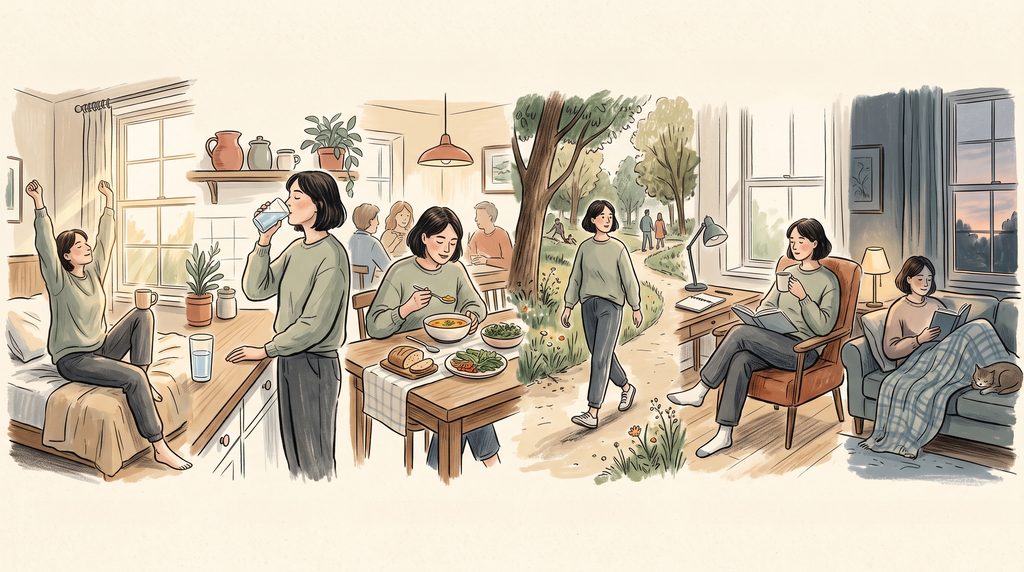
Building a balanced meal does not require calorie counting, complicated recipes, or a perfect-looking plate. You can begin with foods you already eat and add one or two practical components.
This guide offers a simple way to combine carbohydrate-rich foods, protein, fruits or vegetables, and sources of fat. You can adapt the approach to your schedule, appetite, budget, cultural traditions, and preferences.
Food is only one part of how you feel throughout the day. Still, learning how to build more balanced meals can make everyday eating feel simpler and more manageable.
Quick Takeaways
- Balanced meals are about combining foods, not creating a perfect plate.
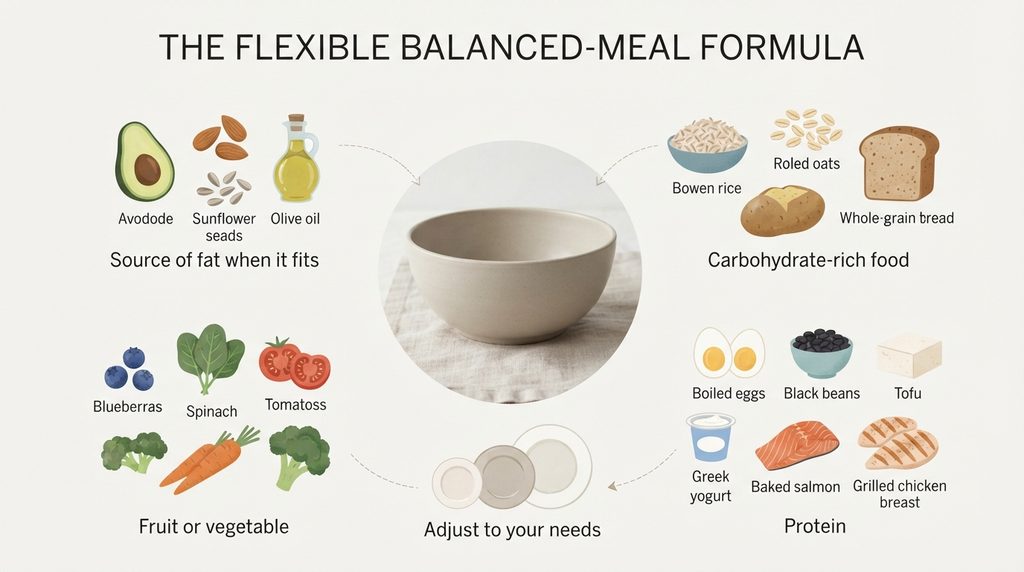
- A practical meal may include a carbohydrate-rich food, protein, produce, and a source of fat.
- One simple addition can often round out a familiar meal.
- Frozen, canned, pre-cut, and leftover foods can make meal preparation easier.
- Persistent fatigue can have causes beyond food and may deserve professional guidance.
What Makes a Meal Balanced?
A balanced meal usually combines several types of food rather than relying on one item alone. The goal is a practical combination that offers variety and fits the situation.
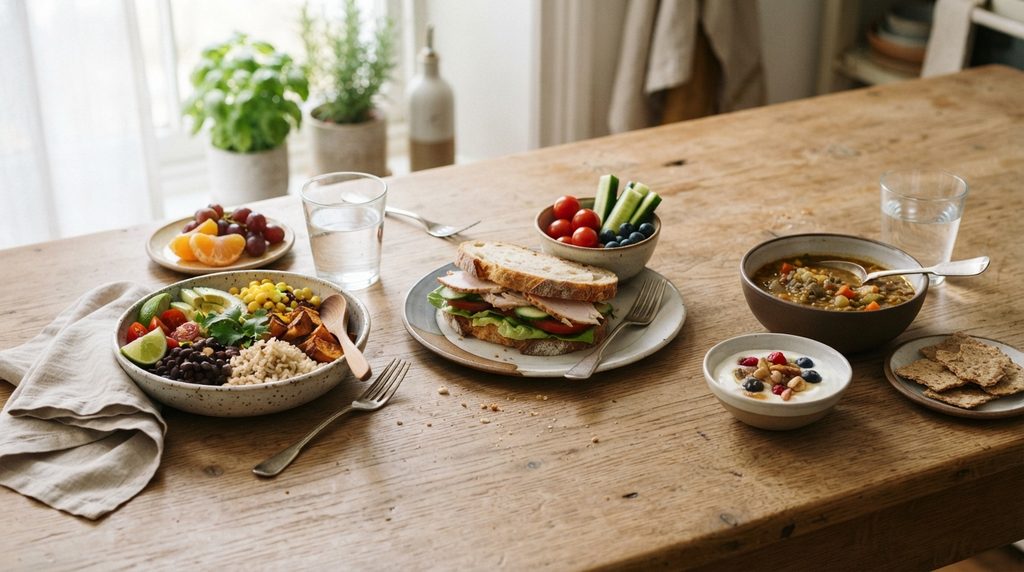
Balance may look different from one meal to the next. Breakfast might be oatmeal with yogurt and fruit. Lunch could be a sandwich with vegetables and fruit. Dinner might combine rice, beans, vegetables, and avocado.
A realistic eating pattern can also account for personal preferences, cultural traditions, and budget. Individual needs differ, so no single meal formula will fit everyone in exactly the same way.[1]
Keep in mind: A balanced meal is a flexible starting point, not a rule that every plate must follow in the same way.
The Main Parts of a Balanced Meal
The following components provide a simple framework. You do not need to measure them precisely or include each one in the same proportion every time.
Carbohydrate-Rich Foods
Carbohydrates are one of the three main nutrients found in foods and drinks. The body breaks many carbohydrates down into glucose, which cells can use for energy.[2]
Common carbohydrate-rich foods include:
- oats;
- rice;
- bread;
- pasta;
- potatoes;
- corn;
- fruit.
Carbohydrate foods vary widely. Rather than labeling them as “good” or “bad,” consider how they fit with the rest of the meal and your individual needs.
Protein Sources
Protein helps the body build and maintain tissues such as muscle, bone, and skin.[3]
Practical protein sources include:
- eggs;
- yogurt;
- beans and lentils;
- tofu and other soy foods;
- nuts and seeds;
- fish;
- poultry;
- meat.
Including both plant and animal examples makes the framework easier to adapt to different eating patterns.
Fruits and Vegetables
Fruits and vegetables can add variety, fiber, vitamins, minerals, flavor, and texture.
Fresh produce can work well, but frozen, canned, dried, and pre-cut options may also be convenient. Try adding berries to oatmeal, vegetables to pasta, fruit beside a sandwich, or a bagged salad alongside leftovers.
Sources of Fat
Dietary fat supplies energy and helps the body absorb certain vitamins. Different foods contain different types of fat, so the category should not be treated as if every option were nutritionally identical.[4]
Possible sources include nuts, seeds, avocado, olive oil, nut butter, dairy foods, and fish.
A separate source of fat is not required at every meal. It may already be present in the protein food, dressing, sauce, or cooking method.
How to Build a Balanced Meal Step by Step
Start With What You Already Eat
You do not have to replace your usual meals. Begin with something familiar and ask:
- What is already in this meal?
- What component may be missing?
- What is the simplest realistic addition?
A bowl of oatmeal already provides a carbohydrate-rich base. You might add yogurt for protein, berries for fruit, or nuts for another component.
Rice could be paired with beans and vegetables. Toast could be served with eggs and fruit. The goal is a practical next step, not an idealized meal.
Start here: Choose one meal you eat regularly. Notice what it already includes, then add the simplest missing component.
Use Additions Instead of Overhauls
Small additions are often easier than rebuilding a meal from scratch. Add a food that fills a missing role using what is affordable, available, and realistic that day.
Simple Ways to Round Out an Everyday Meal
| Starting meal | One way to round it out |
|---|---|
| Toast | Add eggs and fruit |
| Oatmeal | Add yogurt, berries, and nuts |
| Pasta | Add beans or chicken and vegetables |
| Soup | Pair it with crackers and yogurt |
| Rice | Add beans, vegetables, and avocado |
These are examples, not required combinations. Ingredients can be exchanged according to allergies, dietary needs, cultural preferences, cost, and availability.
Simple Balanced Meal Ideas for Busy Days
Quick Breakfasts
Simple options include:
- yogurt with cereal, fruit, and seeds;
- toast with eggs and fruit;
- oatmeal with milk or yogurt and berries;
- a breakfast wrap with eggs or beans and vegetables.
Choose a combination that matches your appetite and morning routine.
Simple Lunches
Practical lunches might include:
- a sandwich with a protein filling, vegetables, and fruit;
- a rice and bean bowl with vegetables;
- soup with crackers and yogurt or cheese;
- leftovers with an added fruit or vegetable.
Lunch does not need to look like a traditional plated meal. Several simple foods can work together.
Simple Dinners
For an easy dinner, begin with one convenient base:
- rice with frozen vegetables and tofu or chicken;
- pasta with beans and vegetables;
- a baked potato with beans, vegetables, and cheese;
- eggs with toast and a side of produce.
READ MORE:
A Realistic Morning Routine for More Consistent Energy
The Sleep and Energy Connection: Why Better Nights Support Better Days
Meals Made With Convenience Foods
A balanced meal does not need to be made from scratch. Useful options may include:
- frozen vegetables;
- canned beans;
- canned fish;
- microwavable grains;
- bagged salad;
- rotisserie chicken;
- plain yogurt;
- pre-cut fruits and vegetables.
Choose options that suit your needs. Check labels when sodium, added sugars, allergens, or other ingredients matter for your circumstances.

Simple Ways to Round Out a Meal
When a meal feels too limited for the situation, look for one manageable addition.
You might:
- add a protein source;
- include a fruit or vegetable;
- pair a snack-like option with another food;
- use leftovers to add variety;
- keep a few versatile foods available;
- choose a realistic option for busy days.
For example, cereal can be paired with milk or yogurt and fruit. Crackers can be combined with hummus and vegetables. A frozen entrée can be served with a bagged salad or frozen vegetables.
Use your appetite and the demands of the day as practical guides. A combination that works well for breakfast may feel too small for dinner.
Balanced Meal Check-In
Use this quick checklist while planning a meal:
- Is there a carbohydrate-rich food?
- Is there a source of protein?
- Can I add a fruit or vegetable?
- Would a source of fat fit this meal?
- Does this meal fit my appetite, schedule, budget, and preferences?
This is a flexible guide, not a rule that every meal must follow perfectly.
Pay Attention to Patterns, Not One Meal
One meal does not define your overall eating routine. Instead of judging an individual choice, notice patterns over time.
You might consider:
- whether the meal fit your appetite;
- how soon hunger returned;
- whether the portion matched the situation;
- which combinations were practical and enjoyable;
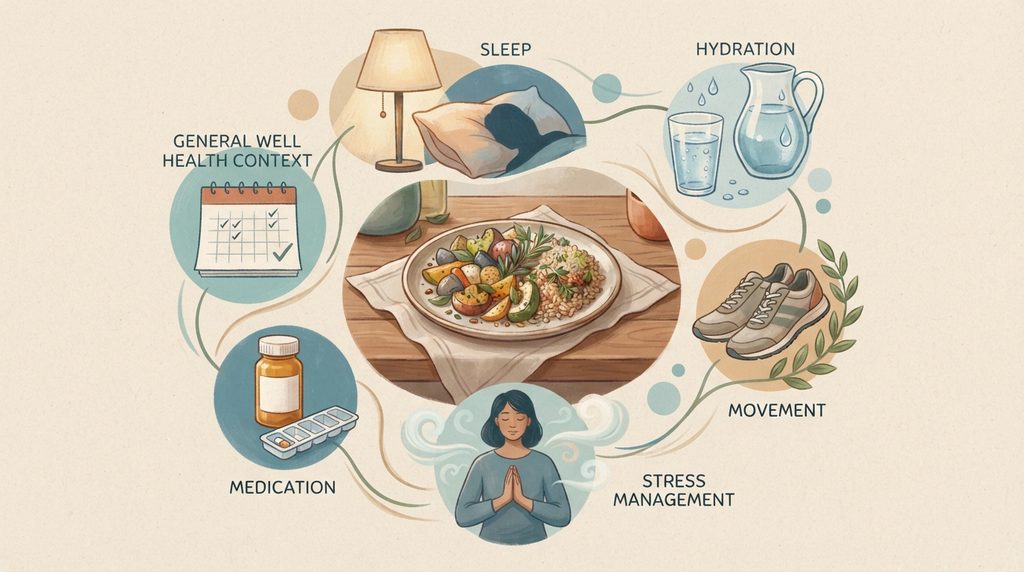
- whether sleep, hydration, stress, or timing might also be relevant.
Avoid trying to diagnose a symptom from one meal.
Food Is Only One Part of Everyday Energy
Meals matter, but food is not the only influence on how alert or tired you feel.
Sleep, hydration, movement, emotional stress, medications, and physical or mental health conditions may also play a role. Fatigue can have many possible causes and may interfere with normal daily activities.[5]
Changing one meal may be a useful practical experiment, but it should not be treated as a complete explanation for persistent tiredness.
When to Talk With a Healthcare Professional
Speak with a qualified healthcare professional if tiredness continues for several weeks, interferes with daily activities, or occurs with other concerning symptoms.[5]
Professional guidance is also important when you have a medical condition, take medication, follow a restricted diet, or need individualized nutrition advice.
Persistent fatigue should not automatically be attributed to food. A healthcare professional can help investigate possible causes.
Frequently Asked Questions
Does Every Meal Need to Include Every Food Group?
No. This framework is a practical tool, not a requirement. Meals may look different across the day, and one plate does not need to follow a perfect formula.
Can I Build a Balanced Meal Without Counting Calories?
Yes. You can focus on food components rather than numbers: begin with a carbohydrate-rich food, add protein, include produce, and add a source of fat when it fits.
Quantities should reflect your appetite, circumstances, and individual needs.
Can Frozen or Canned Foods Be Part of a Balanced Meal?
Yes. They can be practical options when preparation time, cost, or food storage matters. Use them alongside other familiar foods and review labels when particular ingredients are relevant to you.
Can Balanced Meals Prevent an Afternoon Energy Crash?
There is no guarantee. Food may be one factor, but tiredness can also relate to sleep, stress, activity, medications, or health conditions.[5]
Look at broader patterns and seek professional guidance when fatigue persists.
Start With One Familiar Meal
Building balanced meals does not require a complete diet overhaul. Start with one meal you eat often, notice what it already contains, and choose one practical addition.
Use the framework as a flexible guide, adapt it to your circumstances, and remember that persistent fatigue deserves broader attention than food alone.
Start with one meal you eat regularly and choose one practical addition. For a broader look at sleep, hydration, movement, and other influences on daily energy, explore our guide to everyday energy.
Medical note: This article provides general educational information and is not a substitute for individualized medical or nutrition advice. Speak with a qualified healthcare professional about persistent fatigue, medical conditions, medications, dietary restrictions, or concerns about your relationship with food.
Sources
- MedlinePlus — Nutrition
Used for: personal preferences, cultural traditions, budget, and general nutrition context.
URL: https://medlineplus.gov/nutrition.html - MedlinePlus — Carbohydrates
Used for: carbohydrates, glucose, and cellular energy.
URL: https://medlineplus.gov/carbohydrates.html - MedlinePlus — Dietary Proteins
Used for: protein’s role in building and maintaining body tissues.
URL: https://medlineplus.gov/dietaryproteins.html - MedlinePlus — Dietary Fats
Used for: dietary fat as an energy source and its role in vitamin absorption.
URL: https://medlineplus.gov/dietaryfats.html - MedlinePlus — Fatigue
Used for: possible causes of fatigue and guidance about persistent tiredness.
URL: https://medlineplus.gov/fatigue.html