
You may have heard that eating more fiber is good for digestion. That advice sounds simple, but it can raise practical questions: What counts as fiber? Which foods provide it? And why can a sudden increase sometimes cause discomfort?
Dietary fiber includes carbohydrates in plant foods that are not fully broken down and absorbed during digestion. Different fibers have different properties, so they do not all affect the digestive system in exactly the same way.
This guide explains the connection between fiber and digestion, where to find fiber in everyday foods, and how to increase fiber gradually without changing your entire eating pattern at once.
Quick Takeaways
- Dietary fiber is found in plant foods such as fruits, vegetables, beans, whole grains, nuts, and seeds.
- Different fibers can influence stool bulk, consistency, and digestive comfort in different ways.
- Increasing fiber too quickly may cause gas, bloating, or cramps in some people.
- One manageable change at a time can make your response easier to notice.
- Persistent or severe digestive symptoms deserve professional guidance.
What Is Dietary Fiber?
Dietary fiber includes a range of nondigestible carbohydrates with different physical and physiological properties. Naturally occurring fiber is present in plant foods.
For food-labeling purposes, the FDA also recognizes certain isolated or synthetic nondigestible carbohydrates that have beneficial physiological effects.
For everyday eating, you do not need to memorize the technical definition. It is usually more practical to focus on varied plant foods and learn how they fit your routine.
Soluble and Insoluble Fiber: A Simple Overview
Fiber is often divided into two broad categories:
- Soluble fiber dissolves or disperses in water, and some forms create a gel-like material.
- Insoluble fiber does not dissolve in water and can contribute to stool bulk.
This distinction is a useful introduction, but it is not a perfect system for predicting how a food will affect an individual. Many foods contain a mixture of fibers.

Keep in mind: Soluble and insoluble fiber are useful categories, but different foods—and different portions—may feel different from one person to another.
How Fiber Supports Digestion
Fiber plays several roles in normal digestive function. Its effects depend on its properties, the amount consumed, the food it comes from, and individual tolerance.
Fiber Can Influence Stool Bulk and Consistency
Because fiber is not fully digested, it can contribute to stool bulk. Some fibers also retain water, which may influence stool consistency.
These effects are one reason fiber-rich foods are commonly included in general guidance for supporting bowel function. They do not mean that every type of fiber will produce the same result or that fiber is a guaranteed solution for constipation.
Different Fibers Affect Bowel Function Differently
Different fibers can influence stool bulk, consistency, and bowel patterns in different ways. A food or portion that fits comfortably for one person may feel different for another.
Changes in bowel habits can also have many possible causes. Persistent changes should not automatically be attributed to a lack of fiber.
Some Fibers Interact With Gut Bacteria
Some fibers reach the large intestine, where gut bacteria can break them down. Gas can be produced as part of this normal process, which is one reason a sudden increase may feel uncomfortable.
The relationship between fiber, gut bacteria, and digestive comfort is complex, so individual responses vary.
Everyday Foods That Provide Fiber
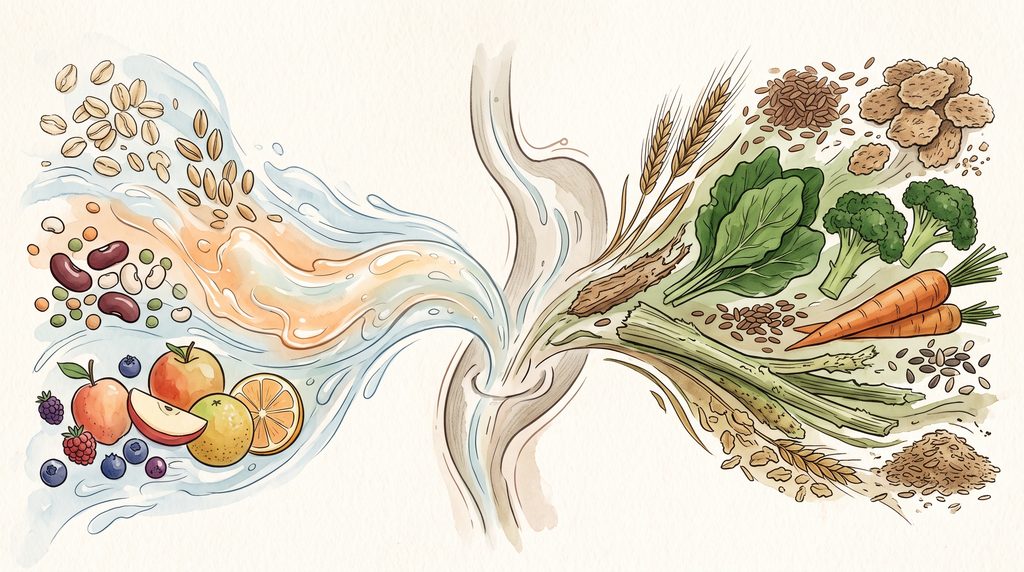
You do not need specialty foods or supplements to find dietary fiber. Familiar sources include fruits, vegetables, beans, peas, lentils, whole grains, nuts, and seeds.
Variety can be useful because these foods provide different combinations of fiber, nutrients, flavors, and textures.
Everyday Sources of Fiber
| Food group | Familiar examples | A simple way to add it |
|---|---|---|
| Fruit | Berries, pears, apples | Add fruit to breakfast or a snack |
| Vegetables | Broccoli, carrots, peas | Add one vegetable to a familiar meal |
| Beans and lentils | Black beans, chickpeas, lentils | Add a small portion to soup or salad |
| Whole grains | Oats, brown rice, whole-grain bread | Try one whole-grain option in a familiar meal |
| Nuts and seeds | Almonds, chia seeds, sunflower seeds | Add a small amount to oatmeal or yogurt |
These examples are starting points, not a required food plan. Choose foods that fit your preferences, budget, cultural eating pattern, and any individualized guidance you have received.
Start here: Choose one fiber-rich food you already enjoy and add it to one meal or snack.
Why It Helps to Increase Fiber Gradually
Eating a large amount of fiber over a short period may cause gas, bloating, or abdominal cramps. MedlinePlus advises adding fiber gradually rather than making a large increase all at once.
A slower pace gives you an opportunity to notice how a particular food and portion fit your routine. It also reduces the confusion that can come from changing several meals at the same time.
Smaller Changes Are Easier to Observe
Instead of increasing fruits, beans, whole grains, and vegetables all at once, choose one change first.
You might add fruit to breakfast, include a small portion of beans in a familiar meal, or try one whole-grain option. Give the change time to fit your routine before introducing another.
There is no universal adjustment schedule. Starting intake, food choices, and digestive tolerance differ from person to person.
READ MORE:
Fermented Foods, Probiotics and Prebiotics: What Is the Difference?
Fluids Are Part of the Picture
Adequate fluids are commonly included in guidance about consuming more fiber, particularly when constipation is a concern. Individual needs vary, however, and a universal water target is not appropriate for everyone.
Keep in mind: Follow individualized medical guidance if you have been advised to limit or monitor fluids.
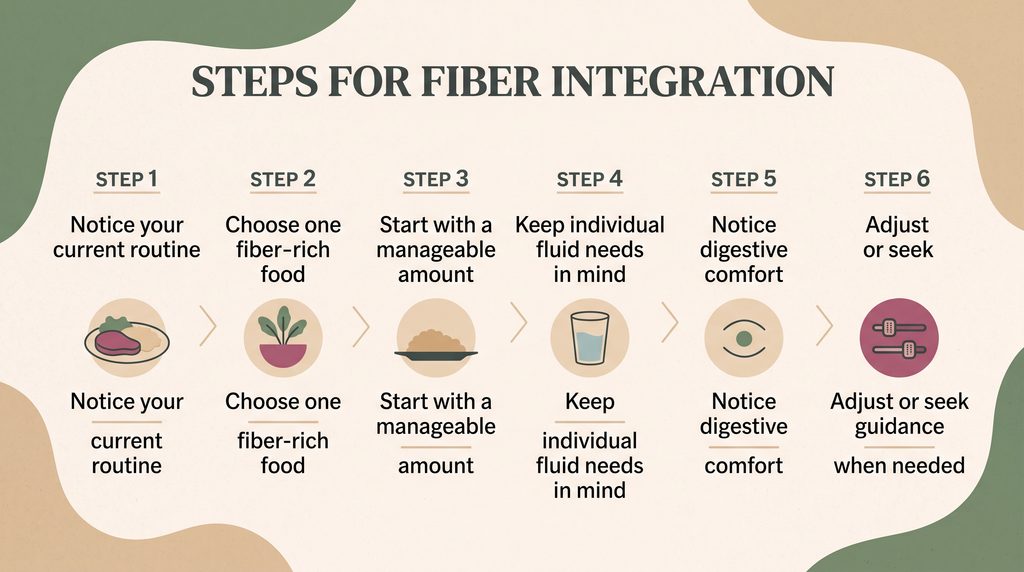
How to Add More Fiber One Step at a Time
- Notice what you already eat. Look for fruits, vegetables, beans, lentils, whole grains, nuts, or seeds that are already part of your routine.
- Choose one small addition. Add one familiar fiber-rich food to one meal or snack.
- Keep the first change modest. The first addition can be small and still be useful.
- Avoid changing several meals at once. A slower pace can make changes easier to notice and describe.
- Pay attention to digestive comfort. Notice patterns in gas, bloating, and bowel habits without using them to diagnose a condition.
- Adjust rather than force it. If discomfort develops, slow the pace rather than continuing to add several new sources at once. Seek professional guidance when symptoms persist or worsen.
Simple Ways to Add Fiber to Familiar Meals
Small additions can fit into meals you already prepare:
- Add fruit or seeds to oatmeal, yogurt, or another familiar breakfast.
- Include beans, lentils, or an extra vegetable in a soup, salad, or main meal.
- Try one whole-grain option in place of a lower-fiber grain when practical.
- Choose fruit, nuts, seeds, or vegetables for a snack when they suit your routine.
These changes can be one part of a broader, realistic digestive routine.
What If More Fiber Causes Gas or Bloating?
Gas or bloating after a sudden increase may be a reason to slow the pace, not automatically avoid all fiber-rich foods.
The amount, portion, and type of food can influence how a change feels. Introducing several new sources at once can make it difficult to identify a useful pattern. MedlinePlus notes that increasing fiber quickly may cause gas, bloating, or cramps in some people.
Avoid removing multiple food groups or starting a highly restrictive diet based on one episode of discomfort. Symptoms that persist, become severe, or interfere with daily life deserve individualized guidance.
Keep in mind: Significant pain or lasting bowel changes should not be assumed to be a normal response to eating more fiber.
When to Talk With a Healthcare Professional
Seek medical guidance rather than assuming significant symptoms are caused by fiber.
Contact a healthcare professional if digestive symptoms do not improve or interfere with your daily life. NIDDK advises seeking prompt medical care when constipation occurs with warning signs such as:
- rectal bleeding or blood in the stool;
- constant abdominal pain;
- inability to pass gas;
- vomiting;
- fever;
- unintentional weight loss.
Individual guidance is also important if you have a diagnosed digestive condition, take medications that affect digestion, recently had gastrointestinal surgery, or have been advised to limit fiber or fluids.
Medical note: This article provides general educational information and is not a substitute for individualized medical or nutrition advice. Speak with a qualified healthcare professional about persistent digestive symptoms, diagnosed conditions, medications, supplements, or fluid restrictions.
Frequently Asked Questions
How quickly should you increase fiber?
There is no universal schedule. Add one manageable food or portion at a time and notice how it fits before making another change. Increasing fiber gradually may reduce the chance of gas, bloating, and cramps.
Why does fiber sometimes cause gas or bloating?
Some fiber reaches the large intestine, where gut bacteria break it down and gas may be produced. Discomfort may be more noticeable when intake increases quickly or several new foods are introduced together.
Do you need a fiber supplement?
Supplements are not necessary for everyone. Many common plant foods provide fiber along with a broader mix of nutrients. Ask a qualified healthcare professional whether a supplement is appropriate when you have persistent symptoms, a diagnosed condition, or concerns about medications.
A Gradual Approach Is Still Progress
Fiber can be part of a varied eating pattern that supports normal digestive function, but making a large change all at once is not necessary.
Begin with one food you already enjoy. Keep the first addition manageable, notice how it fits, and make another change only when you are ready.
Choose one fiber-rich food you already enjoy and add it to a familiar meal or snack. Give the change time to fit into your routine before adding another.
Sources
- U.S. Food and Drug Administration — Questions and Answers on Dietary Fiber
https://www.fda.gov/food/nutrition-food-labeling-and-critical-foods/questions-and-answers-dietary-fiber - MedlinePlus Medical Encyclopedia — Fiber
https://medlineplus.gov/ency/article/002470.htm - MedlinePlus — Dietary Fiber
https://medlineplus.gov/dietaryfiber.html - MedlinePlus Medical Encyclopedia — Gas
https://medlineplus.gov/ency/article/003124.htm - National Institute of Diabetes and Digestive and Kidney Diseases — Eating, Diet, & Nutrition for Constipation
https://www.niddk.nih.gov/health-information/digestive-diseases/constipation/eating-diet-nutrition - National Institute of Diabetes and Digestive and Kidney Diseases — Symptoms & Causes of Constipation
https://www.niddk.nih.gov/health-information/digestive-diseases/constipation/symptoms-causes