Feeling bloated after a meal does not always point to one particular food or digestive problem. Meal size, eating pace, swallowed air, carbonated drinks, bowel habits, and recent dietary changes are all details worth noticing.
Bloating usually describes a feeling of fullness, pressure, or swelling in the abdomen. Abdominal distension refers to a visible increase in abdominal size. The two may occur together, but they are not exactly the same experience.
Instead of changing several parts of your diet after one uncomfortable episode, start by noticing when the symptom occurs, how long it lasts, and whether the pattern repeats.
Quick Takeaways
- Swallowed air, meal size, carbonated drinks, fiber intake, and constipation may contribute to bloating in some situations.
- One uncomfortable meal does not confirm a food intolerance or identify a specific cause.
- A simple record of timing, meals, bowel habits, and other symptoms can help organize your observations.
- Avoid removing several foods at once without professional guidance.
- Persistent, worsening, or severe symptoms deserve medical attention.
What Does Bloating Feel Like?
People often use the word bloating to describe abdominal fullness, pressure, tightness, or the sensation that the abdomen is swollen.
Some people also notice visible distension, while others feel bloated without a noticeable change in abdominal size. Bloating is a symptom rather than a diagnosis, and it can occur in many different contexts.
Frequency and duration matter. Occasional fullness after a larger-than-usual meal is different from discomfort that happens repeatedly, becomes more intense, or begins to interfere with eating and daily activities.
Everyday Factors That May Contribute to Bloating
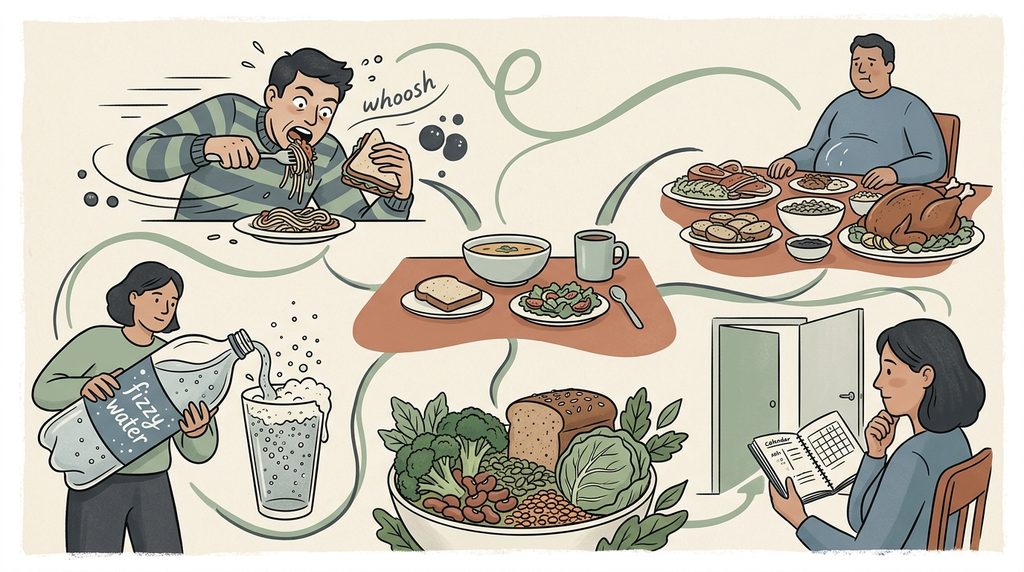
Several factors can overlap. Someone might eat a larger meal than usual, consume it quickly, and have a carbonated drink at the same time.
The goal is not to label one behavior or food as the cause after a single episode. It is to notice whether the same circumstances regularly occur alongside the symptom.
Eating Quickly or Swallowing Extra Air
Everyone swallows some air while eating and drinking. Eating or drinking quickly may increase the amount swallowed. Chewing gum, sucking on hard candy, and drinking carbonated beverages may also add to swallowed air.
Eating more slowly is not a guaranteed solution, but pace is a manageable factor to observe. Notice whether bloating is more likely after a rushed lunch, a meal eaten while working, or a dinner consumed more quickly than usual.
Large Meals and Feeling Overly Full
A larger-than-usual meal may leave the abdomen feeling full or tight. Overeating is one of several possible contributors to abdominal bloating.
Meal size can also overlap with eating pace and food composition. A large meal eaten quickly may feel different from a smaller meal consumed at a relaxed pace.
Recording that a meal was unusually large provides context without assuming that a particular ingredient was responsible.
Carbonated Drinks
Carbonated drinks contain gas and may add to swallowed air. Some people notice more pressure or belching after soda, sparkling water, or other fizzy beverages, while others notice little difference.
Rather than treating these drinks as universally problematic, note whether the response happens repeatedly and whether the amount seems relevant.
A Sudden Increase in Fiber
Fiber can be part of a balanced eating pattern, but consuming a large amount at once may increase gas symptoms for some people.
This may be worth noting after a sudden change, such as adding several servings of beans, bran cereal, or other high-fiber foods within a short period.
A recent increase is useful to record, especially if several fiber-rich foods were added at once. This does not mean fiber should be avoided; changes in amount and pace may matter.
Constipation or Changes in Bowel Habits
Constipation can occur alongside bloating, so changes in bowel frequency or stool pattern are useful details to notice. The American Gastroenterological Association advises clinicians to address constipation when it is present with bloating or distension.
You might record whether bowel movements have become less frequent, whether stools seem harder than usual, or whether the bloating changes after a bowel movement.
These observations add context, but they do not establish a diagnosis or indicate which treatment is appropriate.
Individual Responses to Certain Foods
Some people notice more bloating after particular foods or drinks. Amount, preparation, meal size, and the combination of foods may all matter.
One episode after dairy, wheat, or another food does not confirm lactose intolerance, celiac disease, an allergy, or another digestive condition. Even when a pattern repeats, professional evaluation may be needed before making significant dietary changes.
Keep in mind: A symptom diary can help organize observations, but it cannot diagnose a food intolerance or digestive condition.
What to Track When Bloating Happens
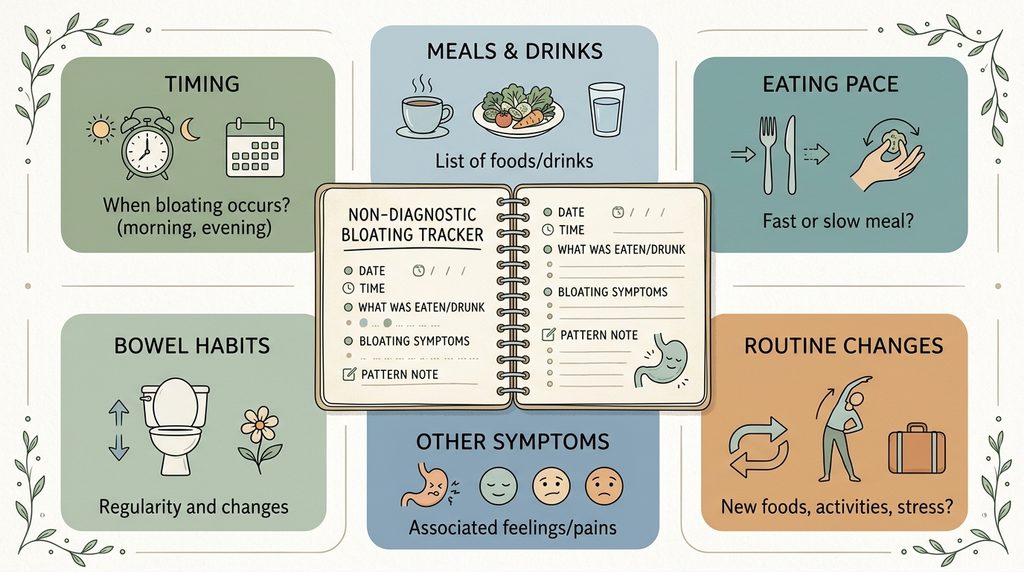
A short food and symptom diary can help organize details that may otherwise be easy to forget. A healthcare professional may ask someone to record foods, drinks, and the timing of gas symptoms as part of an evaluation.
Start with two or three details that seem most relevant. A simple record is more useful than a system that feels difficult to maintain.
Timing and Duration
Note when the discomfort began and approximately how long it lasted.
Was it during a meal, shortly afterward, or several hours later? Did it resolve on its own, continue through the day, or recur at a similar time?
READ MORE:
Meals, Drinks, and Eating Pace
Record the main parts of the meal without weighing ingredients or calculating every calorie.
Useful details include whether the meal was larger than usual, whether it felt rushed, whether it included a carbonated drink, and whether your fiber intake recently changed.
Bowel Patterns and Other Symptoms
Note changes in bowel frequency or stool pattern. Also record symptoms such as pain, nausea, vomiting, diarrhea, constipation, or reduced appetite.
Associated symptoms are important because they may indicate that routine tracking is not enough and medical guidance is appropriate.
Recent Routine Changes
Travel, changed schedules, a new eating pattern, reduced activity, or a recently added medication or supplement may provide relevant context.
Do not stop or change a medication because you suspect it may be related to bloating. Discuss new or worsening symptoms with the prescribing professional.
A Simple Bloating Tracker
| What to notice | What to record | Why it helps |
|---|---|---|
| Timing | Start time and duration | Shows repeated timing |
| Meals and drinks | Main foods, meal size, and carbonated drinks | Adds meal context |
| Eating pace | Whether the meal felt rushed | Highlights a possible pattern |
| Bowel habits | Changes in frequency or stool pattern | Adds digestive context |
| Other symptoms | Pain, nausea, or other changes | Supports decisions about care |
| Routine changes | Travel, medications, or schedule changes | Shows what recently changed |
Avoid Changing Too Many Things at Once
Removing several foods at the same time can make a pattern harder to interpret. If dairy, wheat, beans, and multiple vegetables are all removed on the same day, it becomes difficult to know whether any one change mattered.
Restrictive eating plans are not an appropriate first response to a single episode of bloating. When symptoms repeatedly seem connected to food, a physician or registered dietitian can help evaluate the pattern and consider nutritional adequacy.
Bring your notes to the appointment rather than relying on memory or beginning a broad elimination plan on your own.

When to Talk With a Healthcare Professional
Talk with a healthcare professional when bloating becomes frequent, persistent, increasingly uncomfortable, or disruptive to eating and daily life. Medical guidance is also appropriate when gas symptoms change suddenly or occur with other symptoms.
Contact a healthcare professional if bloating or abdominal swelling occurs with:
- severe or persistent abdominal pain;
- repeated vomiting;
- fever;
- blood in the stool or rectal bleeding;
- severe or ongoing diarrhea;
- unexplained weight loss;
- a sudden or persistent change in bowel habits;
- swelling that is worsening and does not go away.
Worsening abdominal swelling, tenderness, fever, severe diarrhea, bloody stools, and difficulty eating or drinking are among the reasons to contact a healthcare professional.
When to get help: Sudden or severe symptoms may need prompt medical care rather than additional diary entries.
Frequently Asked Questions
Is bloating the same as abdominal distension?
Not exactly. Bloating describes a feeling of fullness, pressure, or swelling. Abdominal distension refers to visible enlargement of the abdomen. They can occur together or separately.
Does bloating after one food mean I am intolerant to it?
No. A single episode does not confirm an intolerance, allergy, or digestive condition.
Meal size, eating pace, other foods, bowel habits, and timing may all contribute to the context. Repeated symptoms are worth documenting and discussing with a qualified healthcare professional before making broad dietary restrictions.
What should I track when bloating happens?
Start with timing, duration, meal size, eating pace, drinks, recent dietary changes, bowel patterns, and other symptoms.
Choose only a few details at first. The goal is to create a record that is simple enough to maintain.
When should I talk with a healthcare professional?
Seek guidance when bloating is persistent, severe, worsening, disruptive, or accompanied by symptoms such as significant pain, repeated vomiting, fever, bleeding, or unexplained weight loss.
Start With One Useful Observation
You do not need to change your entire diet after one uncomfortable meal.
Begin with one or two details, such as when the discomfort starts, whether the meal was unusually large or rushed, and whether your bowel habits have changed.
The goal is not perfect tracking. It is to collect enough context to recognize a repeated pattern or have a clearer conversation with a qualified healthcare professional.
Start by tracking one or two details instead of changing everything at once. For a broader foundation, explore our guide to everyday habits for better digestion.
Medical note: This article provides general educational information and is not a substitute for individualized medical advice. Speak with a qualified healthcare professional if bloating is persistent, severe, worsening, or accompanied by other concerning symptoms.
Sources
- National Institute of Diabetes and Digestive and Kidney Diseases — Symptoms & Causes of Gas in the Digestive Tract
https://www.niddk.nih.gov/health-information/digestive-diseases/gas-digestive-tract/symptoms-causes - National Institute of Diabetes and Digestive and Kidney Diseases — Eating, Diet, & Nutrition for Gas in the Digestive Tract
https://www.niddk.nih.gov/health-information/digestive-diseases/gas-digestive-tract/eating-diet-nutrition - MedlinePlus — Abdominal Bloating
https://medlineplus.gov/ency/article/003123.htm - MedlinePlus — Abdomen: Swollen
https://medlineplus.gov/ency/article/003122.htm - American Gastroenterological Association — Evaluation and Management of Belching, Abdominal Bloating and Distention
https://gastro.org/clinical-guidance/evaluation-and-management-of-belching-abdominal-bloating-and-distention/ - American Gastroenterological Association — New Clinical Practice Update: Belching, Bloating and Distention
https://gastro.org/news/new-clinical-practice-update-belching-bloating-distention/