“Drink more water” is common advice, but it does not explain how fluids fit into digestion or why individual needs vary.
This guide looks at stool consistency, dietary fiber, everyday fluid sources, and realistic hydration habits without relying on a one-size-fits-all rule.
Quick Takeaways
- Fluids are part of normal digestive function.
- Adequate fluid intake may help support softer, easier-to-pass stools.
- Fiber and fluids are often considered together.
- Beverages and food both contribute to total water intake.
- Persistent symptoms or medically managed fluid needs require individualized guidance.
How Fluids Support Everyday Digestion
Fluids Are Part of the Digestive Process
Water is part of saliva and other fluids involved in normal digestion. It also contributes to the water content of stool.
For most people, drinking water during or after a meal does not interfere with digestion. People who have been advised to limit fluids should continue to follow their healthcare professional’s guidance.
That does not mean water “flushes” food through the body or cleanses the digestive system. Digestion is a coordinated process involving organs, muscles, nerves, enzymes, food composition, and other factors.
Water Helps Shape Stool Consistency
The amount of water in stool helps influence whether it is soft or dry and difficult to pass.
Adequate fluid intake may help support softer stools, particularly when paired with enough dietary fiber. Still, bowel habits are influenced by more than hydration alone.
Hydration, Stool Consistency, and Bowel Regularity
Can Drinking More Water Help With Constipation?
Low fluid intake can be one contributor to constipation. For someone who regularly drinks very little, making fluids more consistent may be one useful part of a broader routine.
Constipation may also be related to low fiber intake, limited physical activity, medications, routine changes, or health conditions. More than one factor can be involved at the same time.
Fluids may be especially relevant when a person is adding more dietary fiber. The National Institute of Diabetes and Digestive and Kidney Diseases recommends drinking water and other liquids to help fiber work better.
Keep in mind: Drinking more water is not a universal solution for constipation. Fiber intake, activity, medications, health conditions, and other factors may also affect bowel habits.
Why More Is Not Always Better
Hydration is about meeting the body’s needs, not consuming the largest possible amount.
Both losing too much fluid and taking in more than the body can remove can disrupt fluid balance. Some health conditions and medications make individualized guidance especially important.
People who have been told to monitor or limit fluids should follow their healthcare team’s instructions rather than a general hydration target.
Why Fiber and Fluids Are Often Considered Together
Different Types of Fiber Interact With Water
Dietary fiber is found in plant foods such as fruits, vegetables, legumes, and grains.
Soluble fiber attracts water and forms a gel during digestion, while insoluble fiber adds bulk to stool. Individual tolerance and digestive responses can vary.
This is why general guidance often discusses fiber and adequate fluid intake together. The goal is not to match each gram of fiber with a precise amount of water, but to consider both within the overall eating pattern.
Increase Fiber Gradually
Adding a large amount of fiber over a short period may cause gas, bloating, or cramping for some people. Increasing it gradually may be easier to tolerate.
When adding more beans, whole grains, fruits, vegetables, or other fiber-rich foods, it is useful to pay attention to regular fluid intake as well.
What Counts Toward Fluid Intake?
Water, Other Beverages, and Food All Contribute
Plain water is a simple fluid source, but it is not the only one.
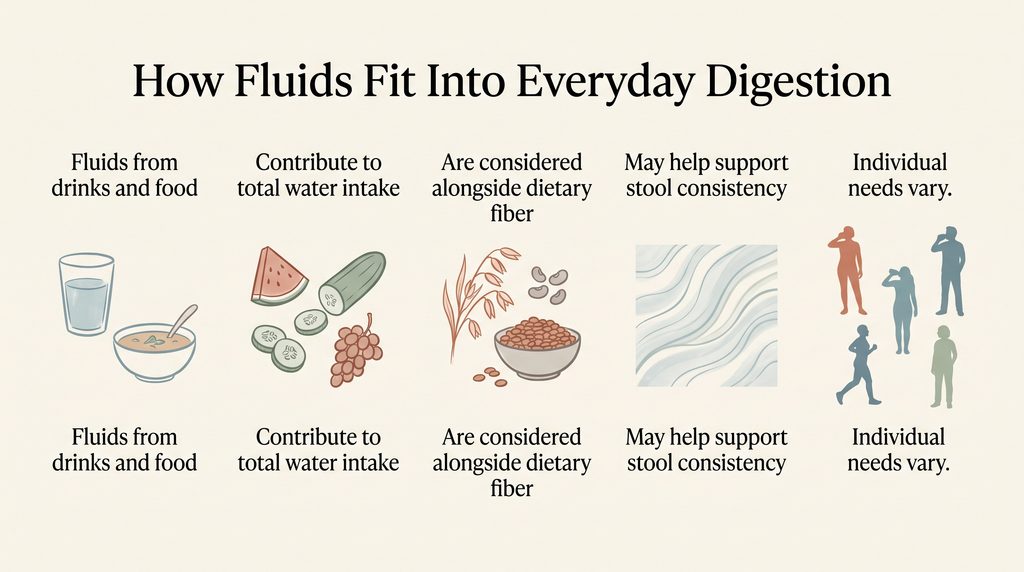
Total water intake includes water from beverages and food. Milk, tea, coffee, soups, fruits, and vegetables may all contribute. A general reference for total water should therefore not be interpreted as a requirement to drink the entire amount as plain water.
Foods such as oranges, berries, cucumbers, tomatoes, and soups can add water through regular meals and snacks.

The Type of Beverage Still Matters
A drink may contribute fluid while also containing ingredients worth considering.
Tea and coffee can count toward fluid intake, although caffeine sensitivity varies. Soups can add fluid, but sodium levels differ. Milk and plant-based beverages may also contribute, while ingredients, added sugar, and individual tolerance vary by product.
| Source | How It Contributes | What to Consider |
|---|---|---|
| Water | Adds fluid without sugar or caffeine | Individual needs vary |
| Milk or plant-based beverages | Contributes to total fluid intake | Ingredients and tolerance vary |
| Tea and coffee | Contribute to fluid intake | Caffeine sensitivity varies |
| Soups | Add fluid through meals | Sodium content can vary |
| Fruits and vegetables | Provide water through food | Water content differs by food |
Why Fluid Needs Vary
Daily Needs Depend on More Than One Number
General intake references can help describe population needs, but they are not personalized prescriptions.
Total water includes both food and beverages, and individual needs may depend on factors such as age, body size, activity level, climate, and medical conditions. There is no single amount of plain water that is right for every adult.
That is why a rule such as “eight glasses for everyone” can be misleading. One person may obtain more water through food, while another may need more because of physical activity or hot weather.
READ MORE:
Meal Timing and Digestion: How to Build a Routine That Feels Sustainable
Health, Medications, Climate, and Activity Can Change Needs
Fluid needs may shift with heat, physical activity, illness, age, medications, and health conditions.
Some heart, kidney, or liver conditions can affect how the body handles fluid. People with medically managed needs should not replace individualized guidance with a generic target.
Simple Ways to Make Hydration More Consistent
A useful hydration routine does not need to be complicated.
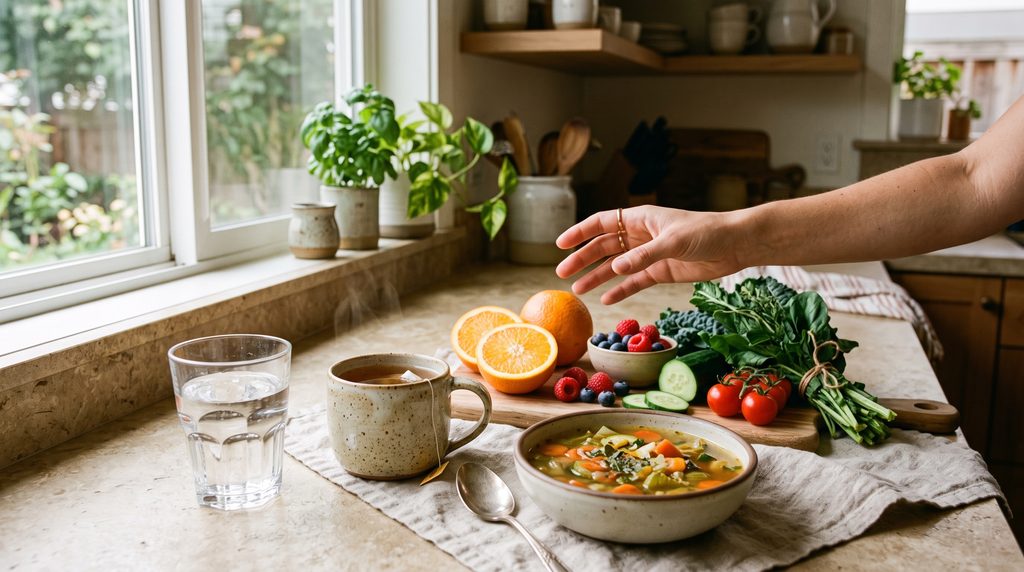
- Keep fluids within easy reach.
Place a glass or bottle where you normally work, relax, or eat. - Pair drinks with regular parts of your day.
Meals, breaks, and routine transitions can serve as simple reminders. - Include water-rich foods.
Fruits, vegetables, and soups can contribute to total intake. - Consider fluids when increasing fiber.
Pay attention to both parts of the routine rather than changing fiber in isolation. - Follow individualized guidance when your needs are medically managed.
Do not override a prescribed fluid limit or change medication based on general wellness information.
Start here: Choose one manageable way to make fluids easier to access during your normal day. You do not need to follow a perfect schedule.
A Realistic Hydration Check-In
- I keep fluids accessible during the day.
- I include drinks and water-rich foods regularly.
- I consider fluids when increasing fiber.
- I follow individualized guidance when my needs are medically managed.
When Digestive Symptoms Need Professional Guidance
A hydration habit cannot explain or address every digestive change.
Persistent constipation, constant or severe abdominal pain, or blood in the stool are reasons to seek medical guidance. Ongoing vomiting, prolonged diarrhea, or difficulty maintaining fluid intake can also lead to dehydration and deserve prompt attention.
Seek individualized advice as well if you use medicines that affect fluid balance or have been told to restrict or closely monitor liquids.
When to get help: Speak with a qualified healthcare professional if digestive symptoms persist, become severe, involve blood in the stool, or make it difficult to maintain fluid intake.
Frequently Asked Questions
Does Drinking Water With Meals Affect Digestion?
For most people, drinking water during or after meals does not interfere with digestion. It can be a convenient way to include fluids during the day.
People with prescribed fluid restrictions should follow individualized advice.
Can Low Fluid Intake Contribute to Constipation?
Yes. Low fluid intake can be one contributing factor, particularly when stools are dry or difficult to pass.
Constipation can also have other causes, so persistent symptoms should not automatically be attributed to hydration.
Do Coffee and Tea Count Toward Fluid Intake?
Coffee and tea can contribute to total fluid intake. Caffeine content, added ingredients, and individual sensitivity still matter, so they do not need to replace plain water entirely.
A Practical Place to Start
Hydration is one part of digestive wellness.
Fluids work alongside dietary fiber, food choices, activity, medications, and individual health needs. Rather than chasing a perfect number, focus on a realistic routine that makes regular fluid intake easier.
Choose one manageable hydration habit, then explore our related digestion guides when you are ready to build a broader routine.
Medical note: This article provides general educational information and is not a substitute for individualized medical advice. Fluid needs can vary based on health conditions, medications, activity, climate, and other factors. Speak with a qualified healthcare professional if you have persistent digestive symptoms or have been advised to limit or closely manage your fluid intake.
Sources
- National Institute of Diabetes and Digestive and Kidney Diseases — Eating, Diet, & Nutrition for Constipation
https://www.niddk.nih.gov/health-information/digestive-diseases/constipation/eating-diet-nutrition - National Institute of Diabetes and Digestive and Kidney Diseases — Symptoms & Causes of Constipation
https://www.niddk.nih.gov/health-information/digestive-diseases/constipation/symptoms-causes - National Institute of Diabetes and Digestive and Kidney Diseases — Definition & Facts for Constipation
https://www.niddk.nih.gov/health-information/digestive-diseases/constipation/definition-facts - MedlinePlus — Water in Diet
https://medlineplus.gov/ency/article/002471.htm - MedlinePlus — Fluid and Electrolyte Balance
https://medlineplus.gov/fluidandelectrolytebalance.html - MedlinePlus — Fluid Imbalance
https://medlineplus.gov/ency/article/001187.htm - MedlinePlus — Drinking Water
https://medlineplus.gov/drinkingwater.html