
Advice about meal timing can get surprisingly rigid: eat every few hours, never eat after 8 p.m., always have breakfast, or keep every meal at exactly the same time.
The science is more nuanced. Your digestive system does follow daily rhythms, and eating itself affects gastrointestinal activity. But those facts do not add up to one perfect eating schedule for everyone. Some timing questions have clearer guidance—especially when acid reflux is involved—while others are still being studied.
The more useful goal is usually a routine that gives your day some structure without making food another source of stress.
Quick Takeaways
- There is no universal “best” clock time for every meal.
- Digestive activity changes across the day, but digestion does not simply shut down at night.
- Meal timing has clearer practical guidance in some situations, especially for people with nighttime acid reflux.
- A flexible eating routine can use predictable parts of your day instead of exact meal times.
- Persistent or concerning digestive symptoms deserve medical attention rather than increasingly strict scheduling rules.
Does Meal Timing Really Affect Digestion?
Yes—but not in the simple sense that eating at one specific hour is automatically better for your gut.
The gastrointestinal tract has circadian rhythms, meaning some of its functions vary across a roughly 24-hour cycle. Research reviews describe daily patterns in gastrointestinal motility, or the movement of food and waste through the digestive tract. Colonic activity is generally lower during the night and increases after waking and after meals. Feeding time can also act as a timing cue for biological clocks in peripheral tissues.
That helps explain why meal timing is biologically relevant. It does not prove that everyone should eat breakfast at 7 a.m., lunch at noon, and dinner at 6 p.m.
Sleep schedules, work hours, meal size, health conditions, symptoms, medications, and personal preferences can all affect what feels practical.
What this does—and does not—mean: Your digestive system has daily patterns. It does not run on a universal meal timetable, and reduced nighttime activity is not the same as digestion “turning off.”

Why Consistency Does Not Have to Mean Eating by the Clock
A regular meal pattern can mean having some predictability in your day. It does not have to mean eating within the same 10-minute window every day.
There is condition-specific guidance that supports regularity. For example, NICE guidance for people with irritable bowel syndrome (IBS) recommends regular meals, taking time to eat, and avoiding missed meals or long gaps between eating. That advice is intended for people managing IBS and should not be turned into a universal claim that irregular meal times cause digestive disease.
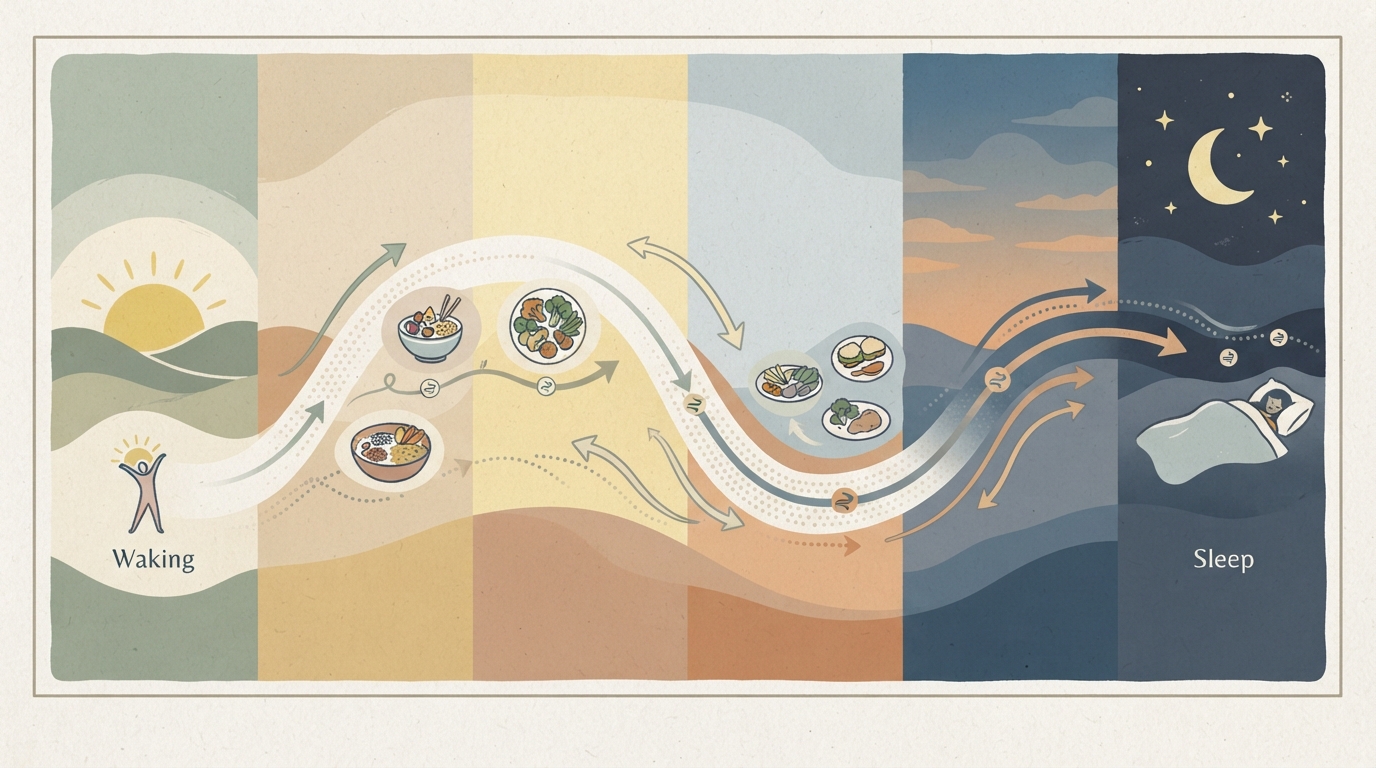
A practical everyday approach is to think in terms of meal anchors rather than exact times. An anchor might be breakfast after getting ready for work, lunch during a predictable break, or dinner after arriving home.
These are useful reference points, not a medical protocol.
If Tuesday’s lunch happens at 12:30 and Wednesday’s happens at 1:15, your routine has not failed. Consistency can leave room for weekends, family responsibilities, travel, appetite, and normal changes in daily life.
When Meal Timing May Matter More
Some situations have more actionable evidence than others.
Eating Close to Bedtime and Acid Reflux
The clearest example involves gastroesophageal reflux disease, or GERD.
The American Society for Gastrointestinal Endoscopy recommends that people with GERD symptoms avoid meals within three hours of bedtime. The recommendation is strong, although the guideline rates the supporting evidence as low quality.
NIDDK similarly notes that, for people who have GERD symptoms at night or while lying down, eating meals at least three hours before lying down or going to bed may improve symptoms.
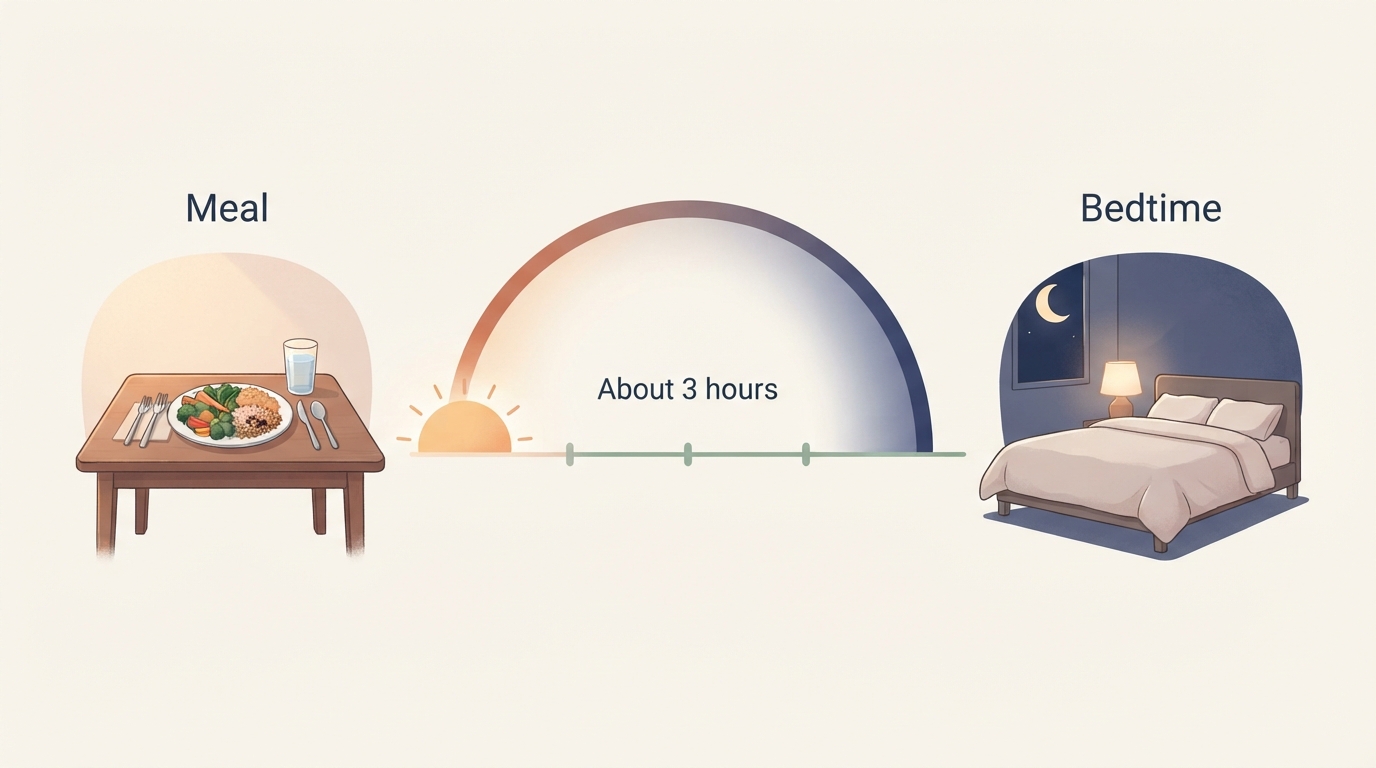
This is why “never eat after 8 p.m.” is the wrong takeaway. An 8 p.m. dinner could be very close to bedtime for one person and several hours away from bedtime for someone else.
The more relevant factor is the meal-to-bed interval, particularly if nighttime reflux is a problem—not an arbitrary number on the clock.
Meals and Bowel Movements
Eating can stimulate movement in the colon, sometimes called the gastrocolic response. This normal response helps explain why some people notice an urge to have a bowel movement after a meal.
For people managing constipation, NIDDK describes bowel training after breakfast as one possible strategy. It notes that trying to have a bowel movement 15 to 45 minutes after breakfast may help because eating encourages the colon to move stool.
That is a constipation-specific example. It is not evidence that everyone needs breakfast or should schedule bathroom visits.
When Your Schedule Changes From Day to Day
Night shifts and rotating schedules make rigid meal advice especially unrealistic.
A 2025 systematic scoping review found that shift work was frequently associated with gastrointestinal symptoms, but the evidence had important limitations. Most studies were cross-sectional, and relatively few examined dietary behavior and meal timing in enough detail to identify an ideal schedule.
For someone with changing work hours, a repeatable-enough pattern may therefore be more useful than trying to imitate a conventional daytime schedule.
How to Build a Meal Routine That Feels Sustainable
You do not need to redesign your entire day. Start with what is already predictable.
Start With the Parts of Your Day You Can Count On
Look for recurring points such as:
- when you usually wake up
- a reliable work or school break
- when you get home
- a regular family meal
- your usual bedtime
Those points can help you decide where meals realistically fit.
Choose Flexible Meal Anchors
Instead of “Lunch must be at 12:00,” your anchor might be “I usually eat lunch during my midday break.”
This creates structure without turning an ordinary schedule change into a failure.
There is also no strong basis for choosing a specific number of meals simply because a wellness rule says everyone should eat that way. A USDA systematic review prepared for the 2025 Dietary Guidelines Advisory Committee found that several questions about meal and snack frequency in adults could not support firm conclusions because of limitations in the available evidence. Importantly, that review focused on energy intake rather than digestive health, so it should not be used to prescribe a digestive schedule.
READ MORE:
Notice Patterns, Not One-Off Days
If you are trying to understand recurring digestive discomfort, a brief record can help you notice possible patterns:
- when you ate
- what the meal was like
- whether you lay down soon afterward
- what symptoms you noticed
- whether the same pattern appeared again
Repeated patterns can help you notice possible associations, but they do not prove what is causing a symptom.
Tracking also does not need to become a permanent habit. A short period of observation may be enough to identify questions worth discussing with a healthcare professional.
Adjust the Routine When Life Changes
Your best routine during a workweek may not look like your weekend routine. Travel, parenting, social events, illness, and shift changes can all affect meal timing.
The goal is not perfect adherence. It is a pattern you can return to without treating normal variation as a mistake.
A Simple Meal-Timing Check-In
- Do I have one or two predictable points in the day that could serve as meal anchors?
- Am I regularly eating very close to bedtime when reflux is an issue?
- Have I noticed a repeatable relationship between timing and symptoms?
- Does my routine still work when my schedule changes?
- Am I trying to manage persistent symptoms with meal timing alone?
Common Meal-Timing Myths Worth Letting Go
| Common claim | What the evidence supports more carefully |
|---|---|
| “Everyone should eat at the same times every day.” | Some regularity can be practical, and regular meals appear in guidance for certain conditions such as IBS. That does not establish one clock schedule for everyone. |
| “You should never eat after 8 p.m.” | For people with GERD, guidance focuses on avoiding meals close to bedtime—about three hours beforehand—not on a universal evening cutoff. |
| “You need exactly three meals a day for healthy digestion.” | There is no established digestive-health rule requiring everyone to eat exactly three meals. Research on meal frequency also has important limitations, and federal evidence reviews have not established one universal adult pattern. |
| “Digestion shuts down at night.” | Gastrointestinal activity follows daily rhythms, but digestive function does not simply switch off. |
| “Time-restricted eating resets your gut microbiome.” | Current human evidence is too uncertain to support that claim. |
What About Intermittent Fasting and Time-Restricted Eating?
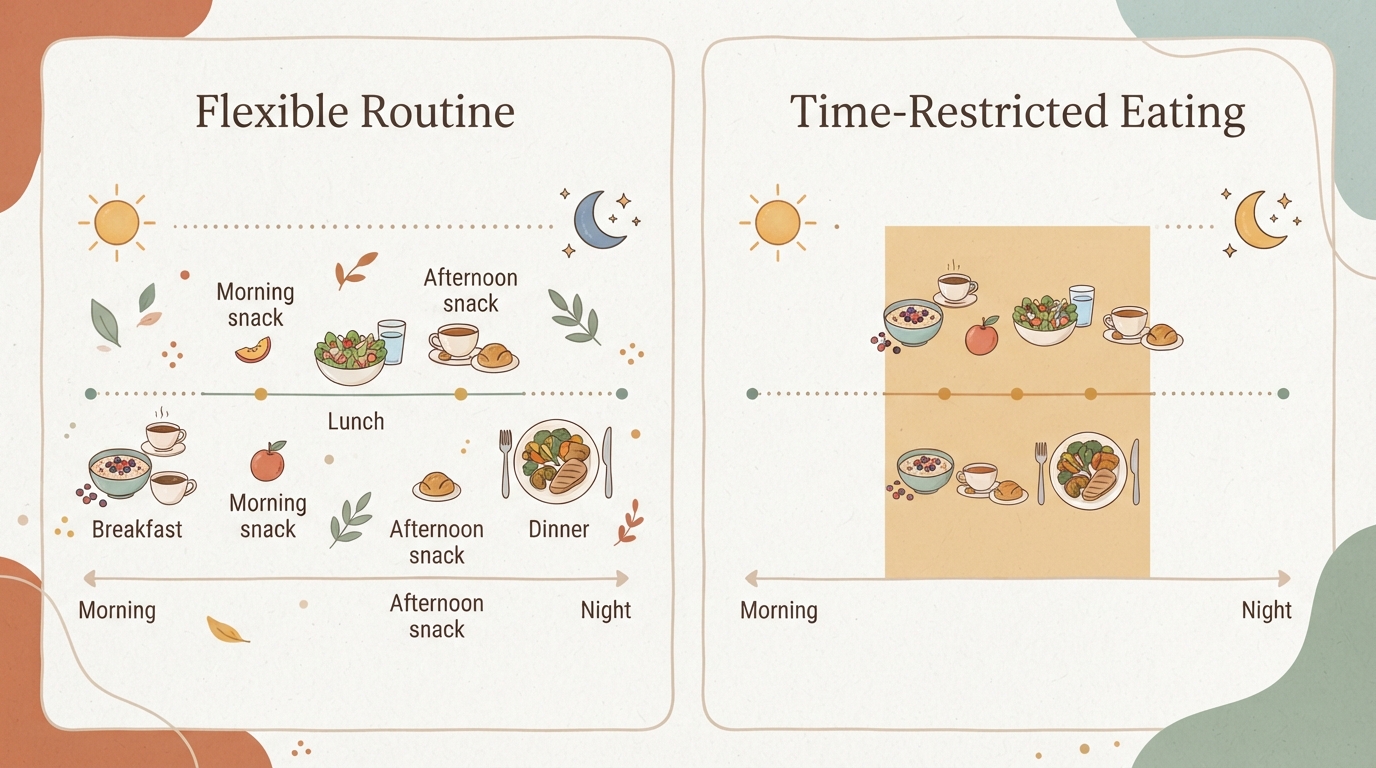
Time-restricted eating, or TRE, is more specific than simply having a regular meal routine. It limits daily food intake to a recurring eating window.
It is sometimes promoted as a way to improve “gut health,” but microbiome evidence remains uncertain. A 2026 systematic review of adults with overweight or obesity found very-low-certainty evidence on the relationship between TRE and gut microbiota alpha diversity. The available studies did not establish a consistent benefit, but they also did not prove that no effect exists.
That population and outcome are also narrower than digestive health in general.
Keep in mind: A flexible eating schedule and time-restricted eating are not the same thing. You do not need to adopt a fasting window simply to make your meal routine more consistent.
When Digestive Symptoms Deserve Professional Attention
Meal timing can be one small part of digestive comfort, but it should not become a way to explain away persistent or concerning symptoms.
NIDDK advises seeking medical attention for symptoms that can include frequent vomiting, difficulty or pain with swallowing, unexplained weight loss, bloody vomit, black or tarry stools, or severe and constant abdominal pain.
Signs of gastrointestinal bleeding—such as black or tarry stools or vomiting blood or coffee-ground-like material—may require urgent evaluation and should not be managed by simply changing meal times. Significant chest pain or severe abdominal pain also deserves prompt medical assessment.
If digestive symptoms keep returning or interfere with eating, sleeping, work, or everyday life, talk with a qualified healthcare professional rather than repeatedly tightening your meal schedule.
A Sustainable Routine Is More Useful Than a Perfect One
Meal timing can influence digestive patterns, but the evidence does not support organizing your life around a supposedly perfect eating clock.
A better starting point is to use a few flexible meal anchors, pay attention to repeatable patterns, and give special consideration to timing where guidance is clearer—such as meals close to bedtime when reflux is an issue.
A sustainable routine should make everyday life easier to navigate, not create another set of rigid rules.
Choose one meal anchor that feels realistic for your schedule and adjust from there. For more practical ways to support everyday digestion, explore our Gut Health & Digestion guides.
Medical note: This article provides general educational information and is not a substitute for individualized medical advice. Speak with a qualified healthcare professional about persistent or worsening digestive symptoms, medical conditions, medications, or other health concerns.
Sources
- Duboc H, et al. — Disruption of Circadian Rhythms and Gut Motility: An Overview of Underlying Mechanisms and Associated Pathologies
https://pubmed.ncbi.nlm.nih.gov/32134798/ - American Society for Gastrointestinal Endoscopy — Guideline on the Diagnosis and Management of GERD: Summary and Recommendations
https://www.asge.org/home/resources/publications/guidelines/american-society-for-gastrointestinal-endoscopy-guideline-on-the-diagnosis-and-management-of-gerd–summary-and-recommendations - National Institute of Diabetes and Digestive and Kidney Diseases — Eating, Diet, & Nutrition for GER & GERD
https://www.niddk.nih.gov/health-information/digestive-diseases/acid-reflux-ger-gerd-adults/eating-diet-nutrition - National Institute of Diabetes and Digestive and Kidney Diseases — Treatment for Constipation
https://www.niddk.nih.gov/health-information/digestive-diseases/constipation/treatment - National Institute for Health and Care Excellence — Irritable Bowel Syndrome in Adults: Recommendations
https://www.nice.org.uk/guidance/cg61/chapter/recommendations - Alyami J, Lomer MCE, Gibson R — Gastrointestinal Symptoms and the Assessment of Diet in Shift Workers: A Systematic Scoping Review
https://pubmed.ncbi.nlm.nih.gov/40878269/ - USDA Nutrition Evidence Systematic Review — Frequency of Meals and/or Snacking and Energy Intake
https://nesr.usda.gov/2025-dietary-guidelines-advisory-committee-systematic-reviews/frequency-meals-snacks_energy-intake - Zhai et al. — Time-Restricted Eating and Gut Microbiota Alpha Diversity in Adults With Overweight or Obesity: An Updated Rapid Systematic Review
https://pubmed.ncbi.nlm.nih.gov/42780843/ - National Institute of Diabetes and Digestive and Kidney Diseases — Symptoms & Causes of Indigestion
https://www.niddk.nih.gov/health-information/digestive-diseases/indigestion-dyspepsia/symptoms-causes - MedlinePlus — Black or Tarry Stools
https://medlineplus.gov/ency/article/003133.htm