Gut health can sound more complicated than it needs to be. Online advice often centers on supplements, restrictive diets, or promises to “reset” the microbiome. In reality, digestion involves a much broader system, and no single food or routine determines how well it functions.
Everyday factors such as food choices, fiber, fluids, movement, meal habits, sleep, stress, medications, and health conditions may all be part of the digestive picture.
This guide explains the basics of gut health and offers realistic places to start—without asking you to overhaul your diet or follow a quick-fix plan.
Quick Takeaways
- Gut health includes more than the gut microbiome.
- Food variety, fiber, fluids, movement, and daily routines may all influence digestion.
- Increasing fiber gradually may be easier to tolerate than making a sudden change.
- Probiotic supplements are not a basic requirement for everyone.
- Digestive patterns vary from person to person.
- Persistent, worsening, or concerning symptoms deserve professional guidance.
What Does “Gut Health” Actually Mean?
“Gut health” is an informal term rather than a single medical measurement. It may refer to digestion, bowel function, digestive comfort, the microorganisms that live in the gastrointestinal tract, and how these factors interact with a person’s overall health.
Understanding a few basic terms makes the subject easier to navigate.
Digestion, the Digestive System, and the Microbiome
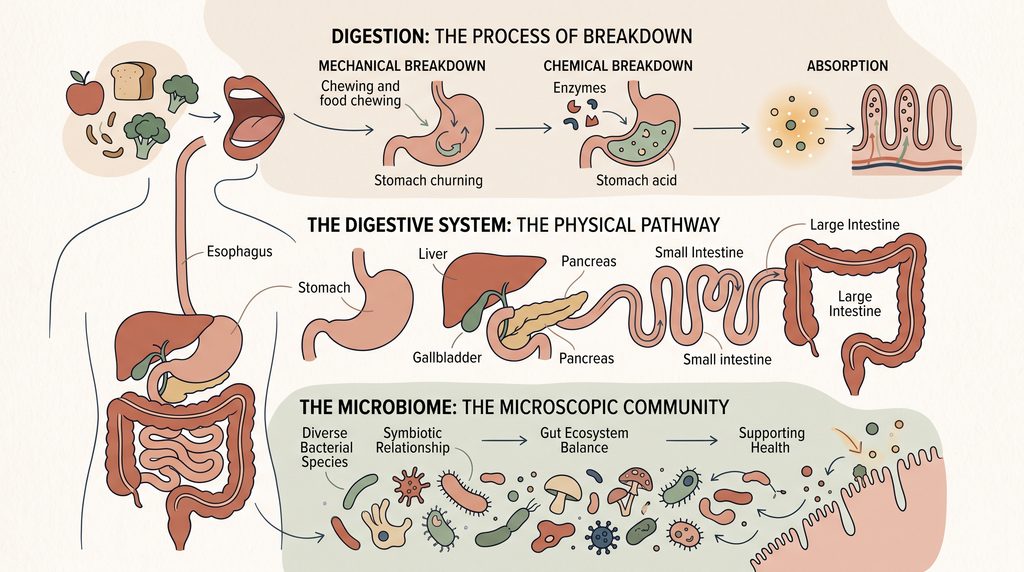
Digestion is the process of breaking food and liquids into smaller components that the body can absorb and use.
The digestive system includes the gastrointestinal tract along with the liver, pancreas, and gallbladder. These organs help move food and liquid, break them down, absorb nutrients and water, and form waste for elimination.
The gut microbiome refers broadly to the community of microorganisms and their genetic material in the digestive tract. It is one part of the digestive picture, not a synonym for digestion. Microbial communities also differ among body sites and between individuals.
Gut Health Terms in Plain English
| Term | Simple meaning | What it does not tell you by itself |
|---|---|---|
| Digestion | How the body breaks down food and absorbs nutrients | Whether one food is appropriate for everyone |
| Digestive system | The organs involved in digestion and waste formation | The cause of a digestive symptom |
| Gut microbiome | Microorganisms and microbial genes in the digestive tract | A simple score for overall gut health |
There Is No Single Measure of a “Perfectly Healthy” Gut
Digestive patterns differ from person to person. Bowel movement frequency is only one part of the picture. Stool consistency, ease of passing stool, discomfort, and changes from your usual pattern may also matter.
For example, the National Institute of Diabetes and Digestive and Kidney Diseases, or NIDDK, explains that constipation may involve infrequent bowel movements, hard or difficult-to-pass stools, or a feeling that stool has not passed completely.
This is one reason online checklists claiming to identify an “unhealthy gut” can be misleading. A symptom does not reveal its cause by itself, and general wellness information cannot replace an individual medical evaluation.
The Everyday Foundations of Better Digestion
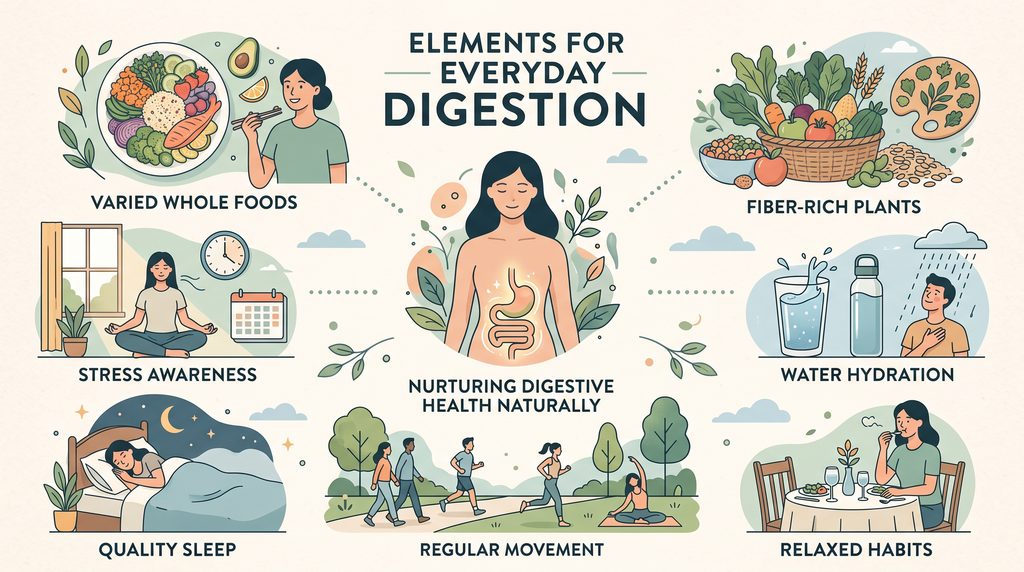
No single habit controls digestion. A more useful approach is to consider several everyday factors and choose changes that fit your health, food preferences, schedule, and resources.
Build Variety Into Your Regular Meals
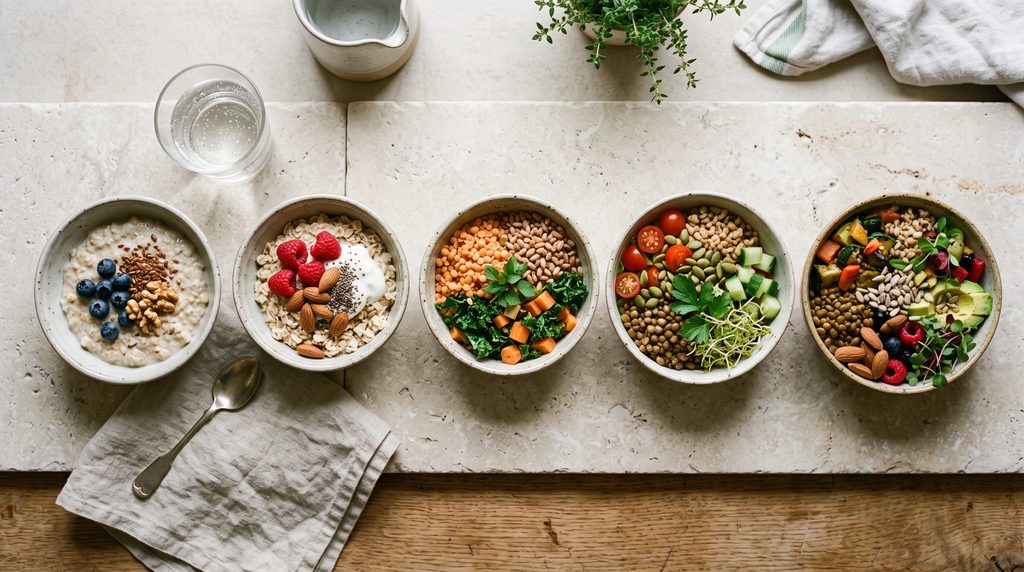
A varied eating pattern can provide a broader range of nutrients and sources of fiber without relying on one “superfood.”
Variety may come from fruits, vegetables, beans, lentils, whole grains, nuts, seeds, and other foods that fit your preferences and dietary needs. NIDDK identifies foods such as whole grains, legumes, fruits, vegetables, and nuts as sources of fiber.
This does not mean every meal has to look perfect. Adding one familiar food may be more realistic than buying an entirely new set of ingredients.
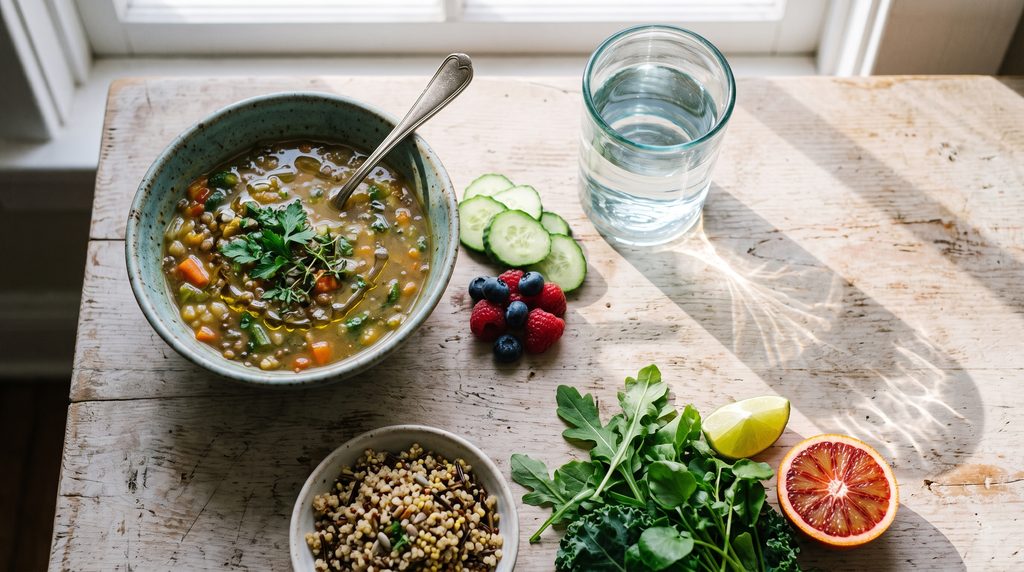
Someone who rarely eats beans, for example, might add a small amount to a familiar soup or rice dish. A person who dislikes certain vegetables can choose other fiber-containing foods rather than forcing one particular option.
Add Fiber Gradually
Dietary fiber plays a role in stool formation and normal bowel function. However, more is not always better all at once.
NIDDK advises people with irritable bowel syndrome who are increasing fiber to add it gradually because a large increase at one time may contribute to gas and bloating. Although that guidance is written for people with IBS, it illustrates why a sudden change may not be comfortable for everyone.
A manageable first step could be:
- adding fruit to a meal you already eat;
- including beans or lentils in one familiar dish;
- choosing a whole-grain option you enjoy;
- adding a small serving of vegetables rather than changing the entire meal.
People with certain gastrointestinal conditions or other medical concerns may need individualized guidance before making a major fiber change.
Meet Your Individual Fluid Needs
Fluids are another part of the digestive context, especially when increasing fiber. NIDDK recommends consuming enough liquids with fiber and notes that fluid needs can vary.
There is no single water target that fits every reader. Needs may differ with activity, climate, diet, pregnancy, medications, body size, and medical conditions.
A practical step may be to keep water or another appropriate beverage accessible during the day instead of trying to meet a rigid number immediately.
People who have been told to limit fluids because of a heart, kidney, or other condition should follow their healthcare professional’s instructions.
Give Meals Enough Time and Attention
Eating while rushed or distracted can make it harder to notice your pace, fullness, and comfort during a meal.
You do not need to follow a formal mindful-eating method. A simpler starting point might be to sit down for one regular meal, pause occasionally between bites, or put away one distracting screen.
These habits are not treatments for digestive symptoms. They are practical ways to pay closer attention to how you eat and how you feel afterward.
Meal timing also does not need to be identical every day. Work schedules, caregiving, culture, appetite, and health needs all shape when people eat.
READ MORE:
Fiber and Digestion: How to Increase Fiber Gradually
HyEating Slowly: A Small Habit That May Support Comfortable Digestion
Include Manageable Movement
Regular movement is part of general health and may also be relevant to bowel regularity. NIDDK lists insufficient physical activity among several factors that may contribute to constipation. It also notes that medicines, medical conditions, fiber intake, and hydration may play a role.
Depending on your abilities and health, movement might include:
- walking;
- light household activity;
- stretching;
- movement breaks during the day;
- adapted exercise.
Choose activity that is appropriate for your mobility and medical circumstances. Speak with a qualified professional before beginning strenuous exercise when you have significant pain, dizziness, heart or lung concerns, or mobility limitations.
Pay Attention to Stress, Sleep, and Routine Changes
The brain and digestive tract communicate with each other. NIDDK describes disorders of gut-brain interaction as conditions involving problems with how the brain and gut work together.
That does not mean stress is the cause of every digestive symptom. Sleep changes, travel, rushed meals, illness, medication changes, and emotional strain may overlap, making patterns difficult to interpret.
Rather than assuming one factor is responsible, notice whether discomfort repeatedly appears alongside certain routine changes. Sleep and relaxation habits can support general well-being, but they should not be presented as treatments for a gastrointestinal condition.
Notice Patterns Without Becoming Overly Restrictive
Paying attention to patterns can be useful. Removing several foods at once, however, can make it difficult to know which change mattered.
Consider changing one variable at a time. A simple note might include:
- what changed;
- when a symptom appeared;
- whether it happened again;
- whether illness, travel, stress, or medication changes occurred at the same time.
A detailed food diary is not necessary for everyone. It may become unhelpful if it increases anxiety or encourages progressively restrictive eating.
Keep in mind: Digestive patterns and food tolerance vary. A habit that feels useful for one person may not be appropriate for another.
Speak with a qualified healthcare professional or registered dietitian before beginning a restrictive eating plan, especially when symptoms persist or you are considering removing major food groups.
Everyday Habits That May Support Digestion
| Everyday habit | Why it may matter | A manageable starting point |
|---|---|---|
| Food variety | Provides different foods and sources of fiber | Add one familiar plant food |
| Fiber | Supports stool formation and bowel function | Increase fiber-containing foods gradually |
| Fluids | Support hydration and work alongside fiber | Keep a suitable beverage accessible |
| Meal pace | Makes eating patterns and comfort easier to notice | Slow down one regular meal |
| Movement | May be relevant to bowel regularity | Choose activity suitable for your ability |
| Routine awareness | May help you notice recurring patterns | Observe one factor at a time |
What About Probiotics, Prebiotics, and Fermented Foods?
These terms are often grouped together, but they do not mean the same thing.
Probiotics and Prebiotics Have Different Roles
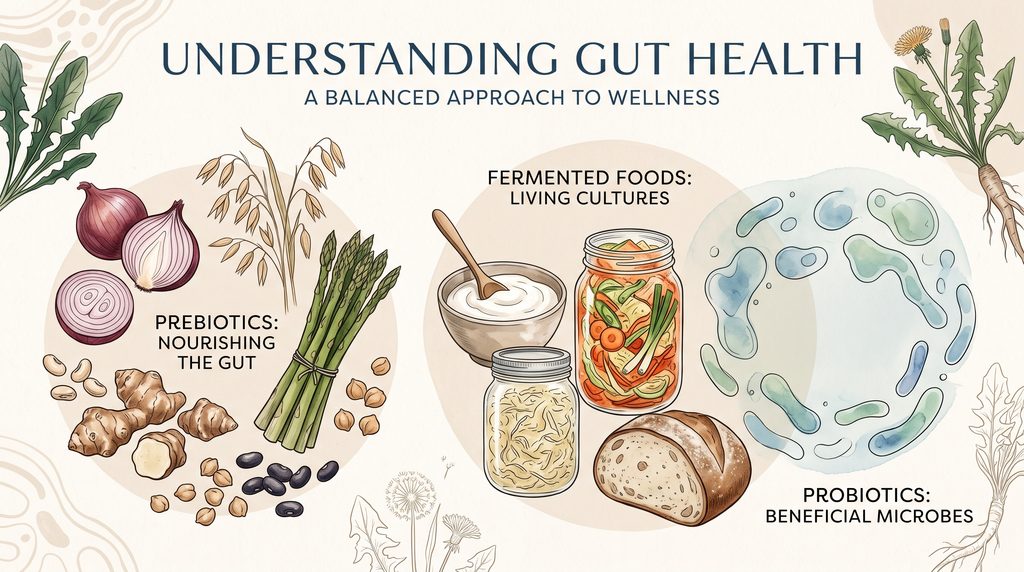
Probiotics are live microorganisms that provide a health benefit when consumed in adequate amounts. They may be present in some foods, added to food products, or sold as dietary supplements.
Prebiotics are substances selectively used by microorganisms in a way that provides a health benefit. Certain complex carbohydrates may act as prebiotics, but not every type of dietary fiber meets that definition.
Fermentation alone does not make a food probiotic. Not all fermented foods contain live microorganisms that have been identified and shown to provide a specific health benefit.

Supplements Are Not a Basic Requirement for Everyone
Probiotic products vary by microorganism, strain, formulation, amount, storage conditions, and intended use. Research findings about one strain or product should not automatically be applied to another.
Evidence is also limited for many commonly promoted uses. Safety depends partly on the product and the person using it, and the risk of serious adverse effects may be higher in people who are seriously ill or have weakened immune systems.
Supplements are not a basic requirement: A probiotic product should not be treated as a universal solution for digestion or the microbiome.
Talk with a qualified healthcare professional before using a probiotic when you have a serious health condition, a weakened immune system, significant symptoms, or questions about how it fits with your care.
A Simple Way to Start
Knowing the basics does not mean you need to work on every habit at once.
Start here: Choose one manageable habit that fits your current routine. You do not need to change your entire diet or schedule at once.
You might:
- add one fiber-containing food you already enjoy;
- keep fluids accessible during the day;
- take more time with one regular meal;
- include an appropriate form of movement;
- notice whether discomfort follows a recurring pattern.
Change one thing, then review how it fits. Consider whether the step was comfortable, affordable, and practical enough to continue.
Stop and seek guidance when a change causes significant discomfort or you are uncertain whether it is appropriate for a medical condition.
Choose One Place to Start
- Add one familiar fiber-containing food.
- Keep fluids accessible during the day.
- Slow down one regular meal.
- Include a manageable form of movement.
- Notice one recurring pattern.
- Seek guidance when symptoms persist or concern you.
Common Gut Health Mistakes to Avoid
Changing Too Many Foods at Once
Large, simultaneous changes make patterns harder to interpret and can turn a simple routine into a stressful project.
Increasing Fiber Too Quickly
A sudden increase may contribute to gas or bloating for some people. A gradual change may be easier to tolerate.
Assuming Every Symptom Comes From One Food
Digestive symptoms can have many possible causes. Diet may be one factor, but medicines, infections, underlying conditions, hydration, activity, and routine changes may also matter.
Using “Detox” or “Cleanse” Products
Promises to detox, cleanse, repair, or reset the gut reduce a complex system to a marketing phrase. They do not explain what a product actually does or whether its claims are supported.
Treating Supplements as a Substitute for Everyday Habits
A supplement should not be presented as a replacement for regular meals, appropriate hydration, movement, or individualized medical care.
Following Restrictive Advice Without a Clear Reason
Eliminating gluten, dairy, grains, legumes, or other broad food categories is not a general requirement for gut health. When symptoms seem connected to food, individualized guidance can help avoid unnecessary restriction.
When to Seek Help for Digestive Symptoms
Occasional digestive changes can happen, but persistent or disruptive symptoms should not be managed only with general wellness tips.

Speak with a qualified healthcare professional when symptoms:
- do not go away or repeatedly return;
- become more intense;
- interfere with eating, sleeping, working, or daily activities;
- appear after a medication or supplement change;
- lead you to remove several foods;
- concern you, even when they are not on a warning-sign list.
Symptoms That Need Prompt Medical Guidance
NIDDK advises prompt medical attention for constipation accompanied by rectal bleeding, blood in the stool, constant abdominal pain, inability to pass gas, vomiting, fever, or unintentional weight loss.
Black or tarry stools, blood in vomit, vomit that looks like coffee grounds, fainting, dizziness, confusion, or other signs of severe gastrointestinal bleeding may require emergency care.
When to get help: Seek urgent medical assistance when symptoms are severe or suggest significant bleeding. For persistent or concerning digestive changes, contact a qualified healthcare professional rather than relying only on general online guidance.
Build a Routine That Fits Your Life
The basics of gut health are usually less dramatic than online trends suggest. Food variety, fiber, appropriate fluids, movement, meal habits, and awareness of routine changes can all be part of a broader approach to digestion.
Choose habits that fit your circumstances and adjust them when your health or daily life changes. A useful routine is realistic, flexible, and appropriate for you.
Frequently Asked Questions
Is gut health the same as the gut microbiome?
No. The microbiome is one part of the digestive picture. Gut health is a broader informal term that may include digestion, bowel function, symptoms, food choices, microorganisms, medical conditions, and other individual factors.
Does everyone need a probiotic for gut health?
No. Probiotic products differ by strain, formulation, amount, and intended use. Evidence about one product cannot automatically be applied to another, and evidence remains limited for many promoted uses.
Can increasing fiber cause bloating?
Some people notice gas or bloating when they increase fiber quickly. Adding fiber-containing foods gradually may be easier to tolerate, although individual needs and medical circumstances vary.
When should I talk with a healthcare professional about digestion?
Seek guidance when symptoms persist, worsen, interfere with daily life, or cause concern. Obtain prompt care for bleeding, black or tarry stools, constant or severe abdominal pain, persistent vomiting, fainting, or other potentially serious symptoms.
Next Step
Choose one manageable habit to start with, then explore our related Gut Health & Digestion guides as you learn what fits your routine.
Medical Note
Medical note: This article provides general educational information and is not a substitute for individualized medical advice. Speak with a qualified healthcare professional about persistent digestive symptoms, medical conditions, medications, supplements, or significant dietary changes.
Sources
- National Institute of Diabetes and Digestive and Kidney Diseases — Your Digestive System & How It Works
https://www.niddk.nih.gov/health-information/digestive-diseases/digestive-system-how-it-works - National Institute of Diabetes and Digestive and Kidney Diseases — Definition & Facts for Constipation
https://www.niddk.nih.gov/health-information/digestive-diseases/constipation/definition-facts - National Institute of Diabetes and Digestive and Kidney Diseases — Eating, Diet, & Nutrition for Constipation
https://www.niddk.nih.gov/health-information/digestive-diseases/constipation/eating-diet-nutrition - National Institute of Diabetes and Digestive and Kidney Diseases — Symptoms & Causes of Constipation
https://www.niddk.nih.gov/health-information/digestive-diseases/constipation/symptoms-causes - National Institute of Diabetes and Digestive and Kidney Diseases — Eating, Diet, & Nutrition for Irritable Bowel Syndrome
https://www.niddk.nih.gov/health-information/digestive-diseases/irritable-bowel-syndrome/eating-diet-nutrition - National Institute of Diabetes and Digestive and Kidney Diseases — Definition & Facts for Irritable Bowel Syndrome
https://www.niddk.nih.gov/health-information/digestive-diseases/irritable-bowel-syndrome/definition-facts - National Institute of Environmental Health Sciences — Microbiome
https://www.niehs.nih.gov/health/topics/science/microbiome - National Center for Complementary and Integrative Health — Probiotics: Usefulness and Safety
https://www.nccih.nih.gov/health/probiotics-usefulness-and-safety - National Center for Complementary and Integrative Health — 5 Things to Know About Probiotics
https://www.nccih.nih.gov/health/tips/things-to-know-about-probiotics - NIH Office of Dietary Supplements — Probiotics: Health Professional Fact Sheet
https://ods.od.nih.gov/factsheets/Probiotics-HealthProfessional/ - NIH Office of Dietary Supplements — Probiotics: Consumer Fact Sheet
https://ods.od.nih.gov/factsheets/Probiotics-Consumer/ - Gibson et al. — ISAPP Consensus Statement on the Definition and Scope of Prebiotics
https://pubmed.ncbi.nlm.nih.gov/28611480/ - National Institute of Diabetes and Digestive and Kidney Diseases — Symptoms & Causes of GI Bleeding
https://www.niddk.nih.gov/health-information/digestive-diseases/gastrointestinal-bleeding/symptoms-causes